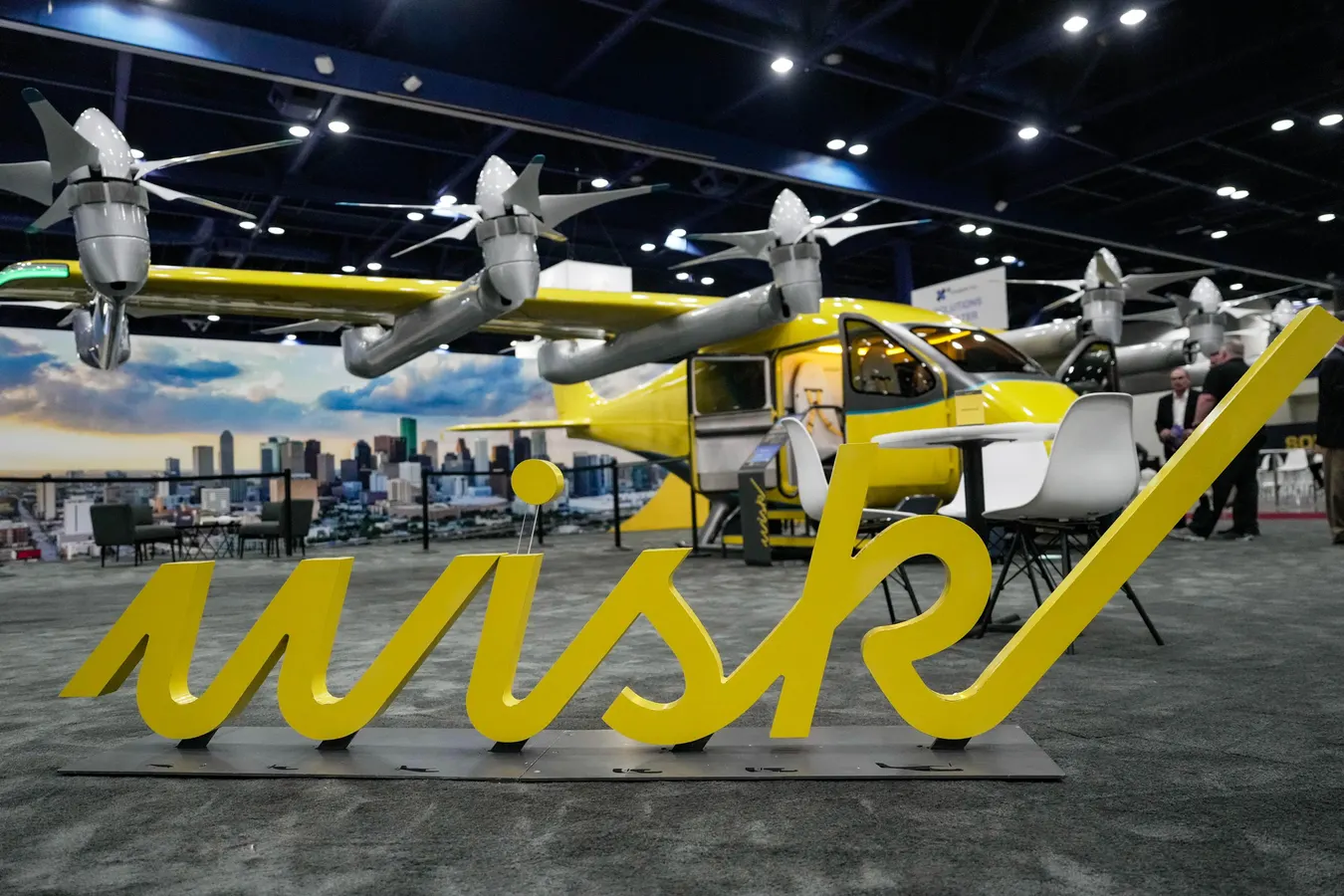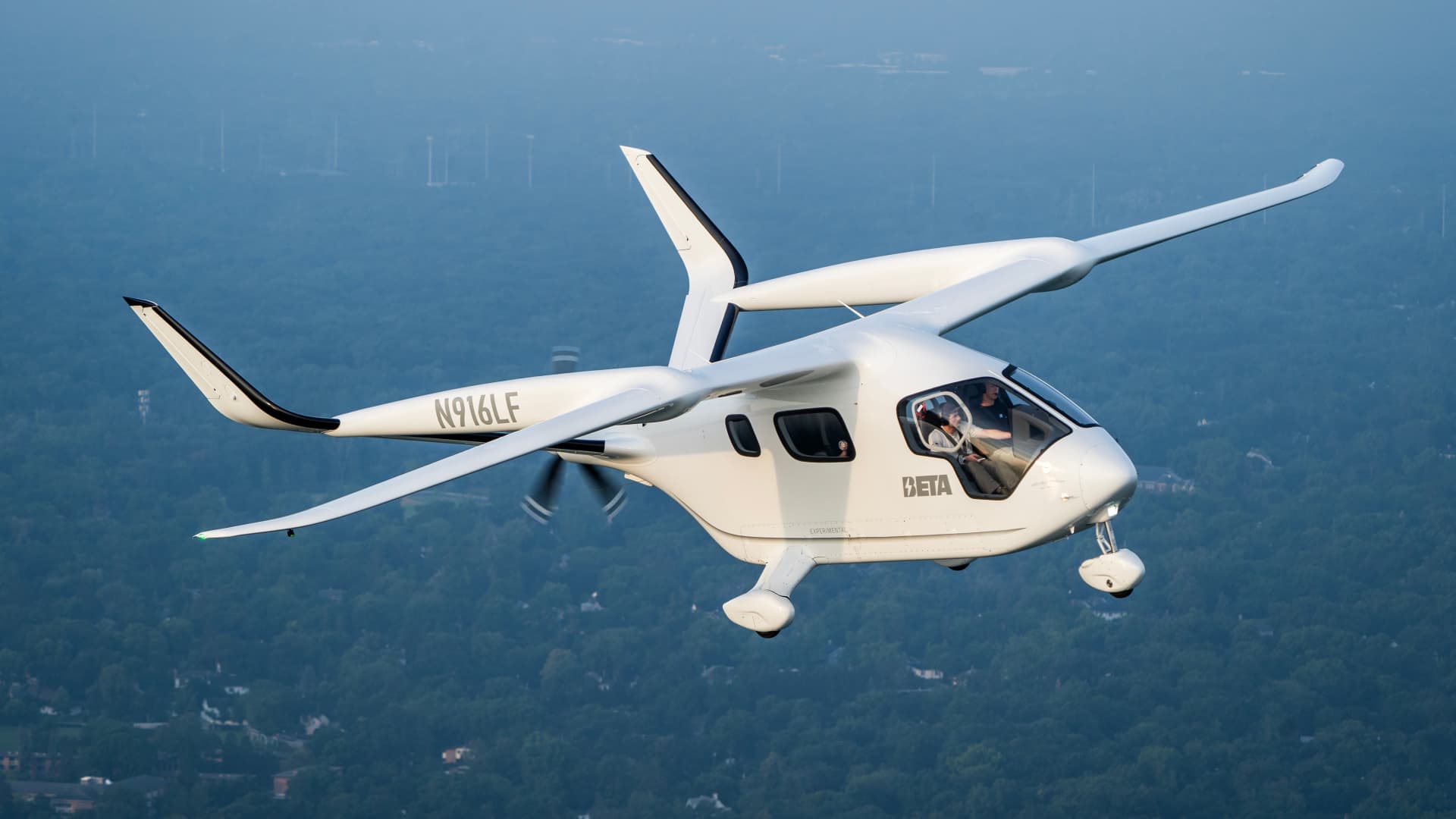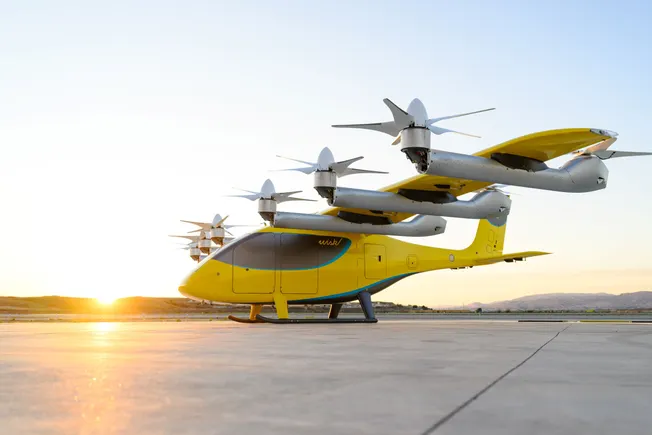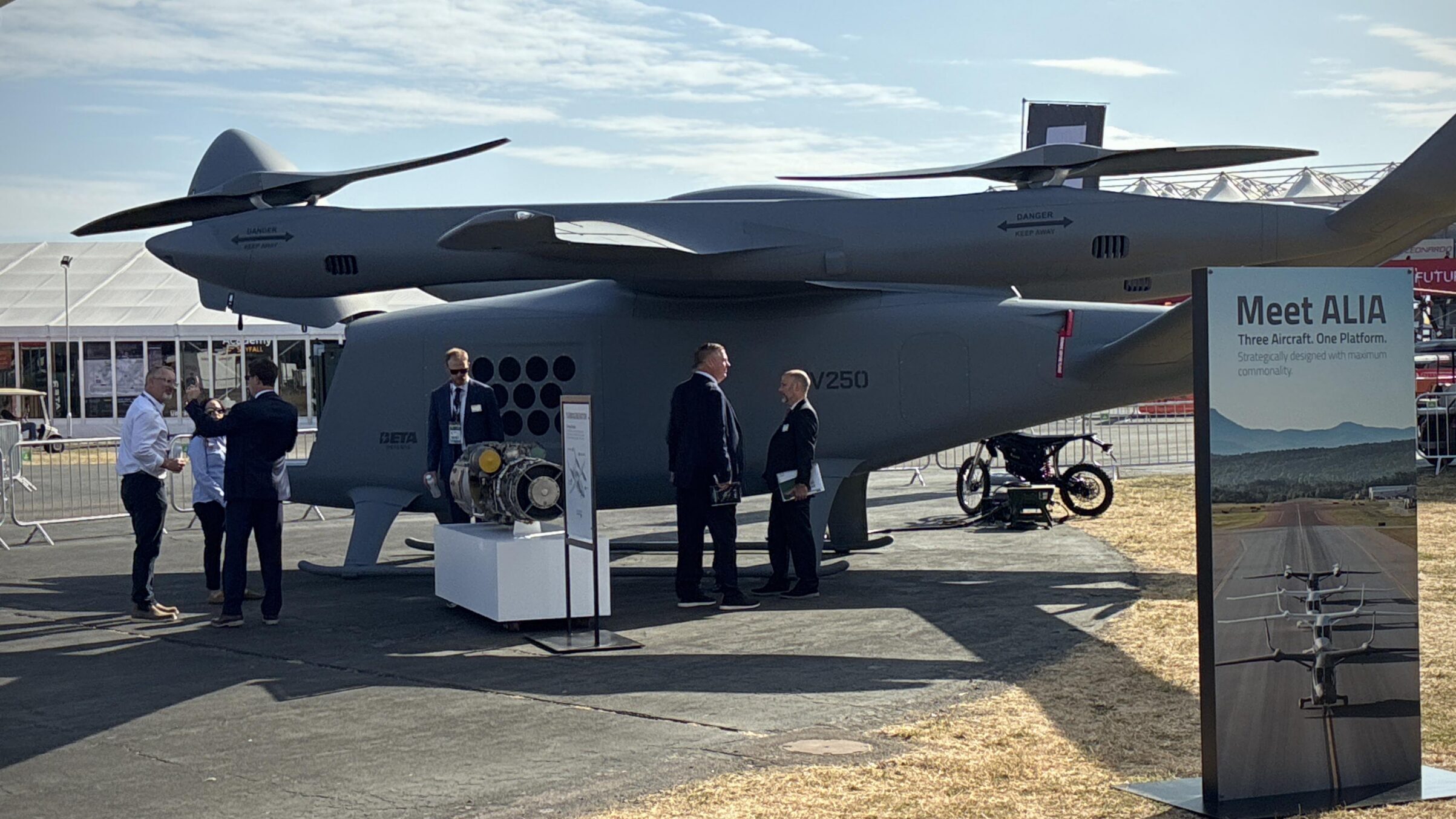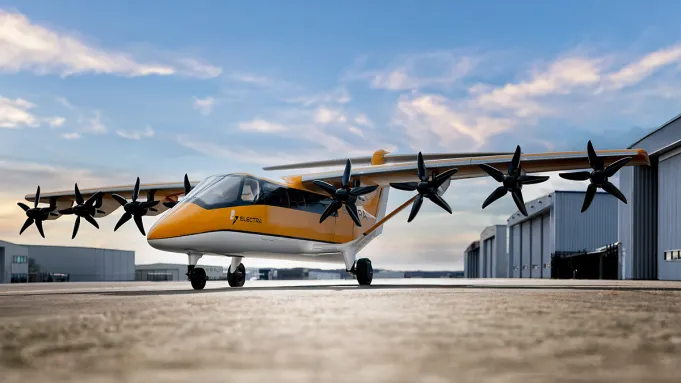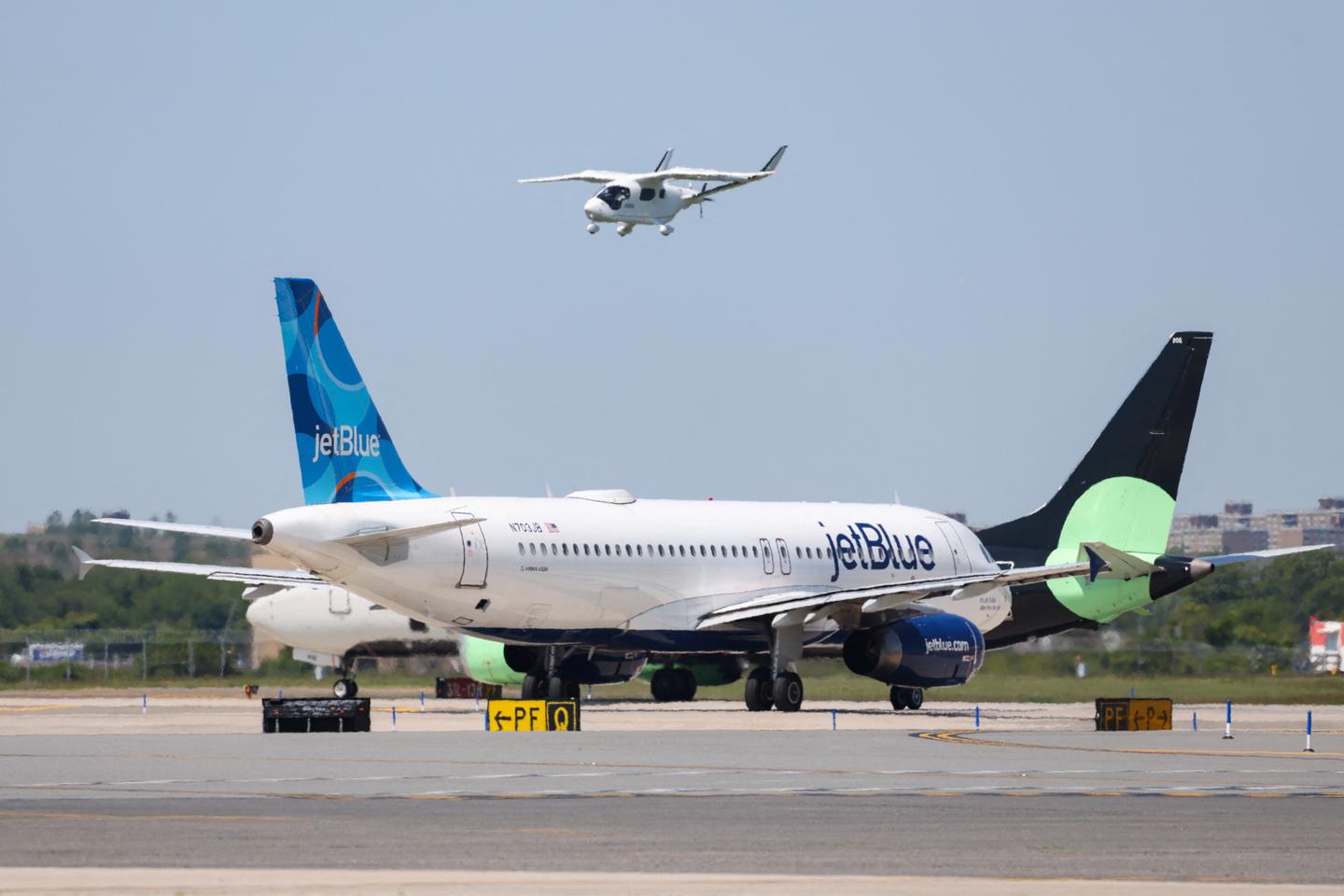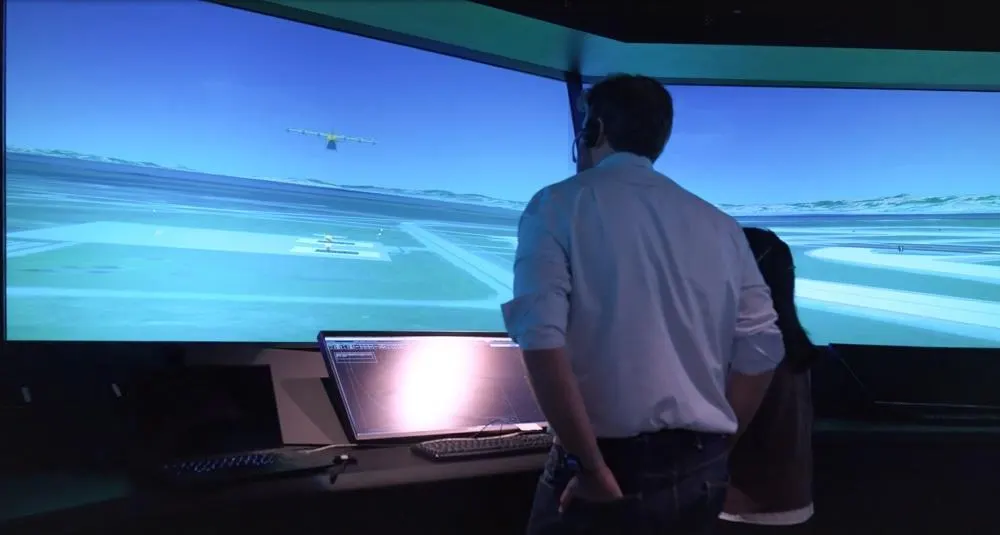
Scene in control room where simulated flights of Wisk Aero autonomous electric vertical takeoff and landing aircraft were conducted.Wisk AeroTwo successful tests, one actual, one simulated, of electric aircraft and a significant deal between the company building an ultra-short takeoff and landing hybrid-electric plane and an engine manufacturer marked new progress in the development what’s known as advanced air mobility. The tests involved an autonomous electric vertical takeoff and landing aircraft and a conventional electric aircraft by Wisk Aero and BETA Technologies Inc. respectively. Wisk and NASA simulation Autonomous aviation company Wisk Aero and NASA said Wednesday they successfully completed a simulation test where a ground-based human, known as a multi-vehicle supervisor, or MVS, effectively managed three autonomous aircraft electric vertical takeoff and landing aircraft, or eVTOLs, in concert with air traffic control. Wisk and NASA have a five-year Non-Reversible Space Act Agreement focused on advancing autonomous aircraft under instrument flight rules in the national airspace system. The tests were conducted by connecting Wisk’s Autonomy Lab in Mountain View, California with NASA’s Air Traffic Control Future Flight Central simulation labs at Ames Research Center, using flight paths in the San Francisco Bay Area. MORE FOR YOUThe idea is to eliminate the need for air traffic control to differentiate between a crewed and uncrewed aircraft by making the autonomous aircraft the “most predictable blip” on the controller’s scope, said Erick Corona, head of system and operations integration, Wisk Aero. “The only way we are able to do that is if we're able to bring people with a central nervous system into a room and have them play what I think was the coolest video game that we could have ever come up with,” said Corona, in an interview. Those people with central nervous systems are the MVSs operating in a ratio of one MVS to three aircraft. They’re not backup or safety pilots who can step in an fly the plane if necessary, but rather a means of boosting safety, efficiency and economy while lightening the load for air traffic controllers through coordination and communication. “Multi-vehicle supervisors will be providing inputs into where the aircraft needs to go from a navigation standpoint,” Corona explained. “So, if for whatever reason we're vectored, the multi-vehicle supervisor will intervene and go left or right, etc. Yes, the multi-vehicle supervisor will, in some cases, have to override a decision for whatever reason but their interventions are part of the design, not from a safety pilot standpoint, stopgap standpoint, but from a cognitive workload standpoint.” Wisk Aero Generation 6 eVTOL makes its first flight at the company's test facility in Hollister, California.Wisk AeroThe ultimate goal for Wisk is to provide short-hop air taxi service in urban areas, perhaps connecting passengers between airports and city centers. When will it be possible to book a seat on a Wisk air taxi? “My money is that you and I can wrangle and fight for a ticket to get on one of these aircraft before the end of the decade,” predicted Corona. BETA test flight aims to speed organ transplant deliveriesAerospace and defense company BETA Technologies Inc., on July 10, said it completed a successful test flight of an electric conventional takeoff and landing aircraft as part of its partnership with United Therapeutics Corp. to evaluate the ability to quickly deliver manufactured organs when they become available. BETA Technologies aircraft during a test flight conducted under the U.S. Department of Transportation and the Federal Aviation Administration's eVTOL Integration Pilot Program, in conjunction with biotech company United Therapeutics to demonstrate the aircraft's ability to transform mission-critical logistics.Brian JenkinsThe goal is to also include electric vertical takeoff and landing aircraft in making such life-saving deliveries quicker and less expensive, the companies said in a release. The flights covered approximately 275 nautical miles, flying between Virginia Tech/Montgomery Executive Airport in Blacksburg, Virginia, Charlottesville-Albemarle Airport in Charlottesville, Virginia, Frederick Municipal Airport in Frederick, Maryland and Martin State Airport in Baltimore County, Maryland. The tests were conducted under the U.S. Department of Transportation and the Federal Aviation Administration’s eVTOL Integration Pilot Program, the federal government's new initiative to evaluate how advanced air mobility aircraft can safely operate in everyday commercial use within the National Airspace System. “Today’s successful missions, set the stage for routine medical applications through electric flight at a much lower cost nationwide,” said Kyle Clark, founder and chief executive officer of BETA Technologies, in a statement. Electra ultra-short gets power boostThe Electra hybrid-electric EL9 ultra-short plane can take off or land in just 150 feet. To power the plane, Electra said Wednesday, it signed a life-of-program production agreement with Safran Helicopter Engine for its TG600 turbogenerator. A turbogenerator consists of a gas turbine combined with one or more electric generators, along with an “innovative” system of electrical power and voltage regulation, the companies said. Electra EL9 Ultra Short aircraft will be part of the federal eIPP program. ElectraThe TG600 turbogenerator, which will supply 600 kW of electricity, will be developed based on the Safran Helicopter Engines Arrano, a new generation engine that the company says offers 18% reduction in fuel consumption over other in-service engines. The TG600 will also be equipped with two GENeUS electric generators supplied by Safran Electrical & Powe. “This agreement is a defining step forward for Electra and for the future of advanced air mobility,” said Marc Allen, CEO of Electra, in a statement. Electra said it expects the EL9 ultra-short to go into service in 2030.
Wisk, NASA, Electra, BETA Make Major Advanced Air Mobility Moves
Two successful tests and a powertrain deal involving aviation companies Wisk, BETA and Electra marked major progress for advanced air mobility.
909 words~4 min read