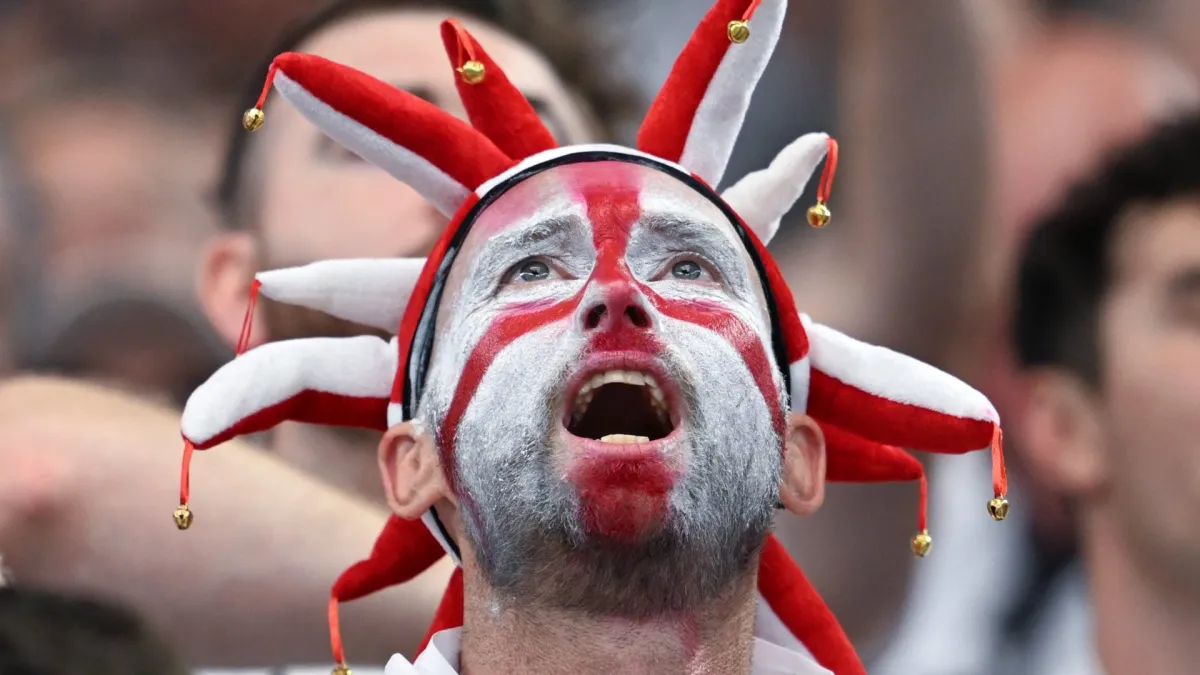
Last Saturday night, on July 11, trains into Leeds, England, where I live, were canceled because of an electrical issue. The only way for me to get back home—or, in the case of most of my fellow passengers, to get to the big pub screens showing the England-Norway World Cup match—was to take the local double-decker bus. I was in the company of about two dozen teenage boys, many shirtless in the heat, drink cans locked in their fists, in a state of high excitement, and in possession of a battered boom box.
First, the muted strains of "Three Lions," the English football anthem exploring the great disappointment of being an English football fan in recent decades, began to mix with the muttering and chatter of the bus. Then as the music swelled towards the chorus, a wall of eager voices rose above the rest of the noise: "Football's coming home, it's coming home!" The sound was raucous, atonal, yet weirdly joyful, and as the bus swung round the curves past blackened stone cottages and fields freshly hayed, a middle-aged man in the front of the bus turned around, and, hanging onto the back of his seat, started to sing along.
An older couple put up their hands and began to sway. "No more years of hurt, no more need for dreaming!" A man with a cane coming up the stairs raised it triumphantly. He staggered into the aisle and held onto the seatbacks, belting out the lyrics as the bus pulled back into the road. The setting sun was pouring red through the clouds as a pair of children scampered into seats at the back and then jumped when the whole bus roared, "Three lions on a shirt!"