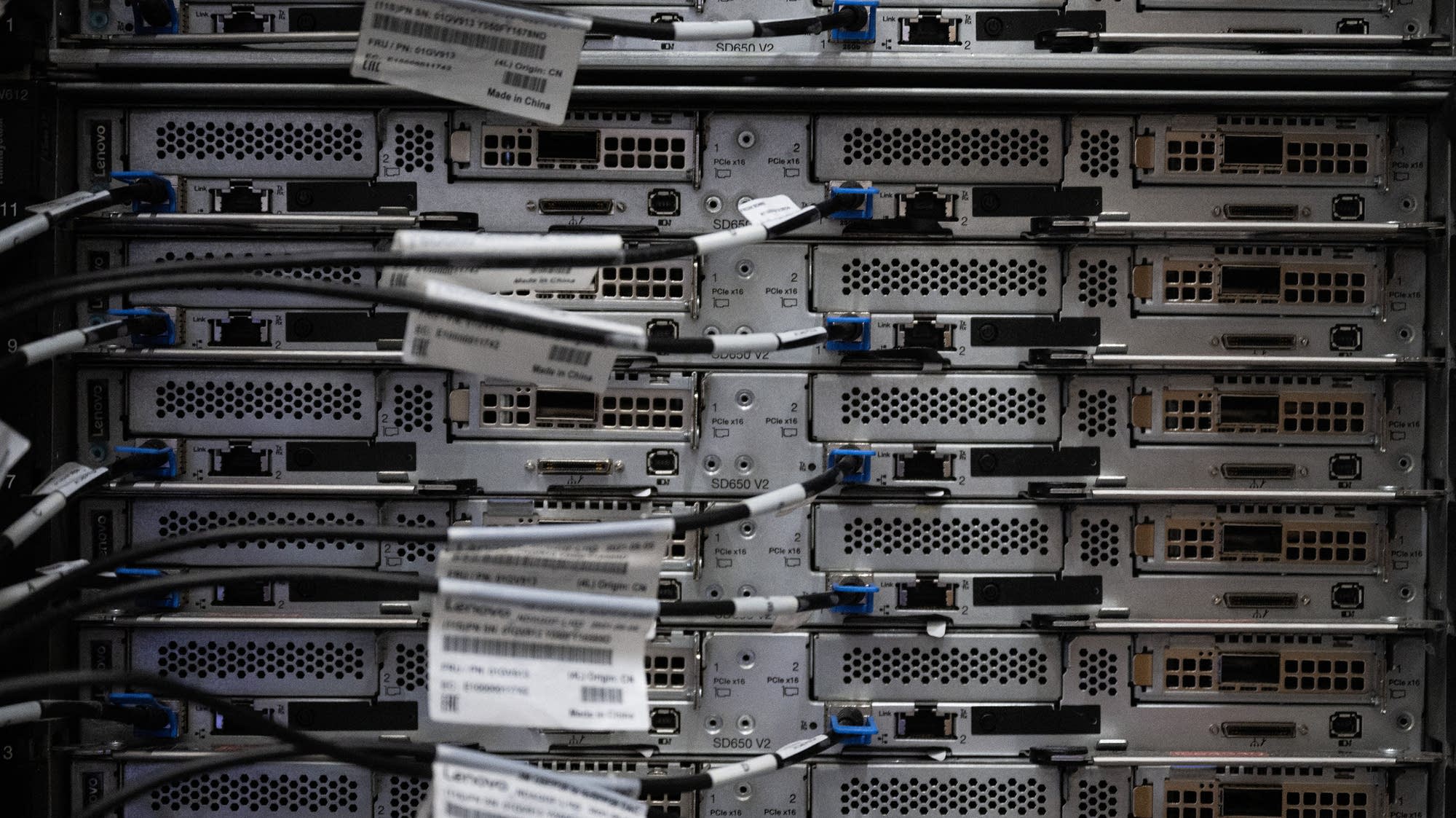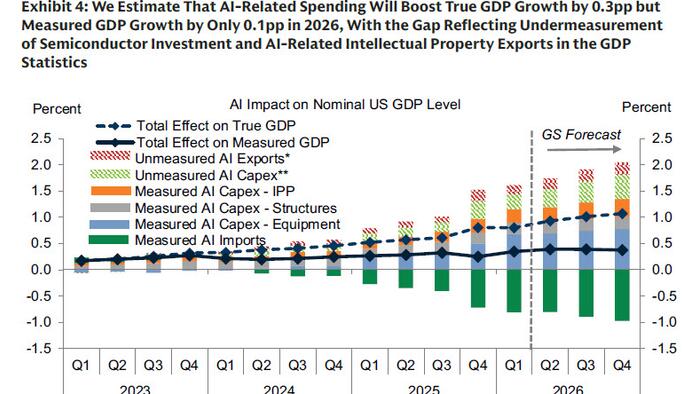
Later this month, the Bureau of Economic Analysis will report how much the economy grew in the second quarter. If it’s anything like the first quarter, the data will show us that the economy is being increasingly fueled by investment in artificial intelligence: all of the spending that goes into building data centers, along with all of the other technology that powers AI.It has been a while since there has been this much spending from the tech sector.“We haven’t really seen it since the 1990s, when we saw the growth of the internet,” said Charlie Dougherty, senior economist with Wells Fargo. Business investment, in general, makes up about a fifth of overall GDP. So, Dougherty said, it’s encouraging that AI investment is so strong, considering what’s going on with the rest of the economy.“What we’ve seen is a housing market that’s really been struggling,” Dougherty said. “We still have relatively high interest rates. Consumer spending looks like it’s moderating.”But there are limits to how much AI-related spending can support the broader economy. For instance, data centers rely heavily on imported electronics, said Josh Lehner, senior U.S. economist at SGH Macro Advisors.“So, if we’re trying to talk about trying to re-shore U.S. manufacturing activity, this spending is not really translating into a lot of domestic jobs on the manufacturing side,” Lehner said.Lehner said AI investment is creating jobs in construction. But that’s just a short-term boost, according to Bernard Yaros, lead U.S. economist at Oxford Economics.“Once you stand up a data center, it doesn’t really take many people to man it or to maintain it,” Yaros said.This wave of investment also might not last.“At some point it will peak,” said Kathy Bostjancic, chief economist at Nationwide. “[That] could even be in 2027 or so, or 2028. Doesn’t mean it’s going to drop sharply, but could peak and start to taper off a little bit.”Bostjancic said that wouldn’t necessarily be a bad thing for the overall economy. That’s because the investment in AI infrastructure isn’t where the real payoff is.“The big payoff is once it gets disseminated through businesses, they utilize that, and reorganize themselves around this new technology,” Bostjancic said.Bostjancic said there have been plenty of waves of investment that have caused the economy to expand, including railroads, electrification, and the IT boom in the ’90s. So if companies start using AI to expand production, the economy could benefit.“That would propel productivity gains, and that would feed into overall economic growth,” Bostjancic said.But getting there could take years. Anne Villamil, an economics professor at the University of Iowa, said in the meantime, companies and investors might not be satisfied with the returns on those investments. Markets could sell off, causing household wealth to fall.“That would lead to consumer spending softening, through a wealth effect, and it would make it much more difficult to finance other types of investment in the economy,” Villamil said.And that would cause the broader economy to slow down.
How AI investment is fueling the broader economy
All of the spending on the AI infrastructure buildout is contributing to economic growth. But that kind of investment won’t necessarily support the broader economy over the long-run.
491 words~2 min read