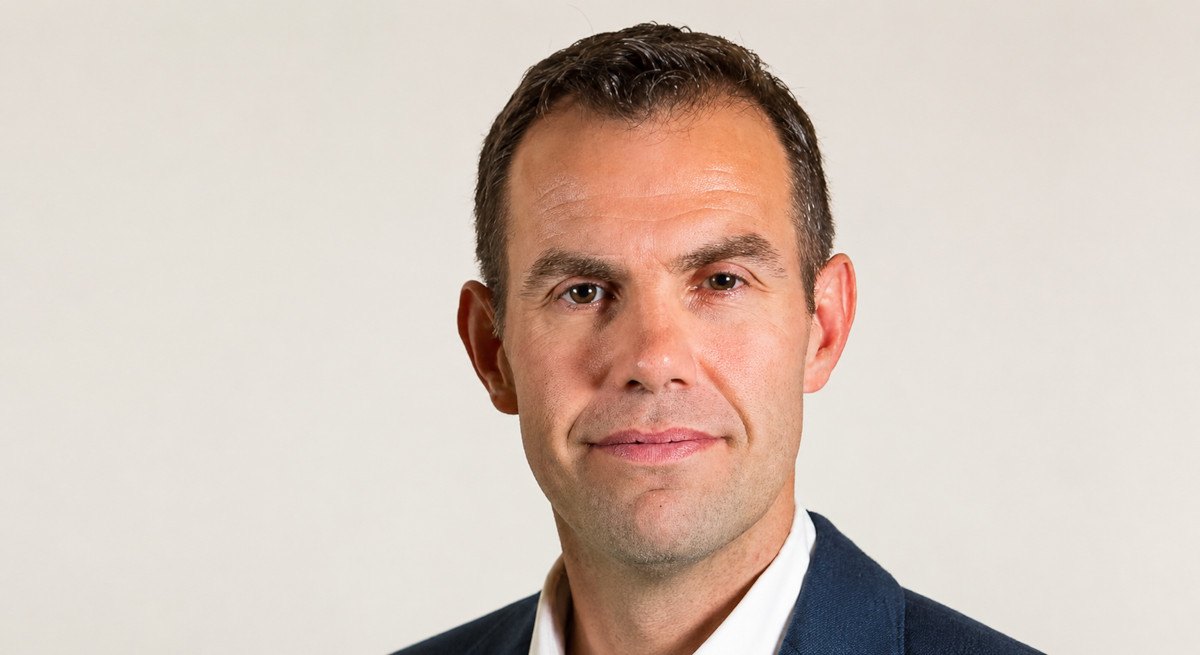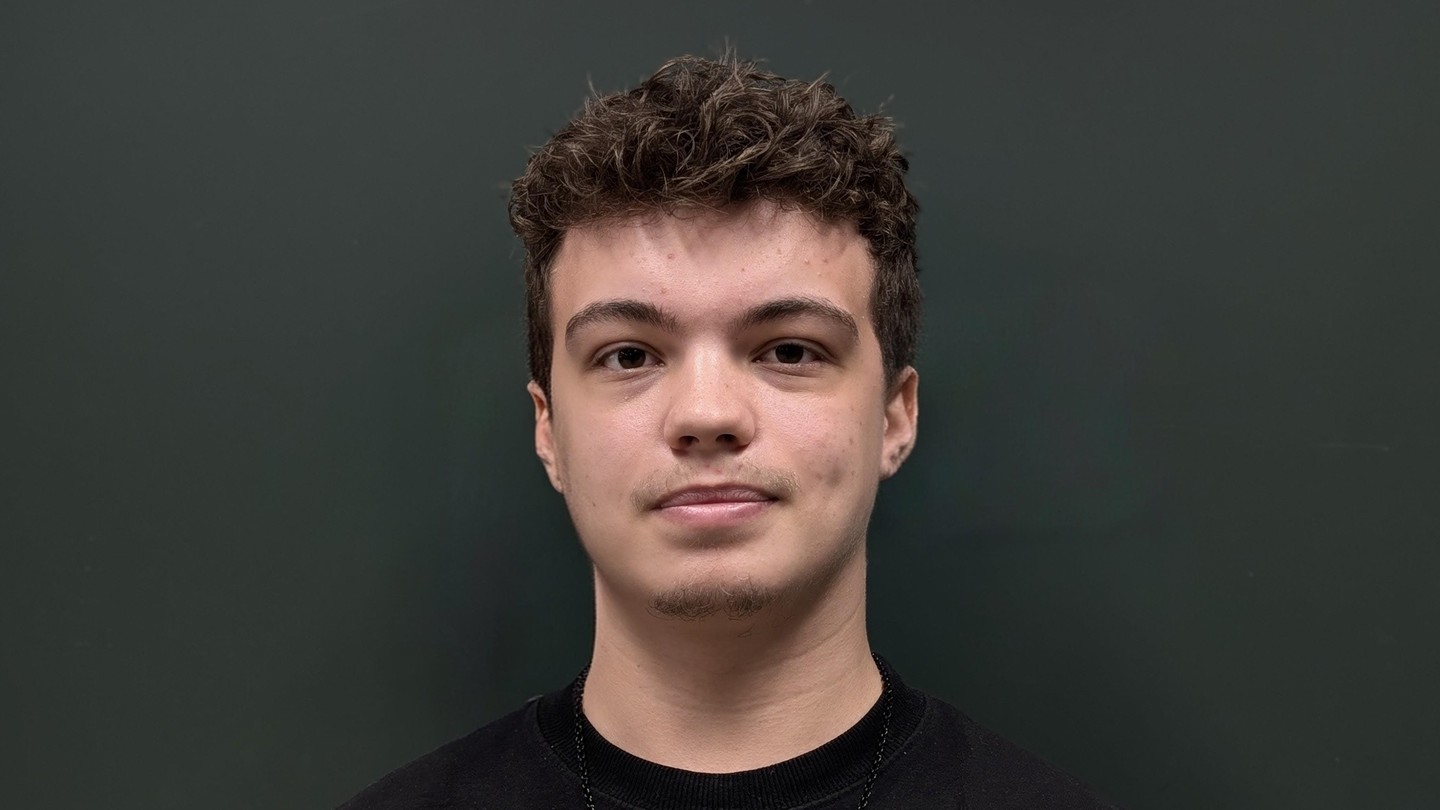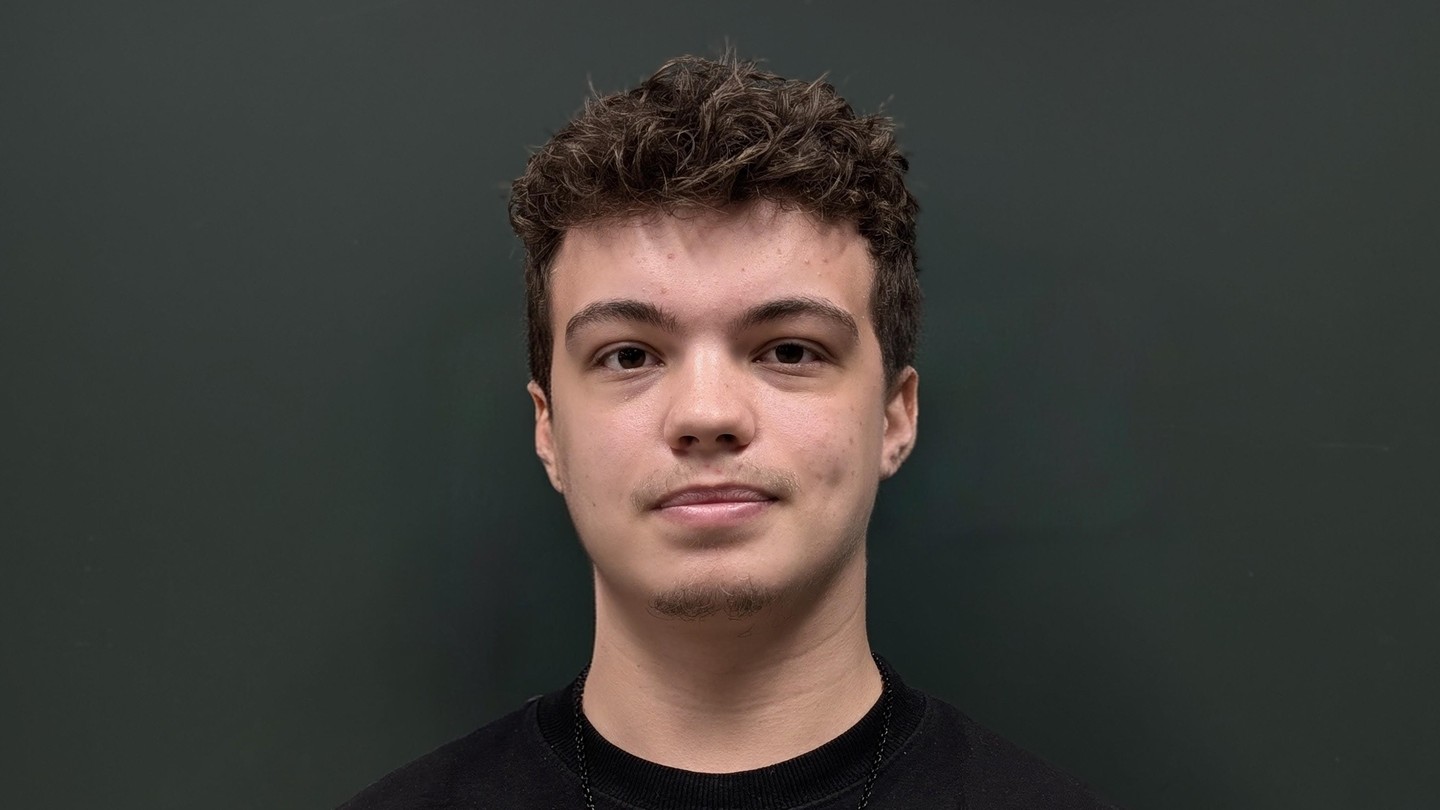
A demanding four-year apprenticeship at one of Europe’s leading research institutions has become a story of technical skill, growing confidence and well-earned recognition.Julien Birbaum did not begin his career at EPFL with a fixed idea of working in geotechnical engineering. He was looking for something more practical than the academic path he had first chosen, but still close to the kind of work that had always interested him.“The things I liked at school were maths, physics and science,” he says. “So when I learnt that EPFL was looking for apprentices, I thought: physics lab, perfect for me.”Before arriving at the Laboratory of Soil Mechanics (LMS), Julien knew EPFL mainly through friends who were beginning their Bachelor’s studies, but LMS itself was new to him. What convinced him, during his first visit, was the scale of the laboratory and the practical nature of the work: the possibility of learning science through his hands as well as his head.His first days placed him among large testing machines, specialised tools and equipment he had never used before. “It was quite impressive at first,” he recalls. “It was really big, with a lot of expensive equipment, so I was a little bit stressed.”Over the next four years, Julien learnt to work in a demanding research environment where precision, responsibility and problem-solving are essential. At LMS, apprentices contribute alongside technicians, researchers and PhD students to experiments in soil and rock mechanics, using specialised equipment to understand how materials behave under different conditions.The classroom part of the apprenticeship came relatively naturally to him; the laboratory asked for a different kind of discipline. “The difficult part was in the lab,” he says. “You have to be really precise.”That precision became central to his final practical work, or Travail Pratique, for which he worked on the dynamic press used for triaxial testing. The task required him to understand the equipment, prepare an operating procedure and demonstrate how it is used as part of his final assessment. “That is probably the work I am most proud of,” he says. “It was quite challenging, and I think I did it well.”Julien with dynamic press test equipment © Brendan Smith / EPFL 2026Patrick Dubey, Technical Manager at LMS and Julien’s supervisor, says Julien was strong from the beginning, but became much more independent over the course of the apprenticeship. By the later stages of his training, researchers and PhD students were no longer turning only to Patrick for assistance; they were also going directly to Julien.Patrick describes Julien as methodical, precise and increasingly confident in the laboratory, and highlights his ability with electronics and practical technical work, including soldering and working with components, as one of the areas in which he developed particularly well.For Julien, Patrick’s role was central. “Everything I know how to do in the lab, I owe to Patrick,” he says. “He helped me understand the work better.” Just as important, Julien says, was learning how to apply his knowledge in practical situations: “In the lab, there are a lot of problems to solve. You have to find a good response quickly. Problem-solving is one of the most useful skills I learnt.”Julien with LMS' Technical Manager Patrick Dubey and Doctoral Assistant Alessandro Parziale (left to right) with the high-resolution porosimetry system.© Celine Michel / 2026 EPFLThe variety of research at LMS was also part of the appeal. Unlike a standard laboratory environment, where the same procedures may be repeated every day, Julien says no two weeks at LMS are the same; the projects, equipment and materials change constantly, depending on the research question.Among the projects that stayed with him most were those linked to CO₂ storage, which gave him the opportunity to contribute to research with clear environmental and engineering relevance.Julien’s progress was recognized with three awards: Best Overall Result in Professional Knowledge, Best Overall Result in Professional Maturity, and the Apprentice Recognition Award for Outstanding Positive Attitude.“They are the accomplishment of four years of work,” he says. “I worked for those prizes. I was hoping to get the best grades, and I got them, so I’m really proud.”The recognition was also a measure of his personal development. Julien arrived at LMS as someone who found it difficult to express himself with others and was initially intimidated by the laboratory environment. By the end of the apprenticeship, he had become more confident, more autonomous and more comfortable working with the wider LMS team.“I have nothing in common with the person I was four years ago,” he says. “I am a different person now. I am more responsible, more reliable — better in every aspect.”Julien will now complete four months of compulsory military service, which he delayed until the end of his apprenticeship, before deciding on his longer-term path. He is considering continuing his studies, possibly in civil engineering, a field he discovered through his work at LMS.Asked what advice he would give to someone starting an apprenticeship, Julien says that four years can seem long at the beginning, but that the experience is worth it. Looking back, what he values most is not only the technical knowledge he gained, but the confidence, responsibility and independence he developed along the way.
“I am a different person now”
A demanding four-year apprenticeship at one of Europe’s leading research institutions has become a story of technical skill, growing confidence and well-earned recognition.
862 words~4 min read