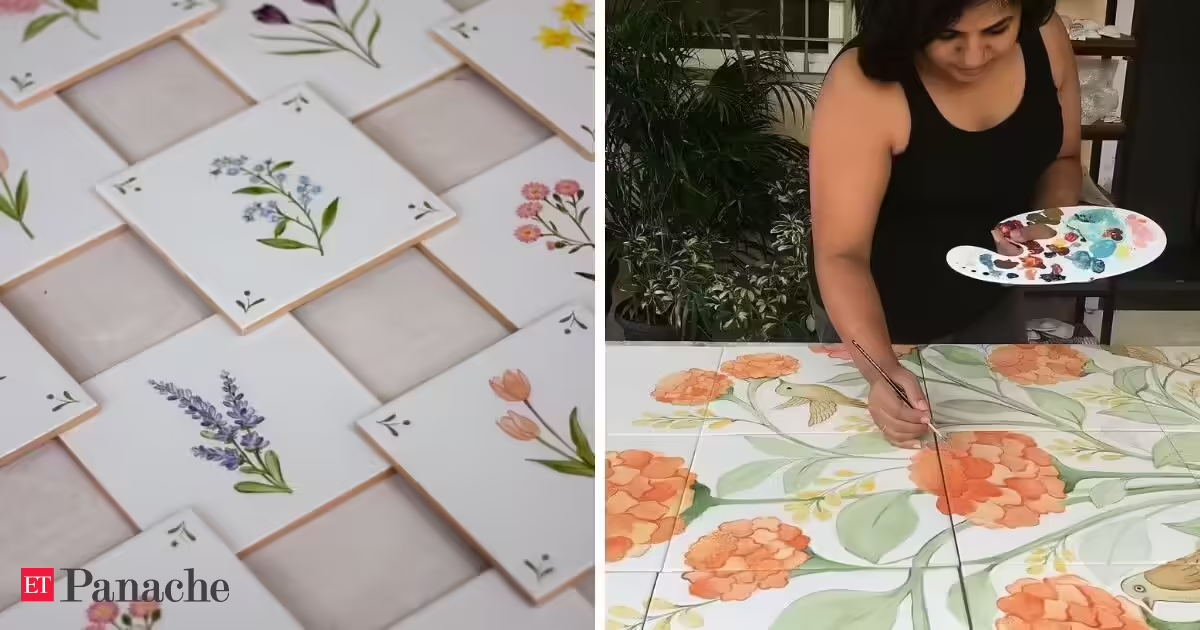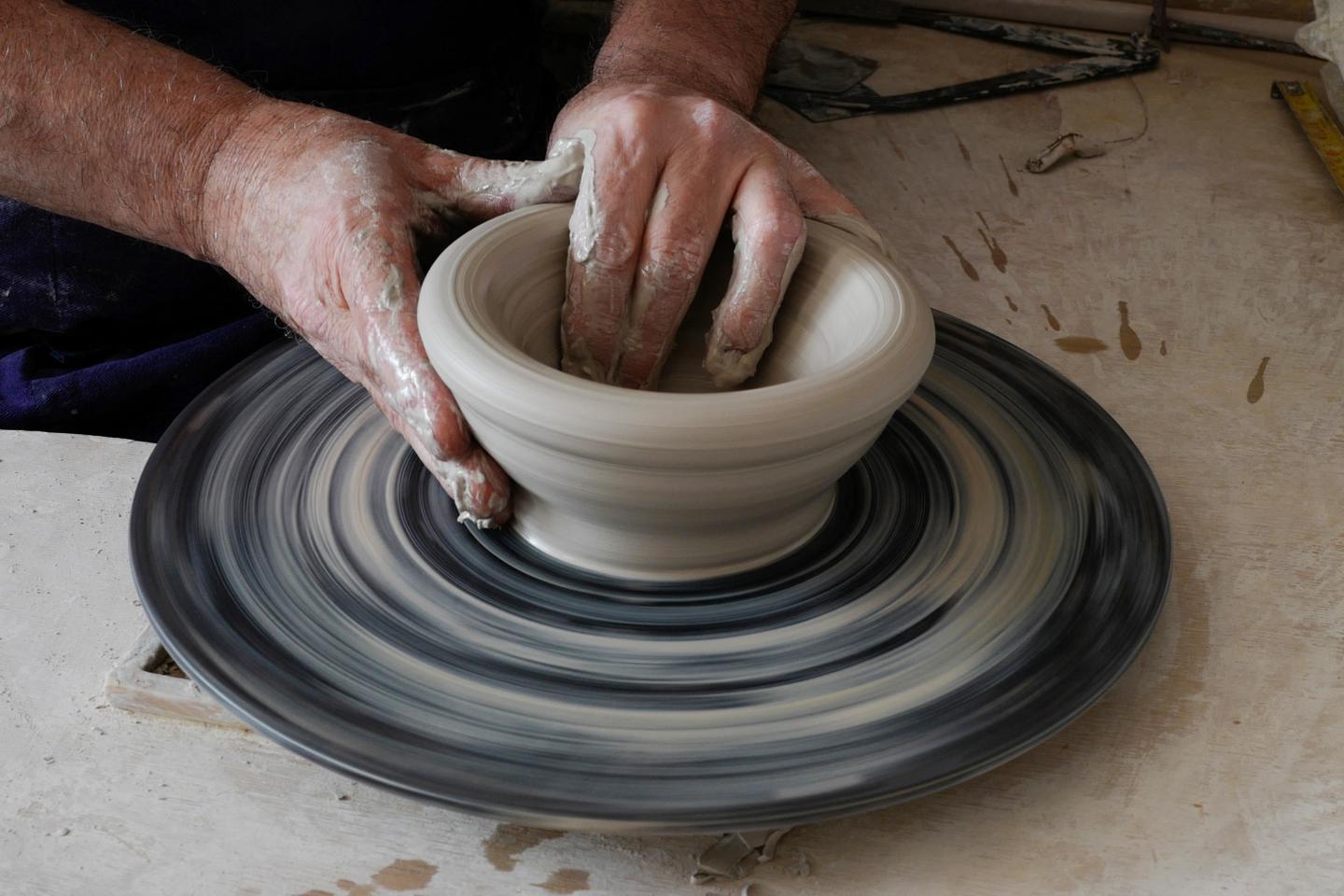
A ceramicist in their workshop in Vallauris, France, in July 2019. VALERY HACHE/AFP
Alexandre Tatay, 32, wanted a stable job. A permanent contract, a predictable paycheck and paid leave. After earning a master's degree in European studies and marketing, he became a press officer at the University of Strasbourg. In his office, the "anxiety-inducing" news scrolled by between press releases he had to write. "It was repetitive," he sighed. At the end of 2022, a two-hour ceramics class, a gift from his older brother, disrupted his routine: "I loved getting my hands in the clay, transforming the material, seeing how it reacts at your fingertips." He signed up for a 15-hour monthly subscription at another workshop in Strasbourg. Little by little, creating began to take over his office job. "I thought only about my new sculpture ideas, blending organic and geometric shapes," said Tatay, enthusiastically.
In October 2025, after his contract ended, Alexandre enrolled at the Ecole de céramique de Provence in Aubagne, near Marseille. "It has a great reputation, and my brother lives nearby." He started an eight-month continuing education course, totaling 455 hours, to prepare for a vocational diploma in wheel throwing. From 8 am to 5 pm, he alternated between taking notes on art history and working at the wheel, centering the clay and shaping it without letting it collapse. "Of the 26 students, half are undergoing career changes. Doctors, bankers, managers, aged 25 to 60, who left everything behind," explained Renaud Andréani, head of the ceramics department. A ceramic artisan trained at the same school in 1998, the 40-something began by making mostly utilitarian pottery, surrounded by serial throwers: "That was another era. In recent years, pottery has shifted more toward artistic objects."