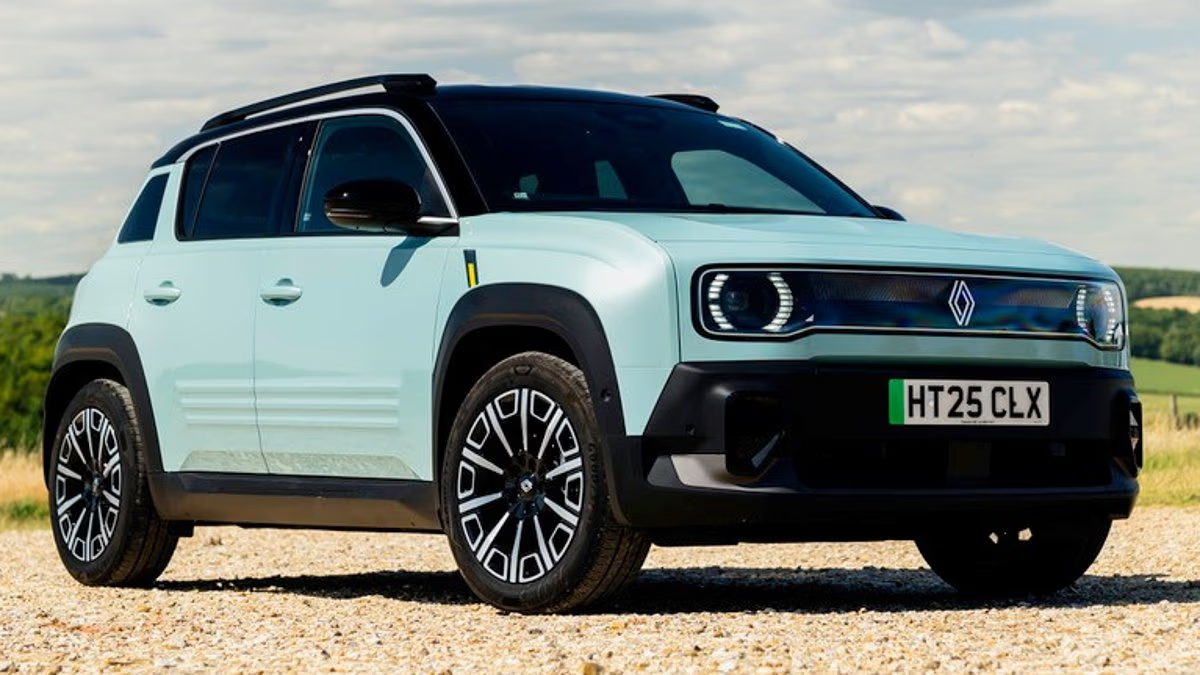
The Government's Electric Car Grant (ECG) is celebrating its first anniversary, but whether it's delivering the boost to EV adoption the Government hoped for is up for debate.Almost two-thirds of car buyers still don't know the scheme exists, new research from Carwow shows, with drivers only five per cent more interested in buying an EV post-grant.However, data from Autotrader shows the average price gap between a new electric vehicle and a new petrol car has narrowed from £1,935 to just £40 in the year since the ECG was introduced, with the grant 'clearly playing a part'.The grant - which offers buyers between £1,500 and £3,750 off a new, sustainable EV costing less than £37,000 - was introduced in July 2025. The £2billion scheme is set to run until March 2030.Since launch, Government statistics show it has helped more than 140,000 drivers save up to £3,750 on an EV, while EV registrations continue to rise. The latest Society of Motor Manufacturers and Traders (SMMT) data shows a 34 per cent increase year-on-year.So, how well has Labour's electric car incentive worked thus far? Are soaring EV sales thanks to the grant or simply rising fuel prices? We take a look at the arguments for and against the ECG. Labour's ECG, worth £2bn, celebrates its first birthday today. But has it persuaded drivers to buy EVs? And has it reduced EV prices? We take a look at the pros and consAgainst: Drivers aren't aware of the Electric Car Grant and the discounts aren't enough Of the 2,400 Carwow users surveyed, interest in buying an EV stood at 33 per cent in the first half of 2025 (pre-grant) and only rose to 38 per cent in the first half of 2026 (post-grant).This puts current levels of EV consideration at the same point as they were in 2019 (38 per cent), and still below the 45 per cent peak recorded in 2022.The lack of movement is likely partly down to a lack of awareness of incentives available. In August 2025, Carwow’s data found that just 36 per cent of shoppers had heard of the ECG, rising only one percentage point to 37 per cent by January 2026.Another problem is the upfront cost barrier, with the ECG doing little to improve the affordability of new EVs.The ECG has two tiers. Band 1 cars - including the Ford Puma Gen-E, Kia EV4 and Nissan Leaf - are the most environmentally friendly and are eligible for the full £3,750 grant. Band 2 cars receive a smaller grant of £1,500. Seven in 10 would be more likely to choose an EV if every eligible model received the full £3,750 discount With the vast majority of eligible new EVs receiving only the Band 2 reduction - just 12 of 60 models qualify for the full £3,750 Band 1 grant - many drivers considering the switch to an electric vehicle receive less than half of the maximum advertised saving.Among those who were aware of the scheme, just 18 per cent of shoppers said the grant had genuinely reduced the cost barrier to buying an EV.Seven in 10 said they would be more likely to choose an EV if every eligible model received the full £3,750 discount.Siobhan Doyle, consumer editor at Carwow, says: 'One of the biggest issues here is that the headline figure of "up to £3,750" does not apply to most eligible vehicles.'While 60 electric cars are currently eligible for the Government's grant, only 12 qualify for the higher Band 1 discount of £3,750.'Another issue is that the grant is largely invisible to consumers.Doyle explains: 'The discount is applied automatically by the dealer, meaning buyers don't actively apply for it or receive any confirmation that they've benefited.'Combined with limited public promotion, the gradual rollout of eligible models and the fact that most qualifying cars receive the lower payment, the scheme has struggled to cut through.' The Renault 5 E-Tech was the most in-demand EV on Autotrader in March and April. It's discounted by either £1,500 or £3,750, depending on the version For: The ECG has helped EVs reach price parity with petrol cars - buyers are backing the discounts As well as Autotrader data showing the average price gap between a new electric vehicle and a new petrol car has narrowed from £1,935 to just £40, it also highlights a period when EVs were cheaper than petrol cars.For two months (March and April 2026), new EVs were actually less expensive than the average new petrol car for the first time (£455 cheaper in April), based on average pricing across all new models, including discounts and grants.Eight of the 10 most-viewed new EVs on Autotrader in June, and year to date, either qualify for the ECG directly or come with a manufacturer-funded equivalent worth between £1,500 and £3,750.The Renault 5 E-Tech was the most in-demand EV in both periods. The 52kWh battery model qualifies for a £3,750 discount, while the 40kWh battery version qualifies for a £1,500 ECG grant.In the three months immediately after the ECG launched, the Ford Puma Gen-E's price premium over its petrol equivalent fell from 13 per cent to just one per cent, while the Leapmotor C10 went from a seven per cent premium to being five per cent cheaper than its petrol counterpart.The Puma Gen-E and Leapmotor C10 were also the two biggest climbers on Autotrader's new EV leaderboard, jumping 67 and 101 places respectively as buyers responded to the larger discounts.Ian Plummer, commercial director at Autotrader, said: 'A year ago, switching to electric meant paying a premium of almost £2,000 over a petrol equivalent on average.'That gap has all but closed, and for a couple of months this spring it went the other way entirely. The Electric Car Grant has clearly played its part, and it's removing one of the last big psychological barriers that's kept drivers on the fence about making the switch.'The positive impact of these incentives is all the more reason why the Government needs to be cautious over the introduction of pay-per-mile charging following its consultation response this week. 'There's a real risk this additional fee could dampen electric demand, as consumer behaviour on Autotrader repeatedly shows that the transition to electric is incredibly cost-sensitive.'EV sales are soaring as sky-high fuel prices push drivers towards electric cars New vehicle licensing statistics released by the Department for Transport and analysed by the AA show there is a continued march towards electric cars as this year's fuel-price rollercoaster takes its toll.Comparing Q1 2026 with Q1 2025, there was a 5.1 per cent increase in overall vehicle registrations, with 769,000 vehicles being registered for the first time.Of these, 150,000 were zero-emission vehicles - an increase of 12.9 per cent - with 146,000 on the road. Meanwhile, 138,000 were zero-emission cars, an increase of 14.5 per cent.At the end of March 2026, zero-emission vehicles accounted for 5.1 per cent of all licensed vehicles, an increase of 1.1 percentage points compared with March 2025.Comparing the end of March 2026 with March 2025, the number of licensed zero-emission cars increased by 32.9 per cent to 1,864,000. Petrol and diesel price volatility is having a strong influence on EV uptake It comes as petrol and diesel pump prices continue to encourage drivers to go electric. The AA, Carwow and Autotrader all say the Iran war and elevated fuel prices have significantly stimulated EV demand.So far this year, UK motorists have faced forecourt prices as high as 159.7p per litre for petrol in late May and 192.4p per litre for diesel in mid-April.Drivers have pivoted towards EVs as a result, with the AA recording a 28.1 per cent increase in electricity usage in the first quarter of this year.Jack Cousens, the AA's head of roads policy, comments: 'This year, car owners who can afford to switch to electric cars have said "enough is enough" and converted to power from the grid rather than petrol from the forecourt.'Aviation, Maritime and Decarbonisation Minister Keir Mather added: 'We've made it easier and cheaper than ever before to go electric, and with savings of up to £1,400 on running costs, there's never been a better time to make the switch, especially against the backdrop of global fuel price fluctuations.'This is Money has contacted the Department for Transport for further comment.
Has the Electric Car Grant sparked increase EV sales in 12 months?
The grants - which offer car buyers between £1,500 and £3,750 off new EVs under £37,000 - was launched a year ago today. But is the incentive scheme working?
1,377 words~6 min read