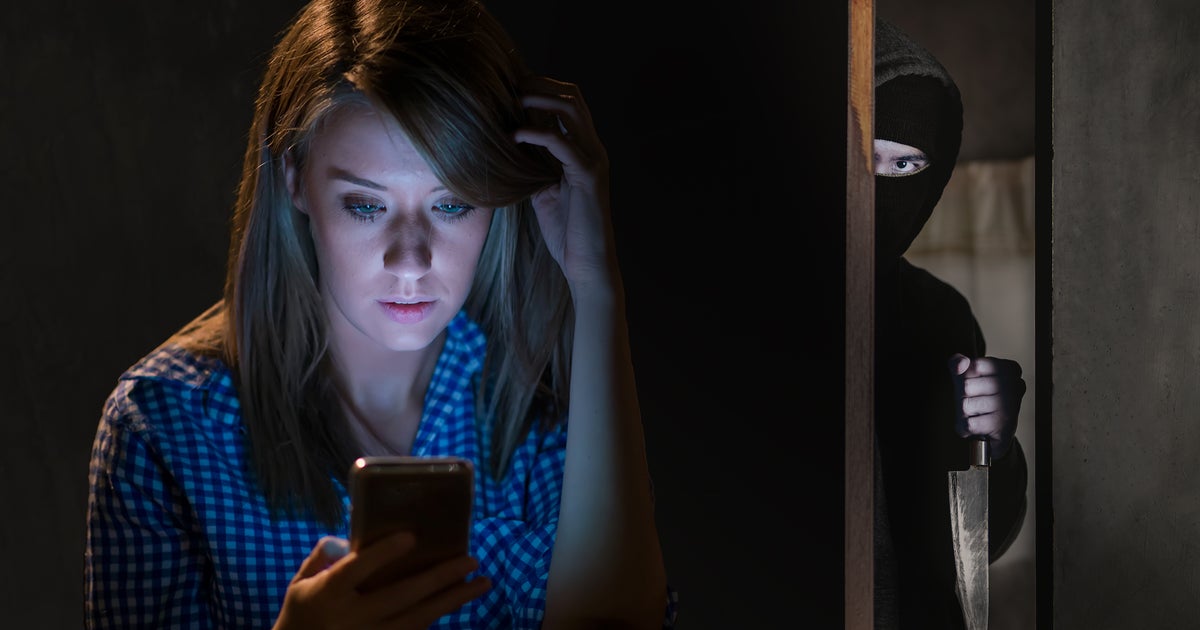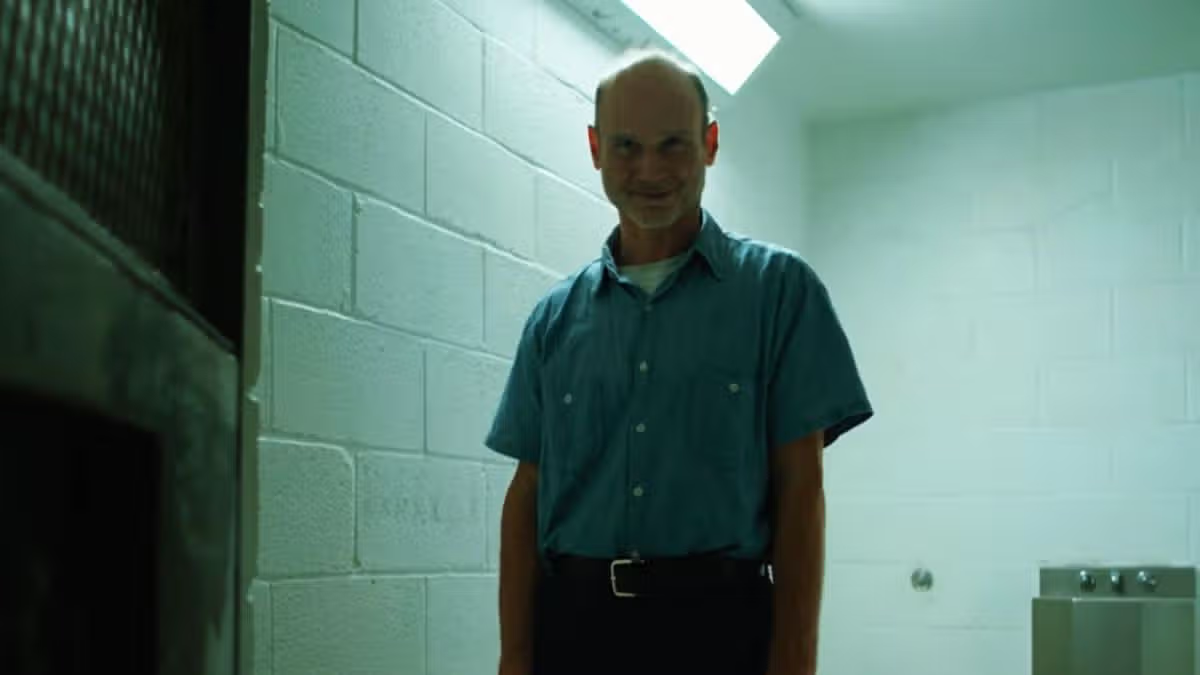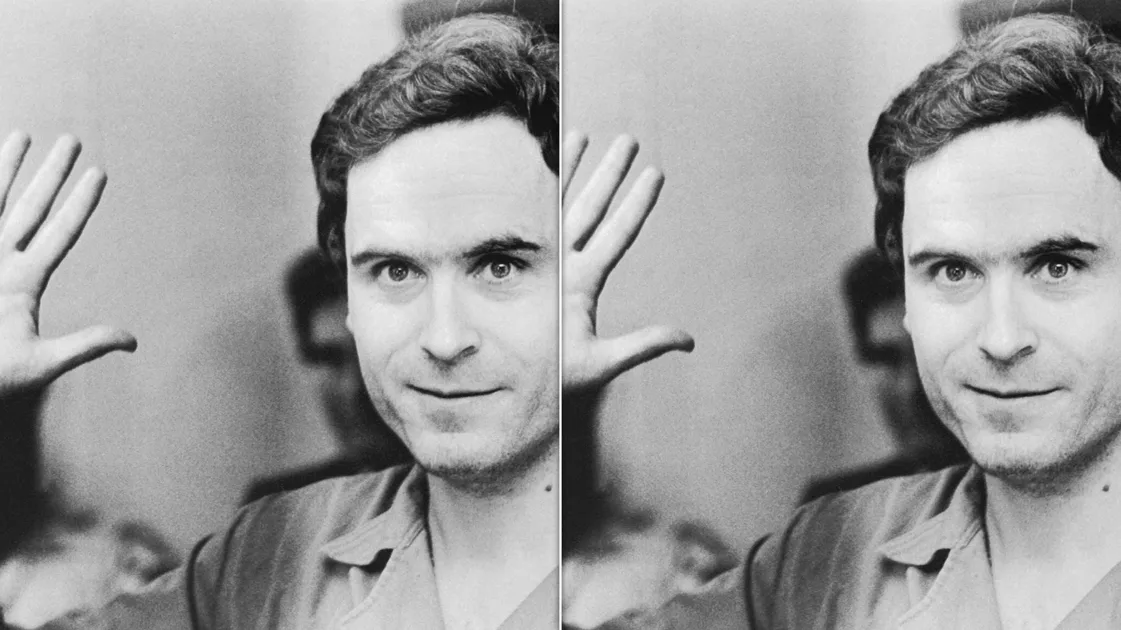
I might as well come out and admit that I’m among the women fascinated by true crime content. I’ve washed dishes while listening to Caroline Fraser’s “Murderland: Crime and Bloodlust in the Time of Serial Killers” (it’s a 16-hour audiobook, so that’s a lot of dishes) and spent more than a few lazy Sundays watching whatever new true crime docuseries Netflix has released.But if you’re a true crime fan like me, sooner or later you have to ask yourself some uncomfortable questions. How is this affecting my mental health? Is there a sort of complicity in watching this type of content ― real stories involving people being stalked, assaulted and murdered ― as a warped way to unwind at the end of a long work day?On the latter point, some forensic psychologists argue that for women, true crime is a way to inoculate themselves from being the victim of such crimes: By consuming stories about the patterns of abusive partners, the behavioral red flags to watch for in strangers, and learning to trust your instincts, women are better equipped to protect themselves from gender-based violence.As Sharon Packer, an assistant clinical Professor of psychiatry and behavioral sciences at the Icahn School of Medicine at Mt. Sinai, told Decider in 2016, consuming true crime is a bit “like a dress rehearsal” for women who know they could end up in these situations themselves. Illustration: HuffPost; Photos: GettyConstantly mentally rehearsing how you’d protect yourself in every worst-case scenario can easily slide into subtle paranoiaAre you ‘true crime-brained’?There’s absolutely something to be said for that argument: the idea that your “gut feeling” is actually a sophisticated alarm system, as security specialist Gavin de Becker argued in his 1997 bestseller, “The Gift of Fear.” But constantly mentally rehearsing how you’d protect yourself in every worst-case scenario can easily slide into subtle paranoia. If you’re not careful, you can become “true crime-brained.”Cait, a Massachusetts-based microblogger, recently highlighted an example of “true crime brain.” In a Reddit post, a guy said he’d gotten back to his hotel room and found a dollar coin in front of the door, which seemed suspicious. Others on the thread were convinced that the poster had been targeted for human trafficking. (Unfounded urban legends about secret “marking” methods ― such as loose change on the floor, flyers on front doors ― are all over the internet.) “The way that thing is placed feels way too deliberate to be a coincidence,” one person wrote to the original poster. “It definitely crosses the line from seeing a random pattern to someone putting this here for a reason, if I was the op I’d definitely set up some CCTV for peace of mind!”Cait’s point was that “true crime brain” has become a collective internet sport, with paranoid posters egging one another on and reading far too much into ordinary interactions.While it’s not a clinical term ― just a term bandied around on social media and in think pieces ― Amanda Vicary, an associate professor of psychology at Illinois Wesleyan University, thinks there could be something to that.“It’s totally possible, and probably even likely, that people are way more scared than they should be because of true crime communities,” she told HuffPost.“The odds of being kidnapped by a stranger or murdered by a serial killer are incredibly slim, but so many of us think it’s going to happen any time we step outside to get the mail or go to the grocery store,” she said.Vicary, who researches the psychology of true crime, experienced a bit of “true crime brain” herself a few months back, when her husband asked her to run out to the grocery store one evening.“I looked at him like he was crazy ― it was 9 p.m. and already dark. Didn’t he know I could get kidnapped? He watches ‘Dateline,’ too!” she said. “Later I thought about it and wondered ― would my mom have been scared to go to the grocery store at night 30 years ago?” she said. “Is this only because we’ve been flooded with true crime documentaries and podcasts over the last decade?” She said, “Still, if we’ve been listening to true crime podcasts for several hours a day and then we encounter a stranger at the grocery store, you can understand why our guard may be up, even though it probably shouldn’t be.”Some behavior changes are smart, Vicary said: Obviously, we shouldn’t open the door to people we don’t know or leave our doors unlocked when we go to sleep at night. (Or windows. In the 1980s, Richard Ramirez, the “Night Stalker,” famously targeted Angelenos who left their ground-floor windows open during sweltering summer nights.) Bettmann via Getty ImagesTed Bundy's image on a television screen on the lawn of the Florida State Prison.But “stranger danger” is overstated for women who listen to true crime. Women are overwhelmingly harmed by people they know ― intimate partners, family members, acquaintances ― with people killed by strangers accounting for only about 10% of female homicide victims.The reality is, Vicary’s husband would probably be at greater risk heading out to the market than she is. Men face higher overall rates of violent crime, but women experience a much higher fear of crime, according to a Gallup poll.Researchers call this the “fear of crime gender paradox,” where women report more fear of crime than men, despite their lower risk of stranger victimization. Some have suggested this gap exists because women often physically differ in size and strength from attackers. Women are also more likely to fear sexual assault, which profoundly shapes how they think about public safety.Arguably, true crime consumption could have something to do with it, too; women make up the vast majority of true crime consumers, typically accounting for between 70-80% of the audience. True crime can easily fuel ‘mean world syndrome’Media scholars have studied how the media we consume shapes our attitudes and behavior for decades. One of them is Kelli Boling, an assistant professor at the University of Nebraska who researches how audiences respond to true crime podcasts. Her work draws on cultivation theory and its related concept, “mean world syndrome,” a cognitive bias that can lead to chronic anxiety, mistrust of others and an exaggerated sense of personal risk.“The general idea is that the more media someone consumes ― typically television ― the more they tend to believe we live in a dangerous world,” she Boling told HuffPost. “The studies began with the consumption of the nightly news and have progressed to other coverage and genres.”But she also sees true crime consumption as a complex, highly individual experience shaped by a person’s lived experiences and the way they engage with media.Someone who has survived a violent attack or experienced abuse, for instance, may feel a heightened sense of anxiety after watching a new Ted Bundy documentary. Someone with no personal history of violence, meanwhile, may simply tune in because the hosts of “My Favorite Murder” recommended it.The highly personal nature of consuming true crime is why Boling is wary of the term “true crime brain,” or otherwise painting the entire genre and its consumers with a broad brush. Crime productions are not homogenous ― for every exploitative podcast, there’s another made in good faith that’s lead to an overturned conviction or law enforcement reopening a case ― and neither are true crime listeners.“Nothing is black and white, including true crime,” she said. Maskot via Getty ImagesFear can be protective but you don’t want that fear to affect your quality of life, said Chivonna Childs, a psychologist with the Cleveland Clinic.Everything in moderation, including true crime contentWhatever your personal experience with violent crime, if you’re a true crime listener, it’s important to approach the genre with a sense of balance. Fear can be protective, but you don’t want that fear to affect your quality of life, said Chivonna Childs, a psychologist with the Cleveland Clinic.“If people are seeing danger in almost everything ― if you think every alley has a murderer waiting or every van is waiting to kidnap them ― that’s a clue they may be overconsuming,” Childs told HuffPost.When it gets to the point where someone can no longer properly interact in society, that may be a sign that something is wrong, Vicary said before adding, “If we’re afraid to leave our homes, afraid to go to a store, then obviously we’ve reached some sort of breaking point.”But other self-protective behaviors are harder to assess. If you’re hesitant to help a stranger in a grocery store parking lot, are you being paranoid?“Of course 99.9% of the time, these encounters are harmless, but at the same time, we all know how Ted Bundy lured in his victims by needing help,” Vicary said. “It’s hard to know what is being safe and what is being overly paranoid.”We need to know how to respond to danger, Childs said. But we also need to be mindful of how true crime shapes the way we move through the world and colors our mood. (How did I feel after finishing that 16-hour “Murderland” audiobook? Not great!)The key, Childs said, is to be discerning about when we apply the lessons of true crime and not let fear from these stories overwhelm our day-to-day lives.“Remaining in a constant state of fear can hijack our nervous system, perpetuating anxiety and depression,” she said. “Too much of anything can be a bad thing; moderation is the key to balance.”
There’s 1 Uncomfortable Question Every True Crime Fan Eventually Has To Ask
True crime brain is easy to slide into, experts say, especially for women.
1,572 words~7 min read