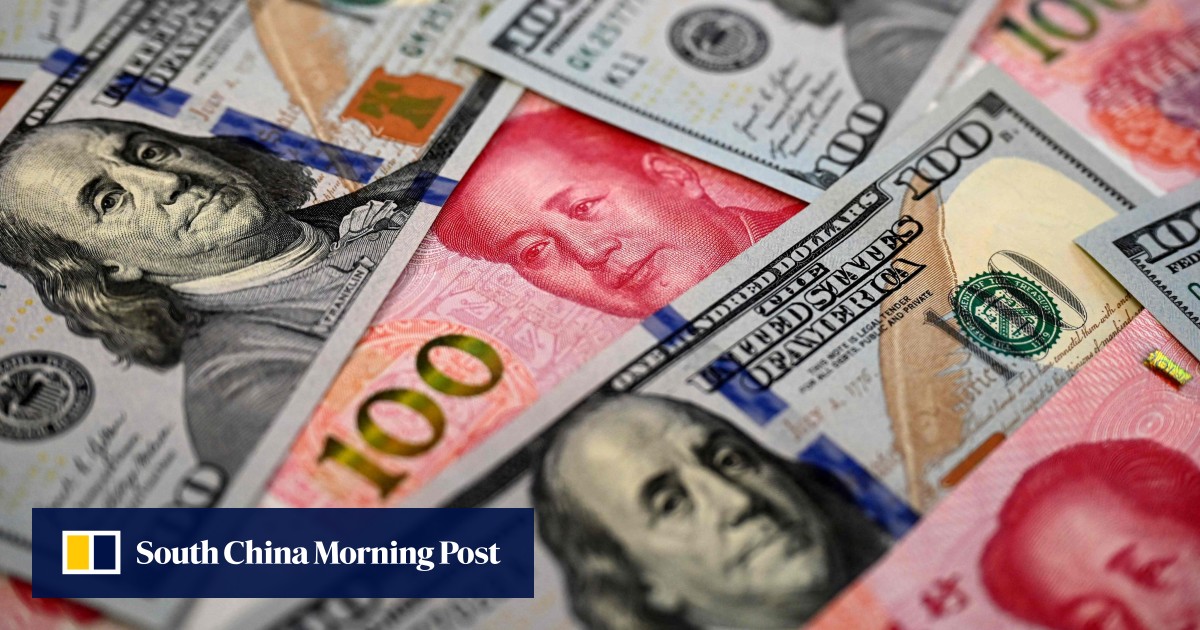
When U.S. allies like Canada and France grumble about overuse of the U.S. dollar, and as Washington’s rivals like Iran start trading in cryptocurrencies and the Chinese yuan, it can be easy to argue that the world is edging away from the greenback. The U.S. dollar’s share of global foreign exchange reserves has fallen from 71% in 1999 to 57% in 2024, its lowest level in a quarter century.
But economists at Standard Chartered aren’t convinced.
“We’re not really in this de-dollarization camp,” Divya Devesh, Standard Chartered’s co-head of FX research for ASEAN and South Asia, said during a July 15 press briefing at the bank’s Singapore office. Instead, companies and investors are still clinging to the U.S. dollar.
“I actually see re-dollarization in the form of exporters keeping dollars, and investors still finding U.S. equities very attractive to invest in,” Devesh said. He pointed out that Taiwan, for example, only converts $2 out of every $100 in export earnings into the New Taiwan dollar. The rest, he added, are mainly kept as U.S. dollars.
Devesh’s views are at odds with a growing chorus of economists and commentators who fear that U.S. government debt, Washington’s use of sanctions and tariffs, and non-dollar trade could undermine the U.S. dollar’s status as the world’s most important currency.