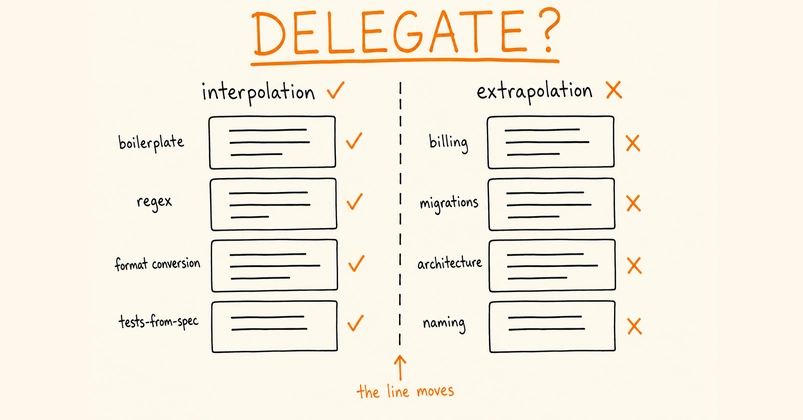
Last week the agent wrote a 200-line CSV-to-JSON normalizer with edge cases I'd have spent forty minutes on, in about ninety seconds. The same afternoon, on a multi-tenant billing edge case, it confidently produced a query that was subtly wrong in a way that would have leaked one customer's invoice totals into another tenant's dashboard. I caught it because I knew the invariant. It didn't, because the invariant doesn't exist anywhere in its training data — it exists only in my schema and my head.
Same tool. Same hour. One task it crushed; one it would have quietly broken. That contrast is the whole article.
The popular framing of AI vs senior developer is a contest of intelligence: is the model smarter or dumber than a person? That question produces nothing useful, because the honest answer is "depends," and "depends" is not a decision rule you can use at 10 a.m. with a backlog in front of you. The better question is not about the model's intelligence at all. It's about the class of task. On which kinds of work does delegating to an AI agent pay off, and on which does it cost more than just doing it yourself?
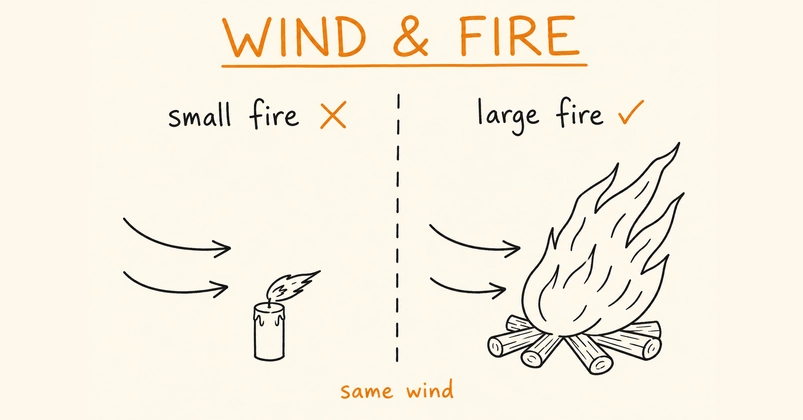
That's a different axis from the one I've written about before. Why AI Coding Widens the Senior–Junior Gap is about the level of the person holding the tool — AI as wind that feeds a fire or snuffs out a candle. This article holds the person constant. Assume a senior who knows what they're doing. The question here is: given that person, which types of task are worth handing to an agent, and which aren't? Skill level is one axis. Task type is another. This is the second one.