in Art, Biology, Science | September 24th, 2025 2 Comments
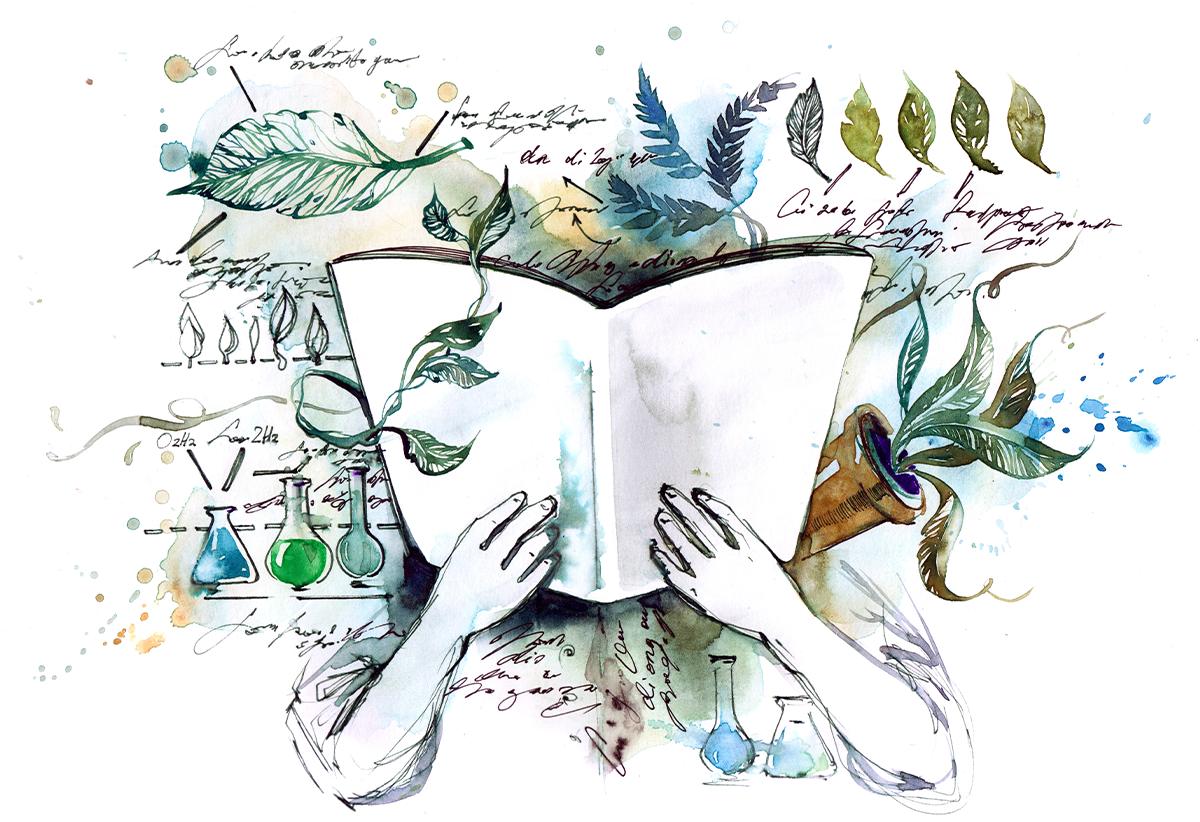
If you follow the ongoing beef many popular scientists have with philosophy, you’d be forgiven for thinking the two disciplines have nothing to say to each other. That’s a sadly false impression, though they have become almost entirely separate professional institutions. But during the first, say, 200 years of modern science, scientists were “natural philosophers”—often as well versed in logic, metaphysics, or theology as they were in mathematics and taxonomies. And most of them were artists too of one kind or another. Scientists had to learn to draw in order to illustrate their findings before mass-produced photography and computer imaging could do it for them. Many scientists have been fine artists indeed, rivaling the greats, and they’ve made very fine musicians as well.
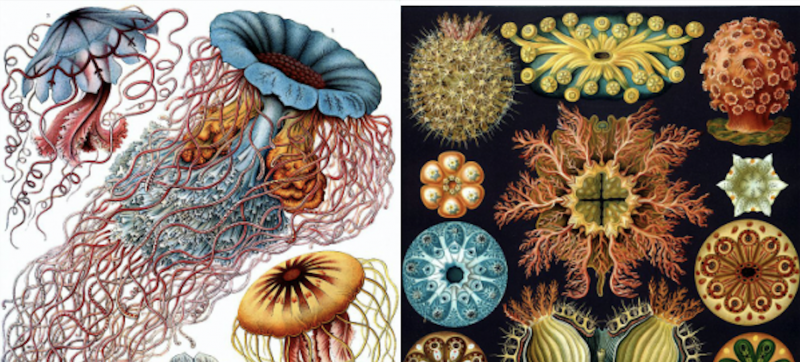
And then there’s Ernst Heinrich Haeckel, a German biologist and naturalist, philosopher and physician, and proponent of Darwinism who described and named thousands of species, mapped them on a genealogical tree, and “coined several scientific terms commonly known today,” This is Colossal writes, “such as ecology, phylum, and stem cell.” That’s an impressive resume, isn’t it? Oh, and check out his art—his brilliantly colored, elegantly rendered, highly stylized depictions of “far flung flora and fauna,” of microbes and natural patterns, in designs that inspired the Art Nouveau movement. “Each organism Haeckel drew has an almost abstract form,” notes Katherine Schwab at Fast Co. Design, “as if it’s a whimsical fantasy he dreamed up rather than a real creature he examined under a microscope. His drawings of sponges reveal their intensely geometric structure—they look architectural, like feats of engineering.”