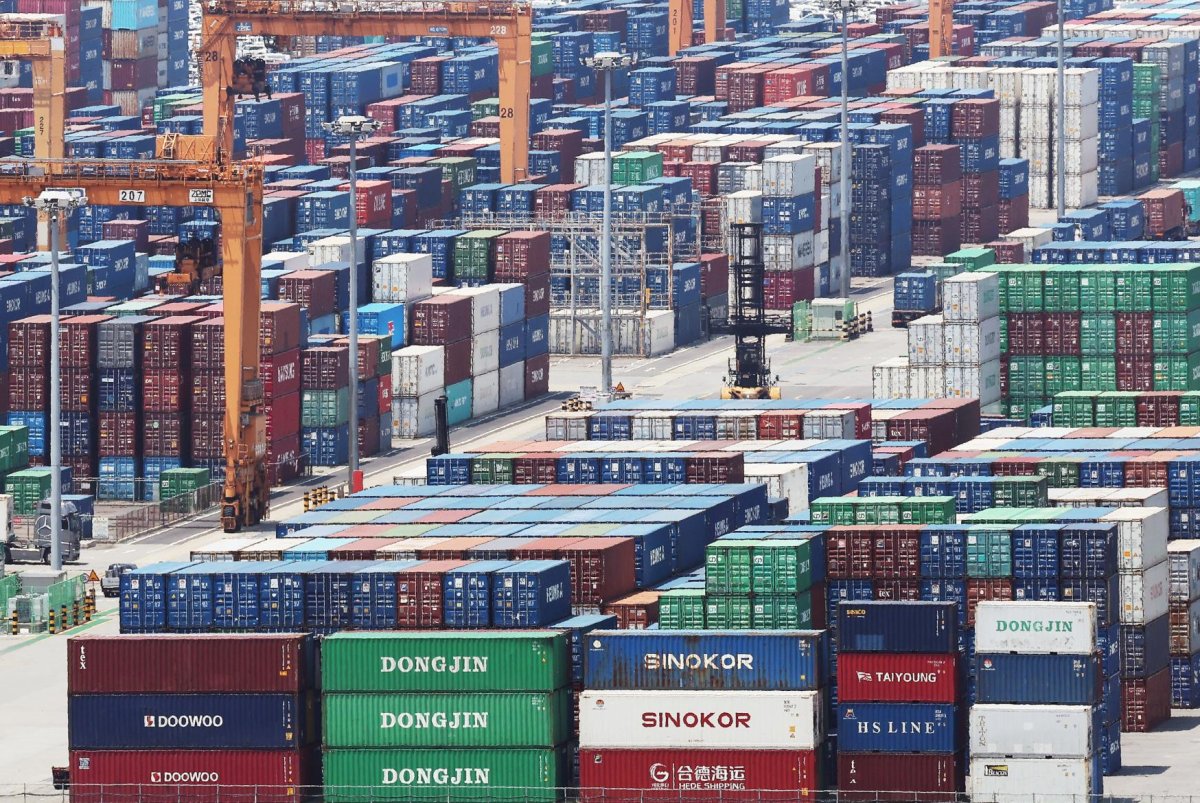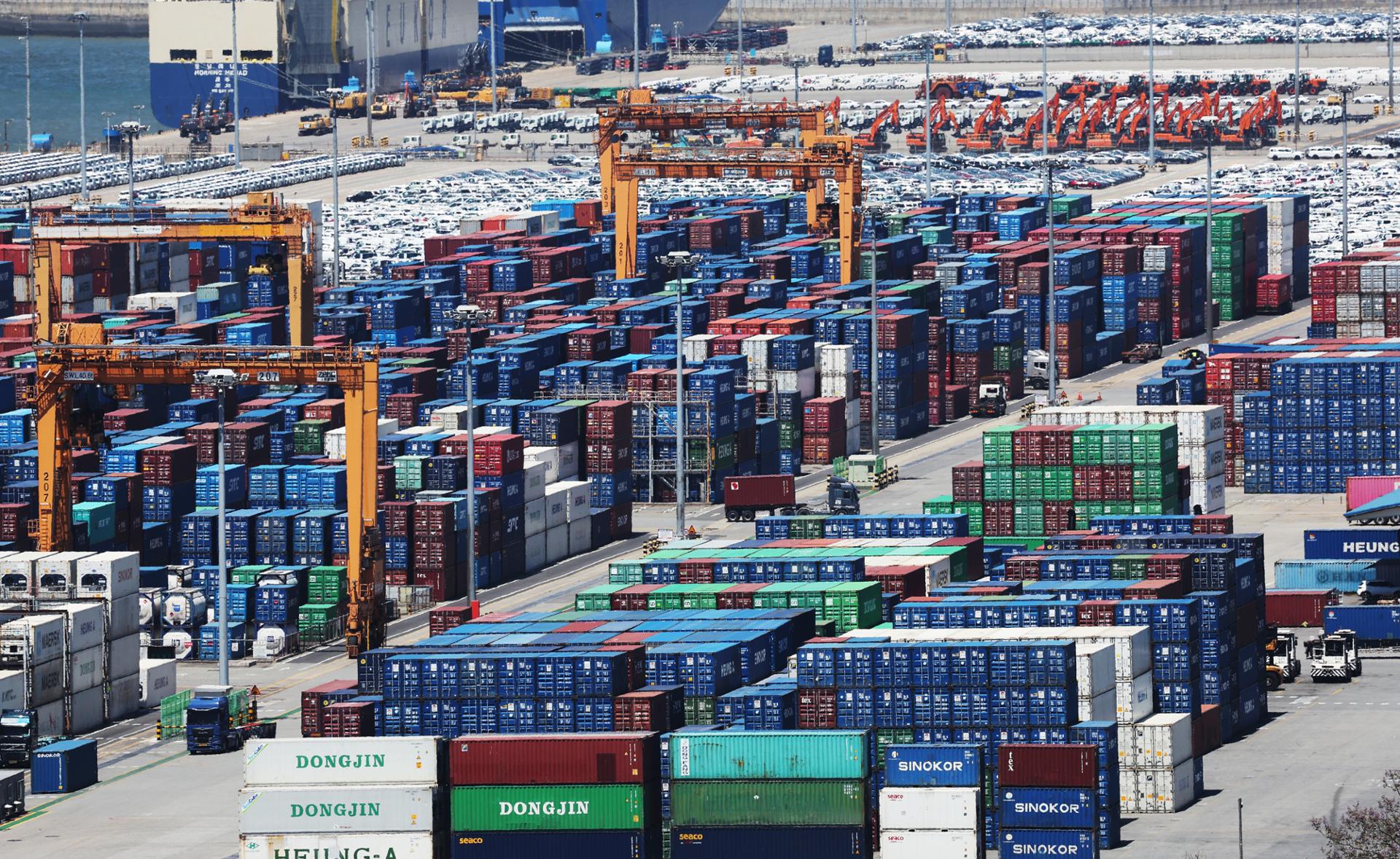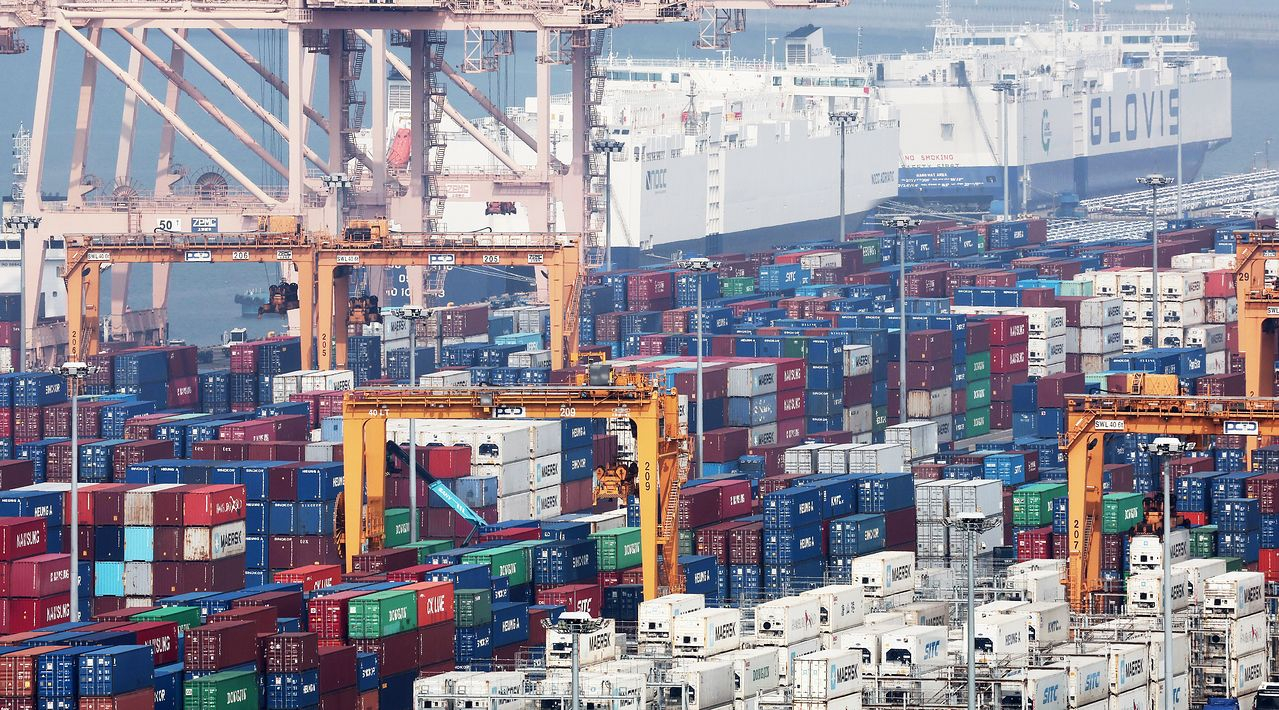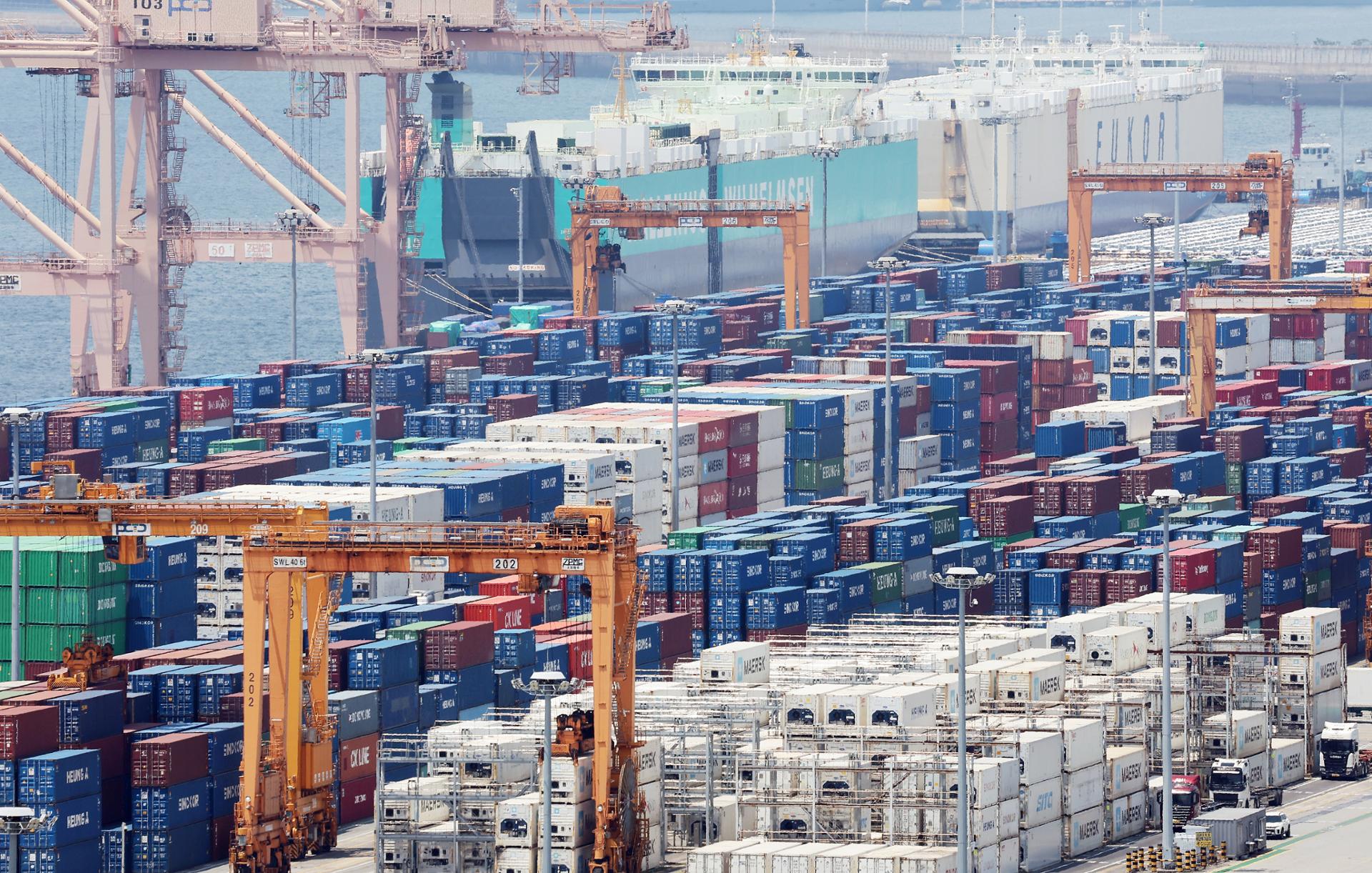
Freight containers await export at the Port of Pyeongtaek. (Yonhap)
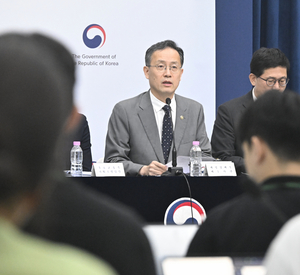
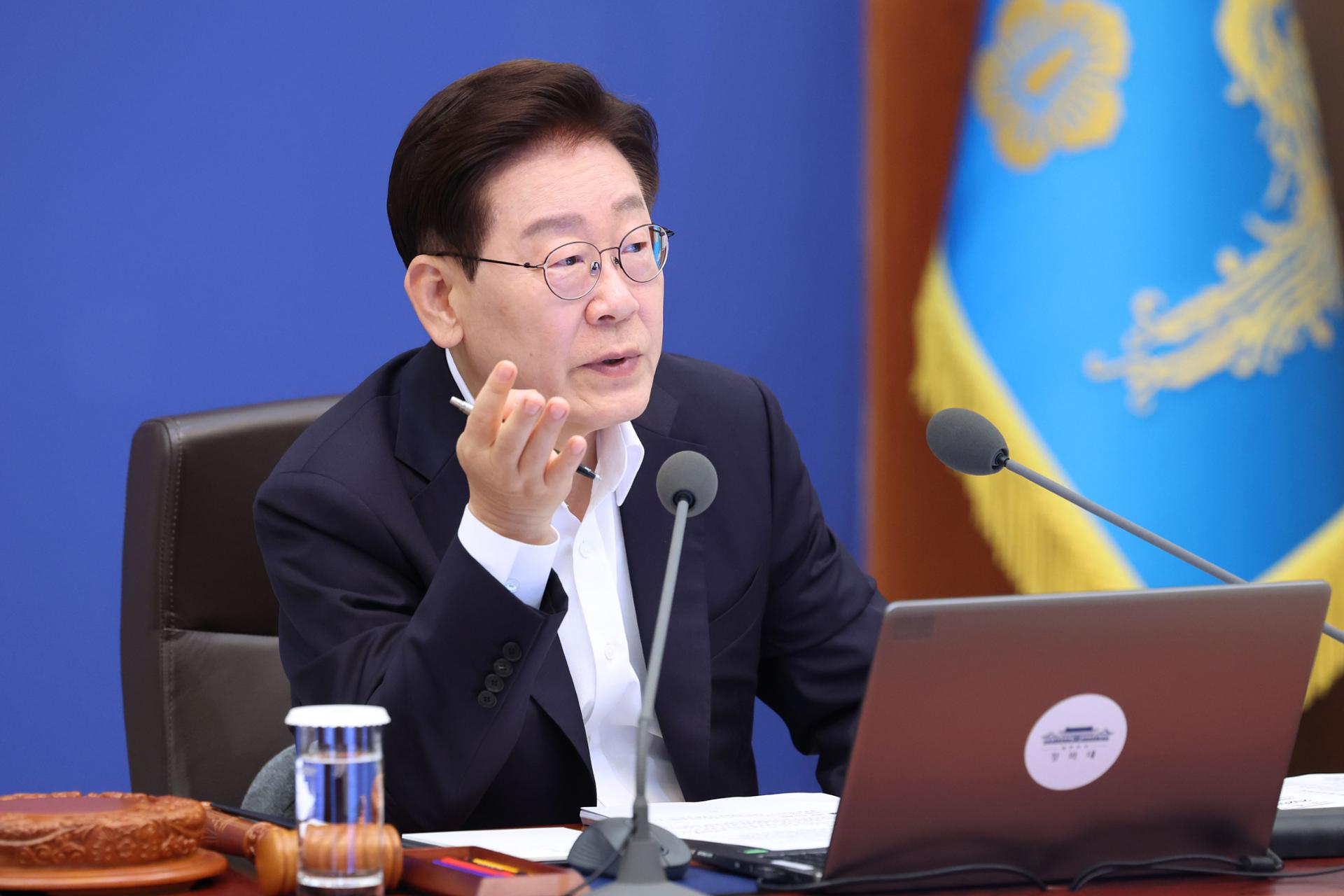
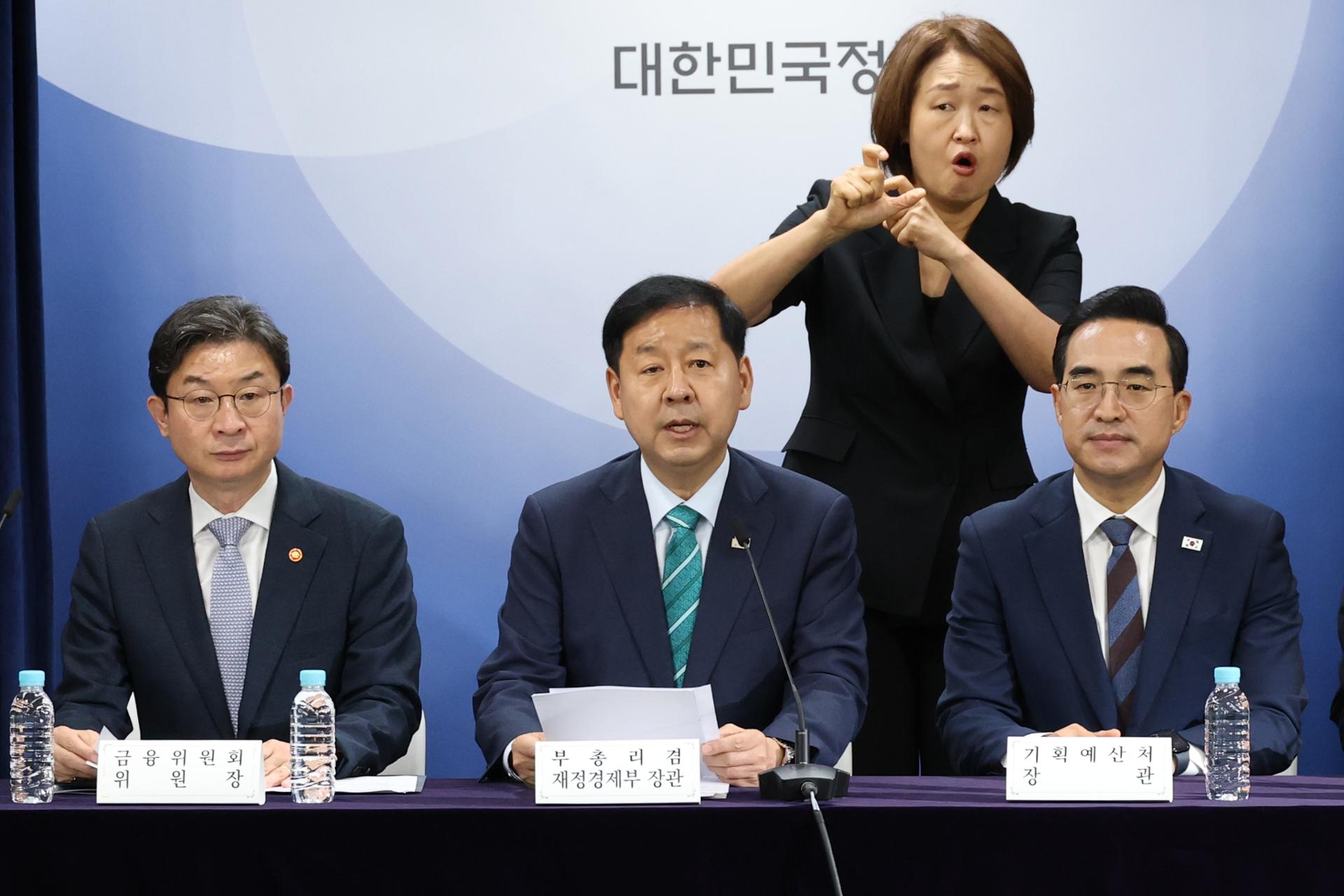
A newly released government forecast expects the Korean economy to grow 3% this year thanks to robust exports and investment stemming from the semiconductor supercycle.If this projection bears fruit, the country could see its first return to the 3% growth level or higher since 2021. Yet the hiring is expected to fall short of predictions, signaling a more pronounced trend of jobless growth.In a growth strategy report for the second half of the year, the Ministry of Finance and Economy on Tuesday raised its 2026 projection a full percentage point to 3% from its forecast made in January.“The revised forecast reflects the tendency of companies to raise capital investment amid the semiconductor boom,” First Vice Finance Minister Lee Hyoung-il said. Korea last posted growth of 3% or higher in 2021, which saw a surprisingly high 4.7% due to the base effect from the previous year’s contraction of 0.7% caused by the COVID-19 pandemic. Excluding 2021, the economy this year could post its greatest expansion since it grew 3.2% in 2018.The report said nominal gross domestic product (GDP) will rise 12.3%, matching a 30-year high set in 1996, and the current account will finish a record-high US$290 billion in the black, or an incredible 2.4 times last year’s figure of US$123.1 billion.Inflation was expected to rise from 2.1% to 2.6% due to factors like high oil prices. Against this macroeconomic backdrop, the ministry unveiled its “3-4-5 vision,” referring to a potential growth rate of 3%, inclusion among the world’s top four exporters and per capita gross national income of US$50,000.Not so rosy were hiring prospects. The report predicted around 150,000 new jobs to be added this year, down from its initial forecast of 160,000 and the lowest since 2020, which saw a plunge of nearly 220,000 due to the COVID-19 pandemic.The not-so-great outlook was blamed on the low employment multiplier in semiconductors and shrinking employment, particularly in the domestic market, in the aftermath of the war with Iran.“We must strive for structural reform and institutional innovation to sustain long-term growth momentum through measures like alleviating sluggish youth employment and the dual structure of the labor market,” commented Yang Jun-sok, a professor of economics at the Catholic University of Korea.President Lee Jae Myung on the same day also stressed the urgency of the situation at a Cabinet meeting.“What we achieve in the second half of this year will shape the Republic of Korea’s trajectory for the next 30 years,” he said. “I ask everyone to work together so that this year is remembered as the first year of us taking a leap toward becoming an ‘irreplaceable Republic of Korea,’ one with a potential growth rate of 3%, a place among the world’s top four trading powers and per capita income of US$50,000,” he said. By Kim Yoon-ju, staff reporter; Shim Woo-sam, staff reporterPlease direct questions or comments to [english@hani.co.kr]