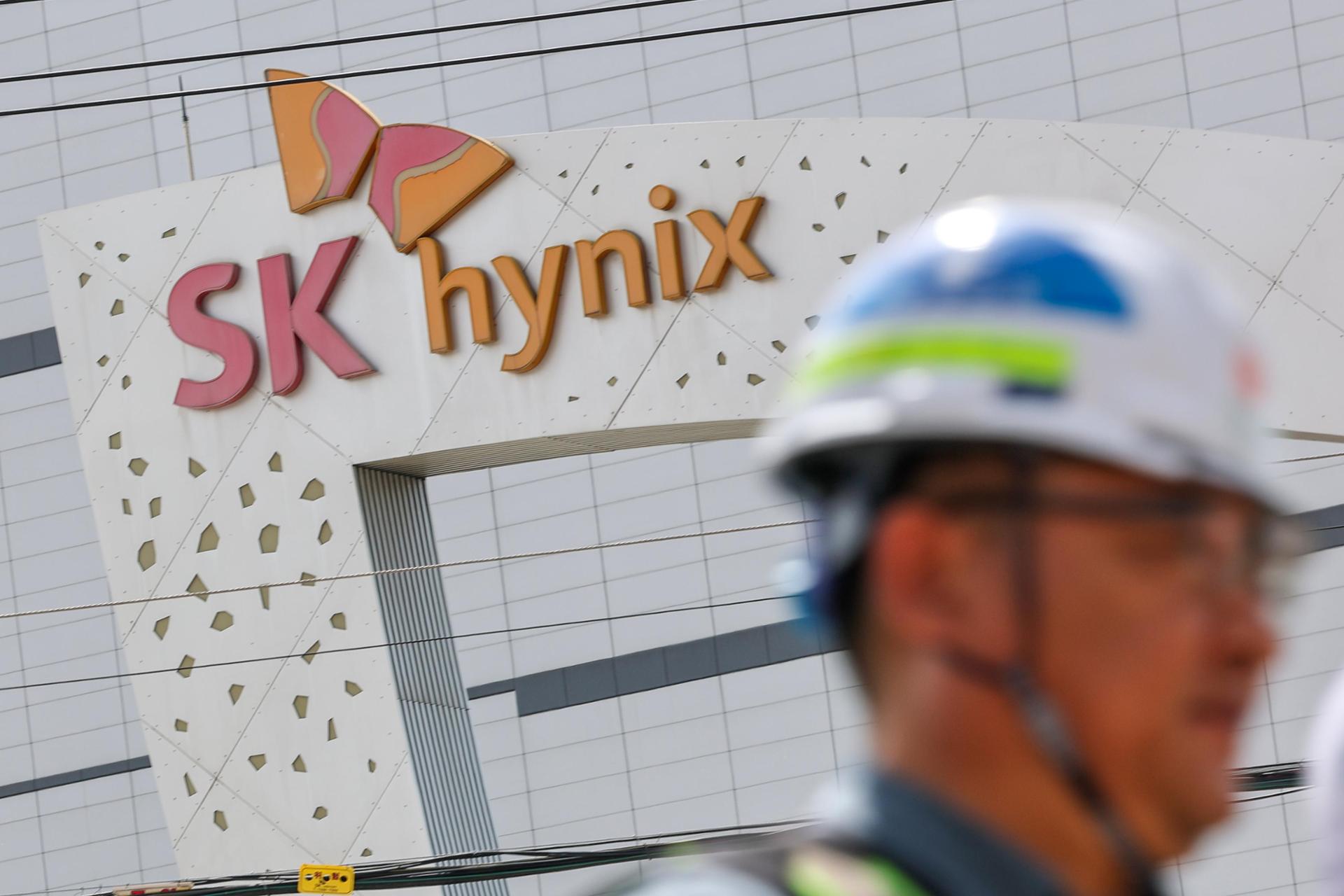
A delivery worker passes in front of an SK hynix chip plant in Icheon, Gyeonggi Province, in this file photo from Oct. 29, 2025. Chip giants' artificial intelligence‑driven windfall profits fuel debate over how to share “excess gains” with the wider society. Newsis
The debate over how to share the enormous gains from the artificial intelligence (AI) semiconductor boom is growing louder in Korea by the day.
The discussion usually centers on whether the larger-than-expected, or so-called “excess,” profits should be shared with other partners who contributed to the earnings, and how a company — or the government — should spend them.
Yet basic questions remain unresolved: What, exactly, counts as “excess gains,” and who has a legitimate claim to them?
“The government keeps talking about win-win growth and telling us to share ‘excess profits’ with subcontractors, but no one can explain what ‘excess’ actually means,” an official from the chip industry told The Korea Times on condition of anonymity. “How much gain is ‘normal,’ and at what point does it become excess? Who gets to set that standard?”