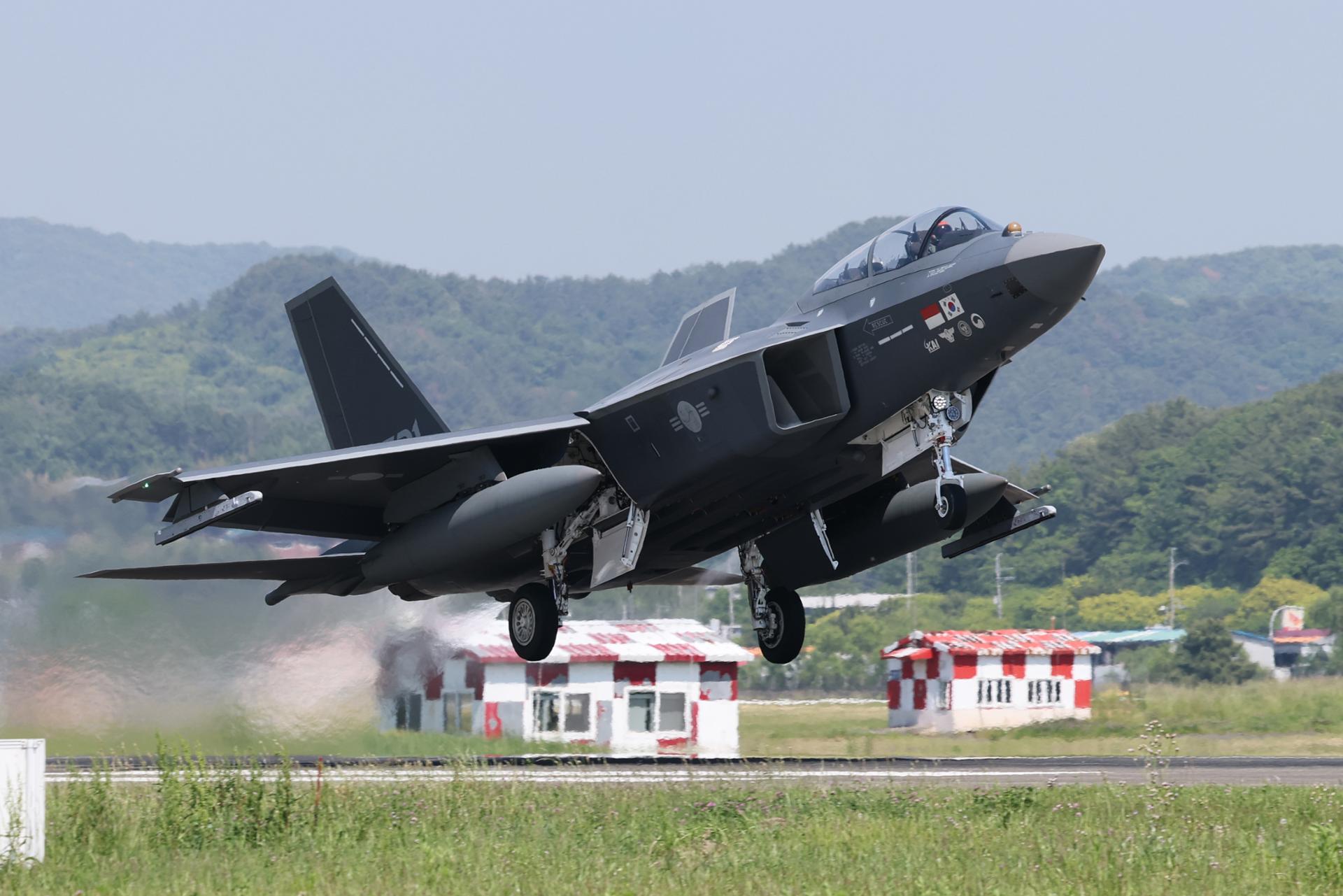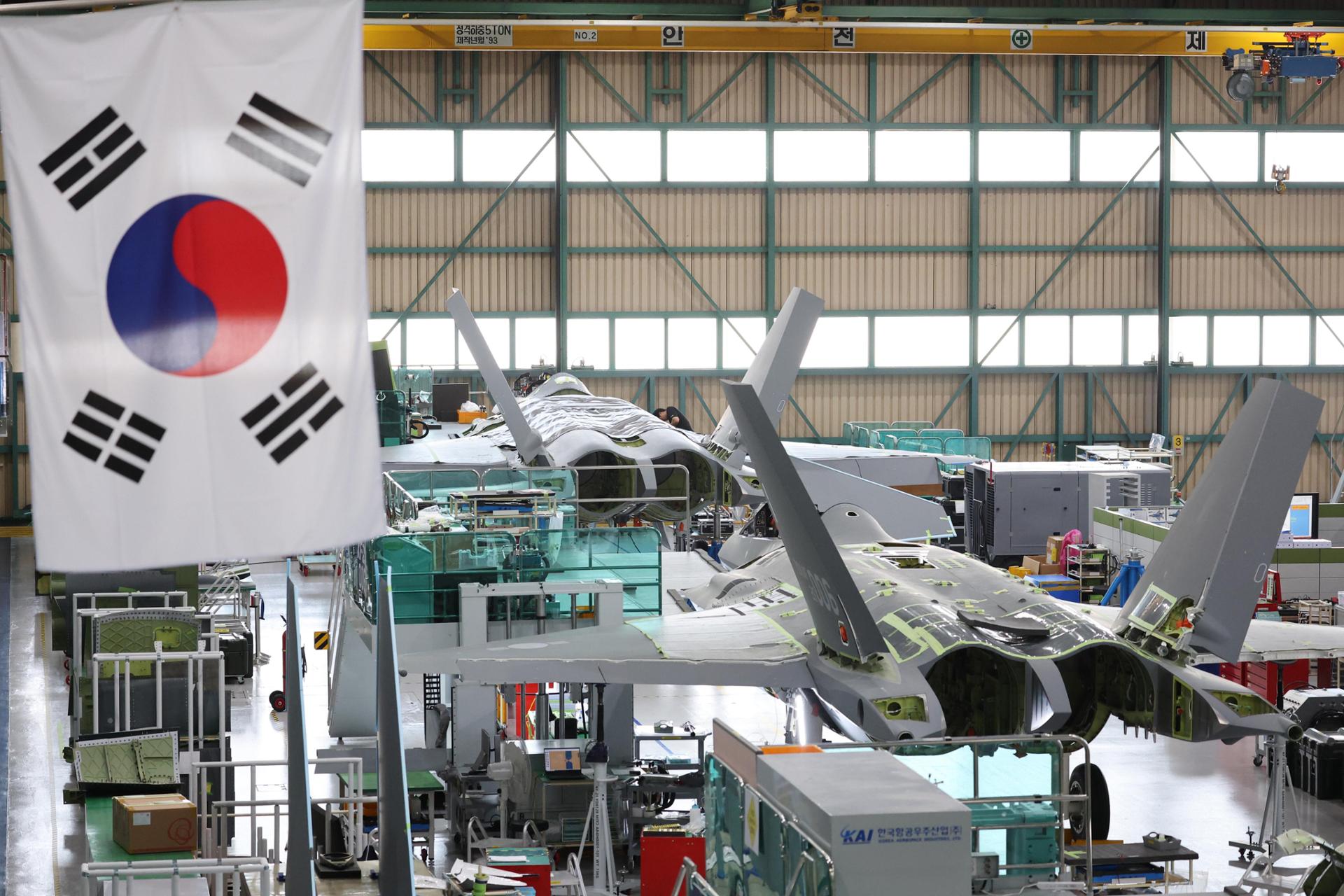
Employees assemble mass-produced KF-21 fighter jets for the Republic of Korea Air Force at Korea Aerospace Industries in Sacheon, South Gyeongsang Province, May 13. The KF-21 is Korea's first domestically developed supersonic fighter. Joint Press Corps
Korea’s booming defense exports are running into a new challenge as manufacturers call for greater flexibility on working-hour rules, arguing that labor shortages and production deadlines are becoming harder to manage under the current 52-hour workweek.
Defense companies say surging domestic and overseas orders have outpaced their ability to secure skilled workers, prompting the industry to seek broader use of the country’s special overtime system.
But the Ministry of Employment and Labor maintains that it has no plans to ease the current framework for the defense sector, saying similar demands are raised across a wide range of industries.
According to industry and government officials, major defense contractors recently met with labor ministry officials to explain the need for additional flexibility under the special overtime system, which allows employers to extend working hours beyond the statutory limit under limited circumstances with government approval.