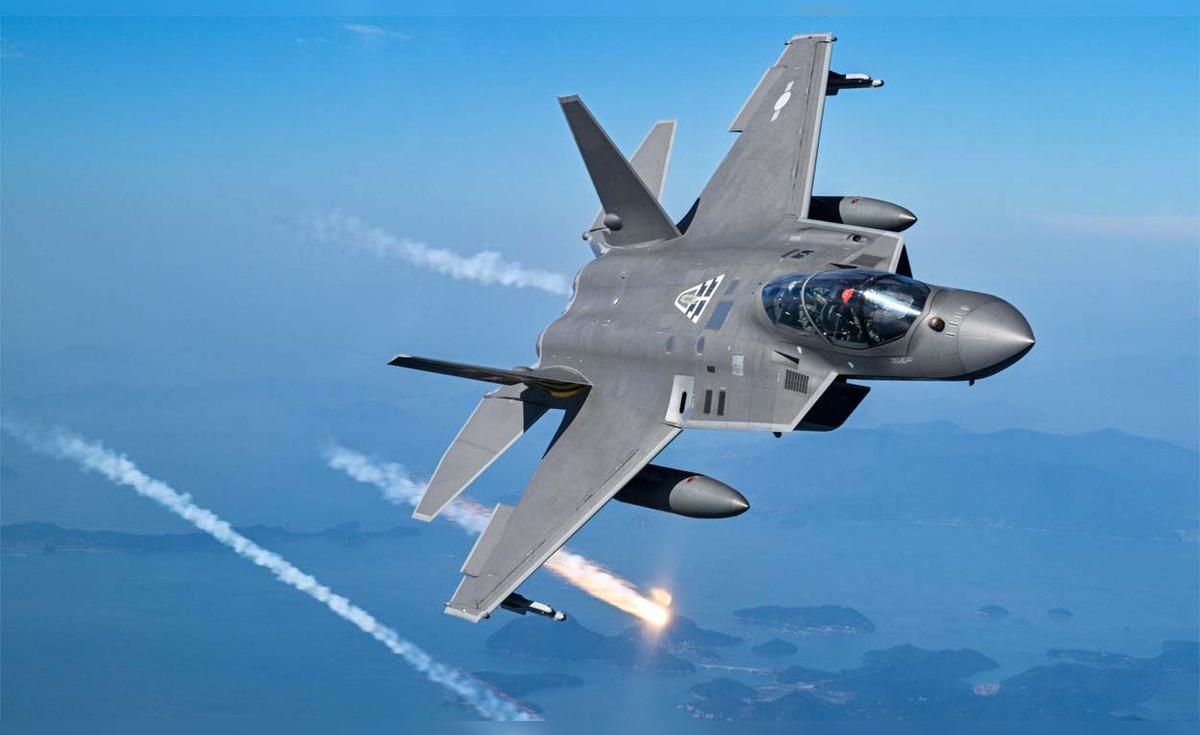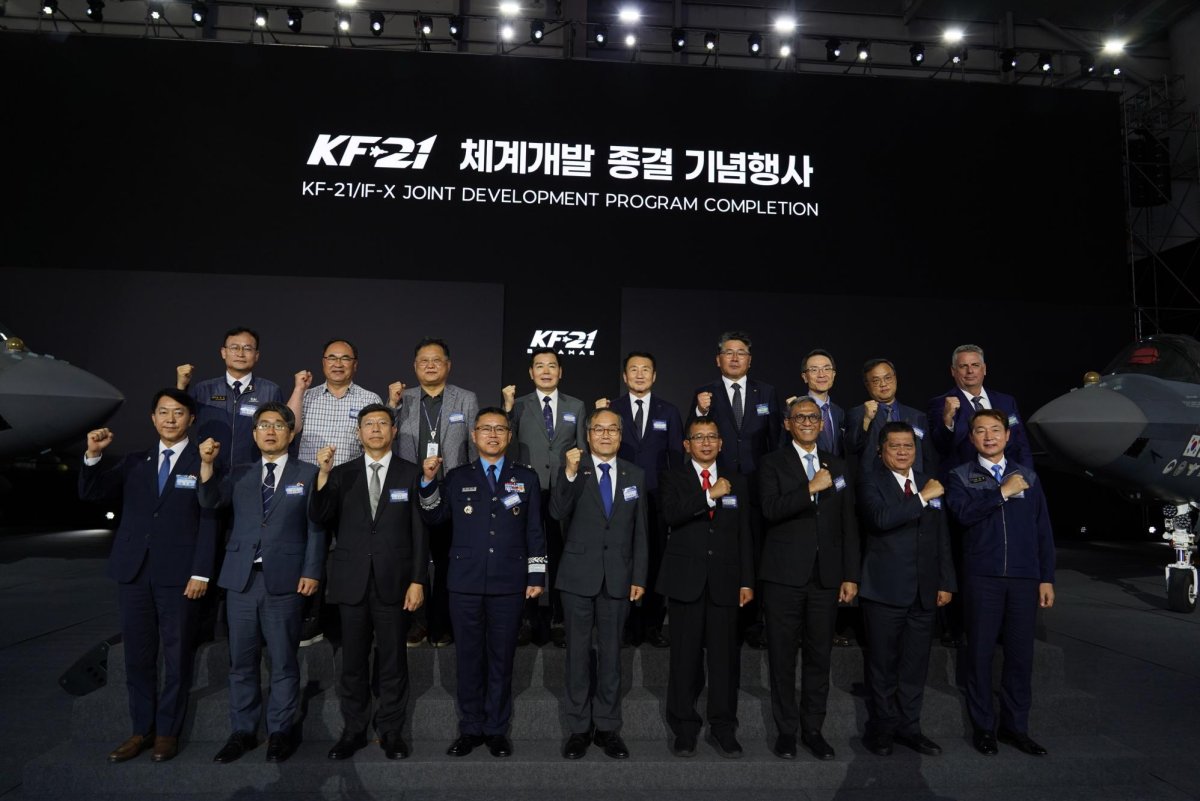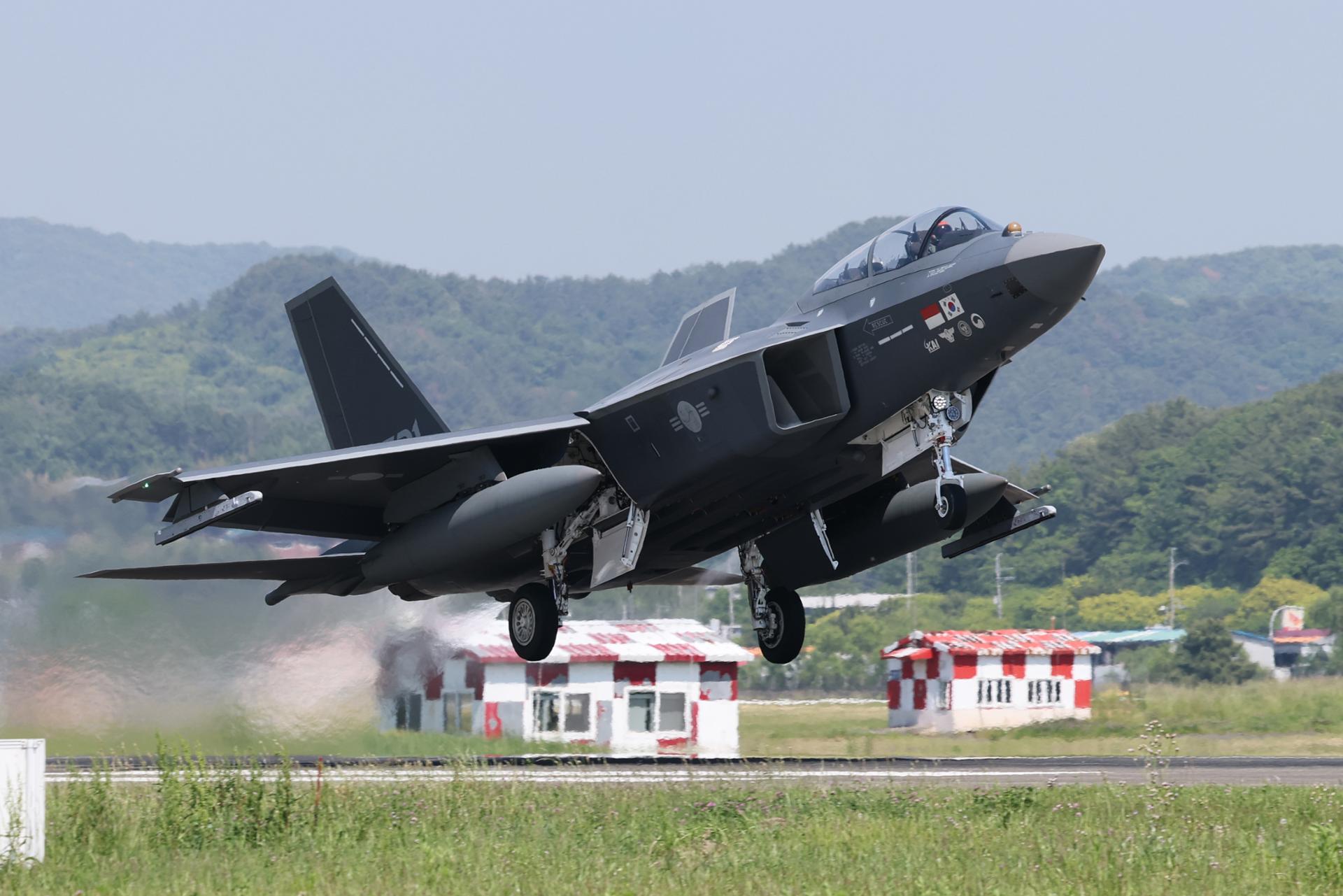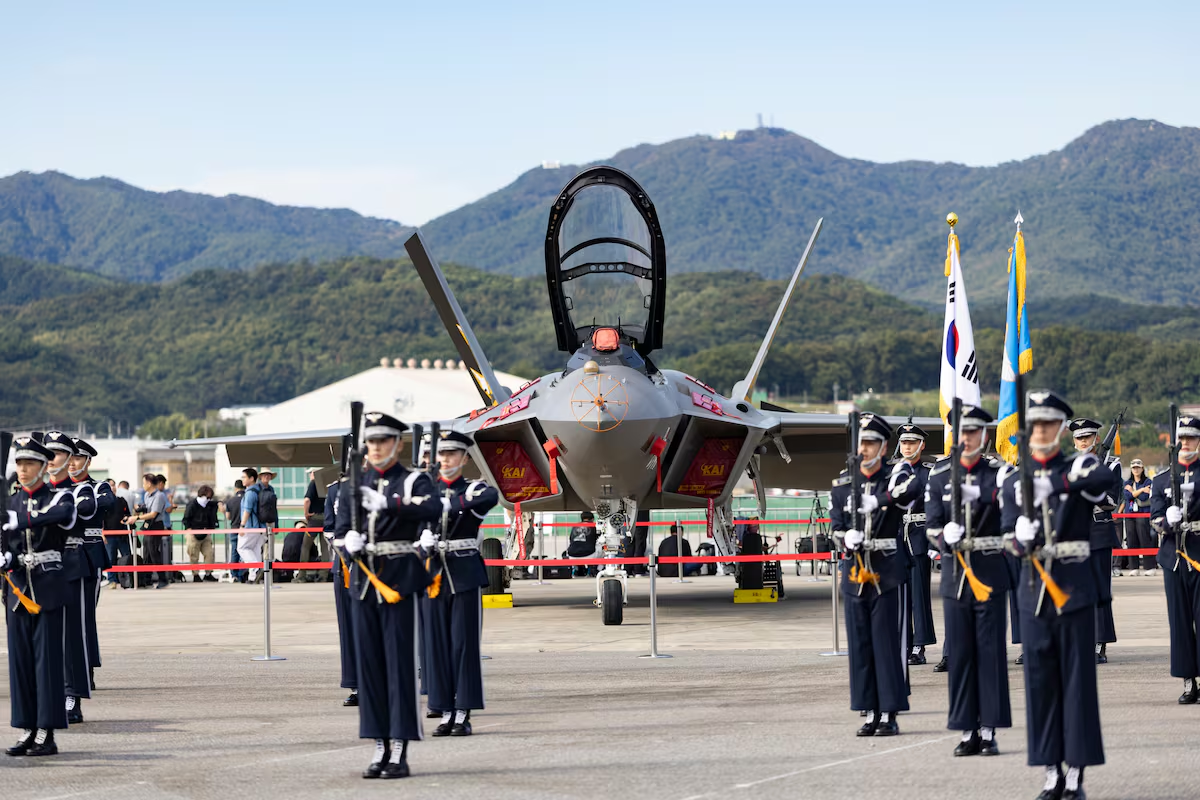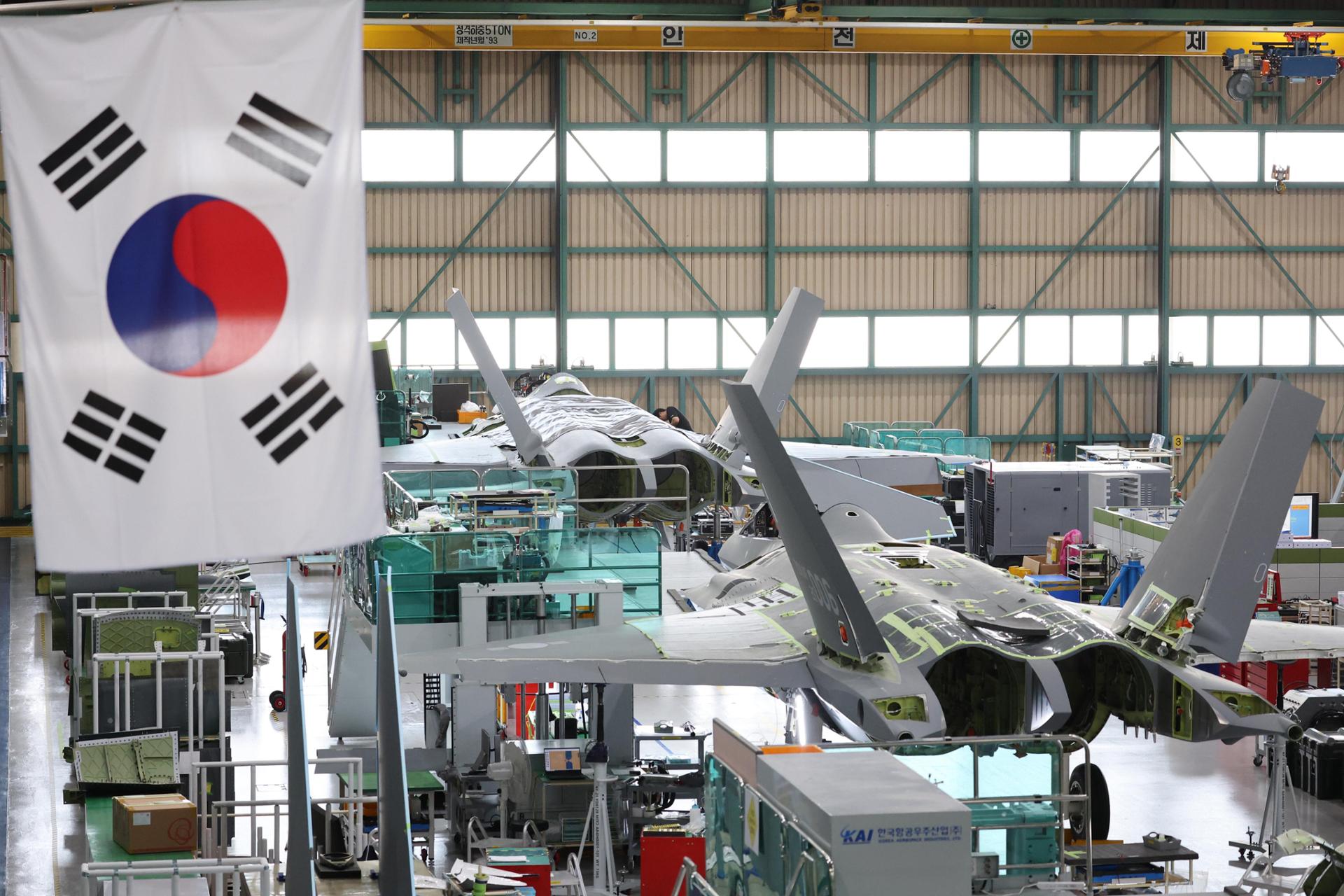
Mass-produced KF-21 fighter jets in the first batch scheduled for delivery to the South Korean Air Force are seen at Korea Aerospace Industries in Sacheon, South Gyeongsang Province, Wednesday. (Joint Press Corps) South Korea plans to accelerate the retirement of its aging F-5 fighter jets by the end of next year, the Air Force chief has said, as the country prepares to field its first domestically developed fighter jet.“We will move quickly to retire the F-5,” Air Force Chief of Staff Gen. Son Seok-rak said during a press conference in Seongnam, Gyeonggi Province, on Wednesday evening. “We are preparing to have it retire honorably before the end of next year.”The F-5 is a US-built light fighter developed by Northrop. South Korea first purchased F-5A/Bs in 1965 and later introduced F-5E variants in the 1970s.Son's remarks came as South Korea nears operational deployment of the KF-21, a 4.5-generation fighter developed by Korea Aerospace Industries. The KF-21 made its first test flight in July 2022, received final combat suitability approval earlier this month, and is scheduled to be delivered to the Air Force in the second half of this year.Earlier in the day, KAI CEO Kim Jong-chul said the first mass-produced KF-21, rolled out on March 25, completed its first flight in April and is undergoing test flights ahead of delivery to the Air Force in early September.Kim described the KF-21 as a milestone that gives South Korea an indigenous combat aircraft platform, saying it would help strengthen operational independence, expand the domestic defense industrial base and serve as a foundation for future fighter development.“The fact that we now have our own aircraft means we can attach and test weapons on our own platform,” Kim said during a press briefing held at the request of the Air Force. “It has created the conditions for us to integrate domestically developed weapons.” KAI CEO Kim Jong-chul (center) explains the KF-21 fighter jets parked on the flight line to reporters during a visit to Korea Aerospace Industries in Sacheon, South Gyeongsang Province, Wednesday. (Joint Press Corps) The remark points to one of the remaining challenges for South Korea’s fighter aircraft industry: building a stronger portfolio of indigenous air-launched weapons. Kim said the KF-21 would allow South Korea to test both domestic and foreign weapons on its own aircraft and eventually export a fighter equipped with Korean-made missiles.According to KAI, the KF-21 program has met more than 13,000 test conditions and logged about 1,600 sorties without an accident.KAI expects to produce more than 20 KF-21s a year through automated production processes, Kim said, adding that the company could raise output with additional investment.“There is no problem with deliveries to the Korean military,” Kim said. “With more effort, we can reach about three aircraft a month, and with additional investment, we have room to increase production to 30 to 40 aircraft a year.”Kim also said KAI sees potential demand for more than 200 KF-21s overseas; discussions are underway with countries including Indonesia, the Philippines, Malaysia and Poland.KAI is also in talks with the United Arab Emirates and Saudi Arabia on possible partnerships for the KF-21’s future development, he added.On concerns over Hanwha’s growing stake in KAI, Kim played down speculation that the defense group could exert influence over the aircraft maker’s management.“At the current level, I do not think it is at that stage,” Kim said. “Since we have the aircraft platform, companies such as Hanwha and LIG D&A also need to cooperate with KAI. I see it as part of efforts to work together.” Engineers assemble KF-21 fighter jets at Korea Aerospace Industries in Sacheon, South Gyeongsang Province, Wednesday. (Joint Press Corps)
Air Force to retire aging F-5 jets by end-2027, KF-21 deployment nears
South Korea plans to accelerate the retirement of its aging F-5 fighter jets by the end of next year, the Air Force chief has said, as the country prepares to f
607 words~3 min read