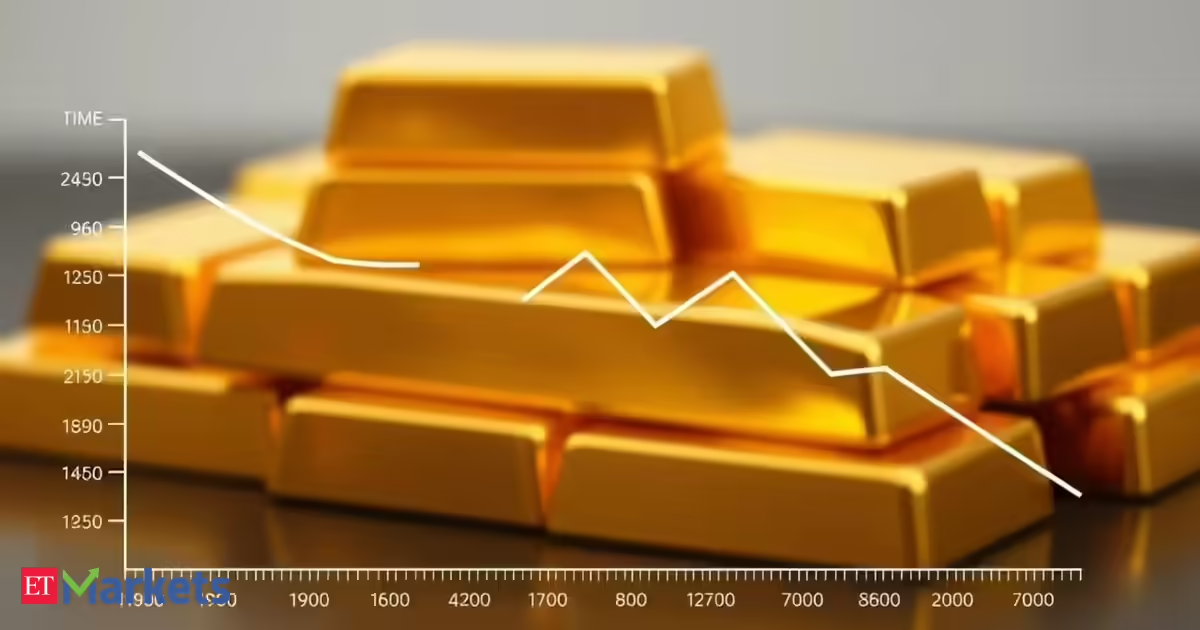
Gold had a rough Tuesday. Spot gold fell 0.6% to $4,028.43 per ounce on July 15, 2026, pulling back sharply after hitting $4,100.49 the previous session. Futures followed suit, easing 0.8% to $4,035.50 per ounce.
The culprit, more or less, is oil. Crude prices climbed above $80 per barrel for the third consecutive session, driven by escalating geopolitical tensions between the U.S. and Iran. When energy costs rise persistently, inflation expectations tend to rise with them, and that changes the calculus around interest rates in ways that gold investors do not love.
Why oil and gold are pulling in opposite directions
Gold is often marketed as the ultimate inflation hedge, the asset you hold when paper money loses its purchasing power. That logic holds reasonably well when inflation is high and interest rates are low, because low rates mean holding gold does not cost you much in foregone yield. The problem is what happens when inflation fears push central banks toward higher rates. Suddenly, gold faces real competition from yield-bearing assets like bonds and cash.
Kelvin Wong of OANDA noted that markets are currently focusing more on geopolitical pressures than on the underlying CPI data. That framing matters, because it suggests sentiment is being driven by fear and uncertainty rather than by a clear read of economic fundamentals.