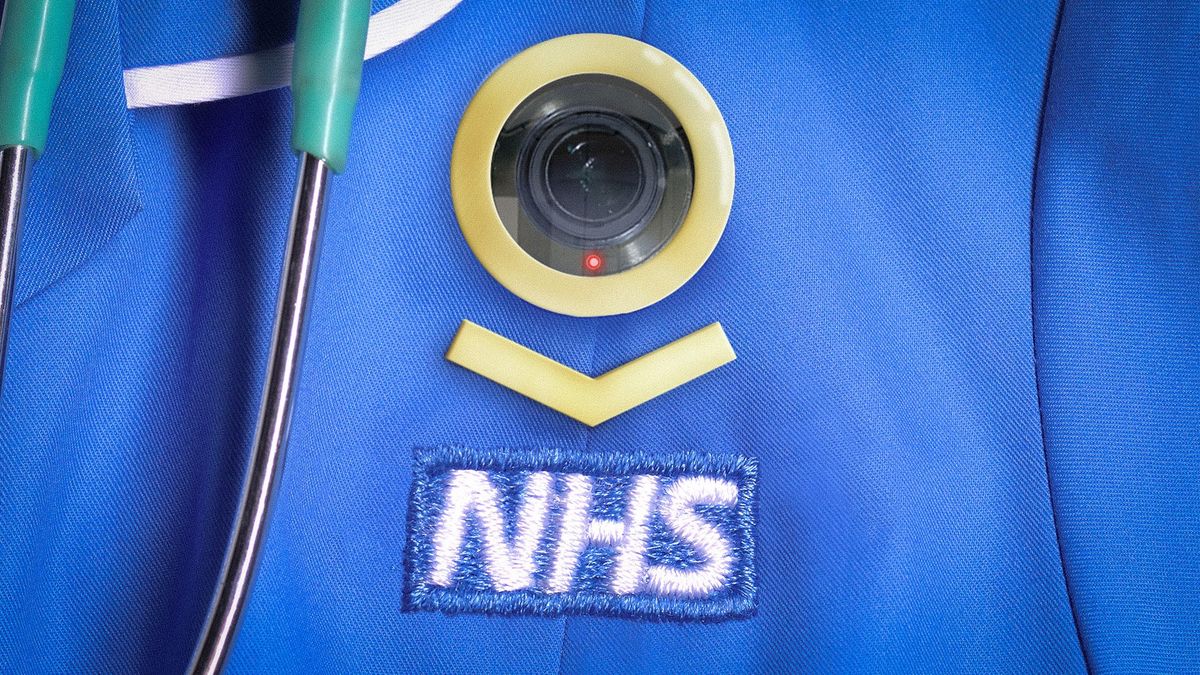
Andy Burnham faces a lot of big decisions. But one of the incoming prime minister’s biggest early tests is what he does about the world’s “scariest company” – Palantir. The US defence and surveillance tech behemoth has a swathe of British public contracts, including, most controversially, a £330m deal with the NHS. It’s pretty clear what many of Burnham’s new parliamentary colleagues want him to do: the science, innovation and technology committee says the government should ditch Palantir and its “clear mismatch with UK values”.Peter Thiel and Alex Karp’s company is not without British backers. The Times and the Telegraph have been enthusiastic supporters. In the Financial Times last month former Conservative party adviser Camilla Cavendish accused Palantir’s critics of putting politics over progress: “To me, what matters is what works.”But does Palantir work for Britain? Does the £330m federated data platform (FDP) live up to the claims of Palantir and NHS England? Has it delivered the much-vaunted digital revolution in our healthcare system?These are questions my Democracy for Sale colleague Lucas Amin and I have been investigating for the past year. We spoke to NHS whistleblowers and Palantir staff, obtained confidential documents and unearthed new data. Our findings, published in the London Review of Books, raise serious questions about the efficacy of Palantir’s technology, about the approach of NHS senior leaders and about the lobbying that helped a Silicon Valley startup expand so quickly in Britain.Let’s start with the most important part of Palantir’s British operation: the FDP. Built on the company’s Foundry software, the platform was sold as a generational chance to knit disparate data from hospitals, doctors, pharmacists and myriad other sites together into a coherent whole. You’d struggle to find anyone in the NHS who would oppose that.NHS England cites impressive statistics for the FDP’s rollout since it launched in 2024. It says almost two-thirds of NHS trusts are “live” on Palantir’s software. Politicians and NHS leaders have hailed the FDP as a success. But drill a little deeper and you’ll find another story. Dozens of the trusts that NHS England says are using the FDP appear not to have logged into a single FDP app in the past year, according to internal usage data released under the Freedom of Information Act.The Cancer 360 tool, which Keir Starmer lauded last year as “groundbreaking new technology” that would “slash treatment delays across the NHS”, was used by just six out of about 200 trusts in the nine months since it launched. (Palantir told us that the firm is merely a software provider: “How that software is used is controlled by the NHS trusts who use it.”)Clinicians’ reluctance around using Palantir’s software is less ideological – although some object on this basis, too – and more practical: many trusts say that the FDP is slower and less effective than their existing technology. NHS analysts say it can take five minutes or more to run a basic query. As NHS Greater Manchester’s chief data officer told the health select committee last month: “We can match anything that the Palantir FDP can do.” Palantir says the FDP could not be compared “like for like” with other systems because of the “additional security” embedded in it.In private briefings we obtained, senior NHS leaders went even further, complaining that Palantir’s software has a “poor user experience”. Kanthan Theivendran, an orthopaedic surgeon at a trust in Birmingham, stopped using Palantir’s flagship waiting-list app because he couldn’t edit the data: “It’s just a waste of time,” he told us.The true cost of Palantir’s FDP is much greater than £330m. Individual trusts have been given as much as £3m each to encourage implementation. Consultancy giant KPMG was even given an £8.5m contract to push the FDP across the health service.Among the biggest challenges is Palantir’s own software. Foundry is a proprietary product. Some NHS data analysts told us that all their work on the FDP would be lost if they no longer had access to Palantir’s platform. This raises concerns over what many experts call “vendor lock in”. Once you start using a Silicon Valley tech company’s product, it can be very hard to move off it – even if you are dissatisfied with the service. Vendor lock in is bad enough if you’re changing smartphones. But when the company that has all your data is working for Donald Trump’s ICE, the Israel Defense Forces and heralding the arrival of AI-fuelled global warfare, the problem is not inconvenience, it’s a national security issue.So how did a Silicon Valley startup that counts the CIA’s investment arm as an early customer become so integral to the British state? The answer, in large part, is paid-for political access and threadbare regulations.In 2018, Palantir hired Peter Mandelson’s lobbying firm Global Counsel to position it as “a respectable partner to the British government”. Global Counsel organised dinners for Palantir with policymakers and politicians but did not have to declare their client on official disclosures, as policy briefings are not classified as paid advocacy. As a former Global Counsel employee who worked on the Palantir contract told us: “You really have to fuck up to have to register somebody.”
I investigated Palantir’s foothold in the British state – and what I found should worry us all | Peter Geoghegan
Paid-for political access and threadbare regulations have helped to embed the US tech firm in the NHS – and beyond. But there is a way to free ourselves, asks Peter Geoghegan of Democracy for Sale
1,177 words~5 min read