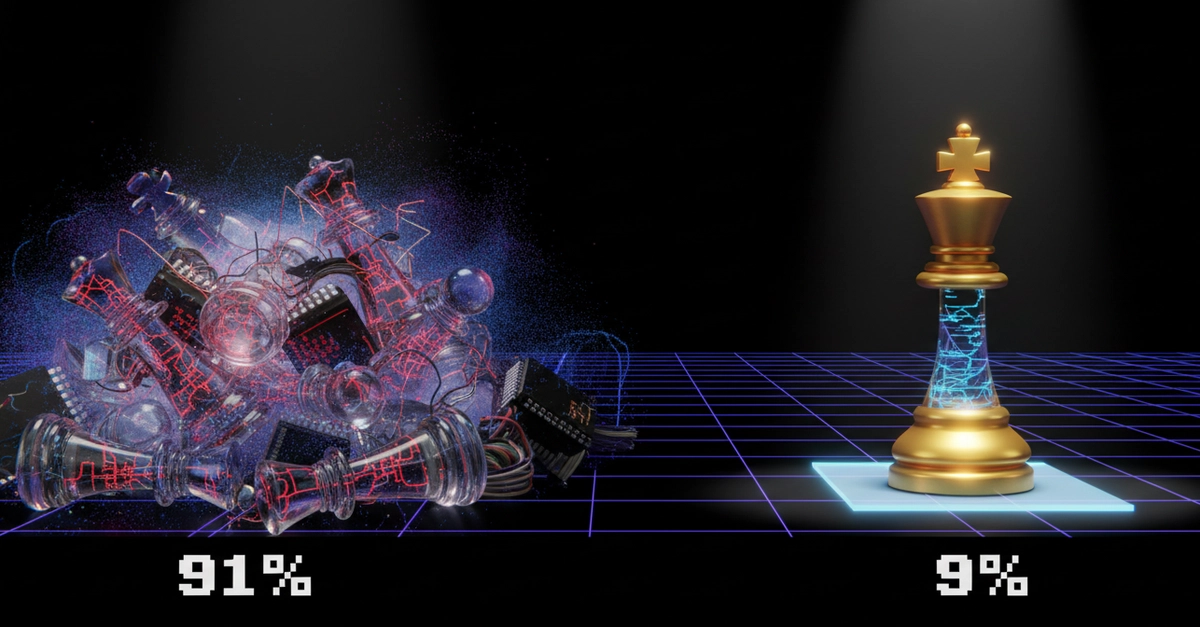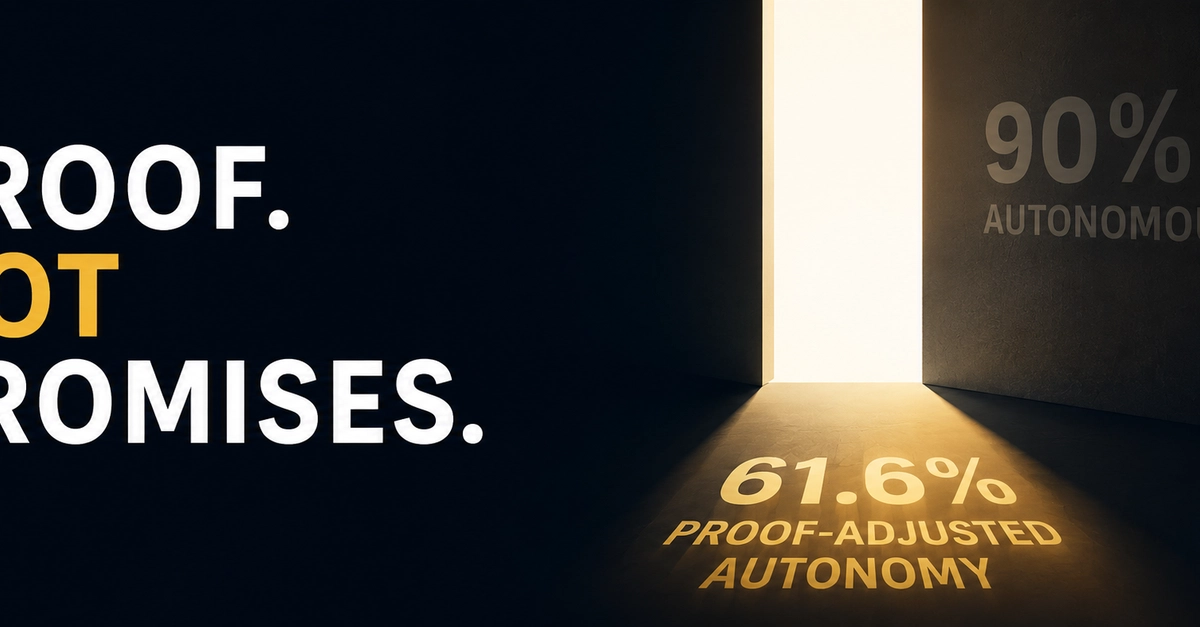
Every agent demo ends on the same slide: "90% autonomous." Here is the number that slide is hiding: 61.6%.
The 90% is real. It measures how much work the agent completed without a human touching it. It just measures the wrong thing. Nobody runs a company on work that was completed. Companies run on work they can accept — without reconstructing it by hand to find out whether it's true.
Grant Thornton documented the problem this spring: organizations are deploying AI faster than they can demonstrate accountability for it. They call it the AI Proof Gap. Jason Wei's Verifier's rule explains the deeper mechanism — the ease of training AI to solve a task is proportional to how verifiable the task is, which is why verifiable capabilities arrive first. But production systems face a third question neither of them answers: how much autonomous work can an organization safely absorb without checking it by hand?
Proof-Adjusted Autonomy measures that boundary.
Raw autonomy is a marketing number