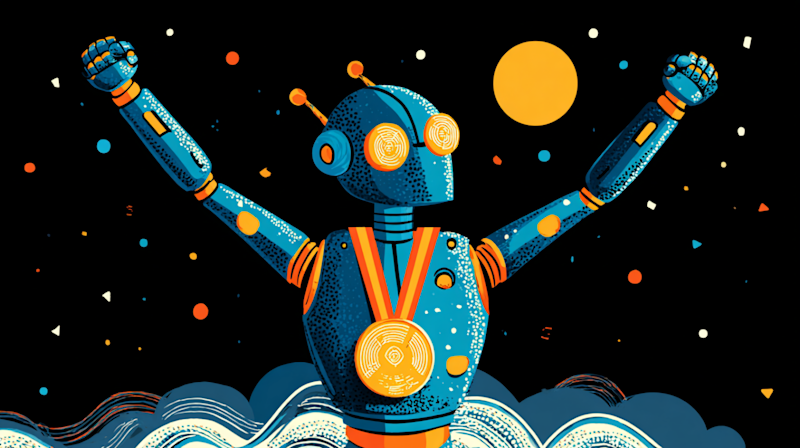
Meta AI has reportedly achieved a perfect score of 30 out of 30 on the Asian Physics Olympiad’s theoretical exam, a result that, if verified, would mark a significant milestone in AI reasoning. The claim places Meta’s AI capabilities at the very top of a fiercely competitive landscape where Google, Shanghai AI Lab, and others are all racing to prove their models can think like elite physicists.
Meta’s ‘Muse Spark’ model has been leading on multiple 2025 International Physics Olympiad leaderboards, establishing the company as a serious contender in scientific reasoning benchmarks. The Asian Physics Olympiad, which brought together roughly 240 students from 30 countries for its 2025 edition in Dhahran, Saudi Arabia, serves as one of the premier proving grounds for both human and artificial intelligence.
To put a perfect 30/30 in context, the gold medal threshold for APhO and related IPhO events typically falls in the range of 21 to 23 out of 30. That means a perfect score doesn’t just clear the bar for a gold medal. It vaults over it by a comfortable margin.
Meta isn’t alone in this pursuit. Google’s Gemini agents and Shanghai AI Lab’s P1 model have both achieved near-perfect theoretical scores in controlled tests at International Physics Olympiad events. The HiPhO benchmark suite, which evaluates AI performance across 12 different physics olympiads including APhO components, has shown that top models perform strongly but have generally fallen short of perfection, clustering around gold-medal thresholds rather than achieving flawless runs.