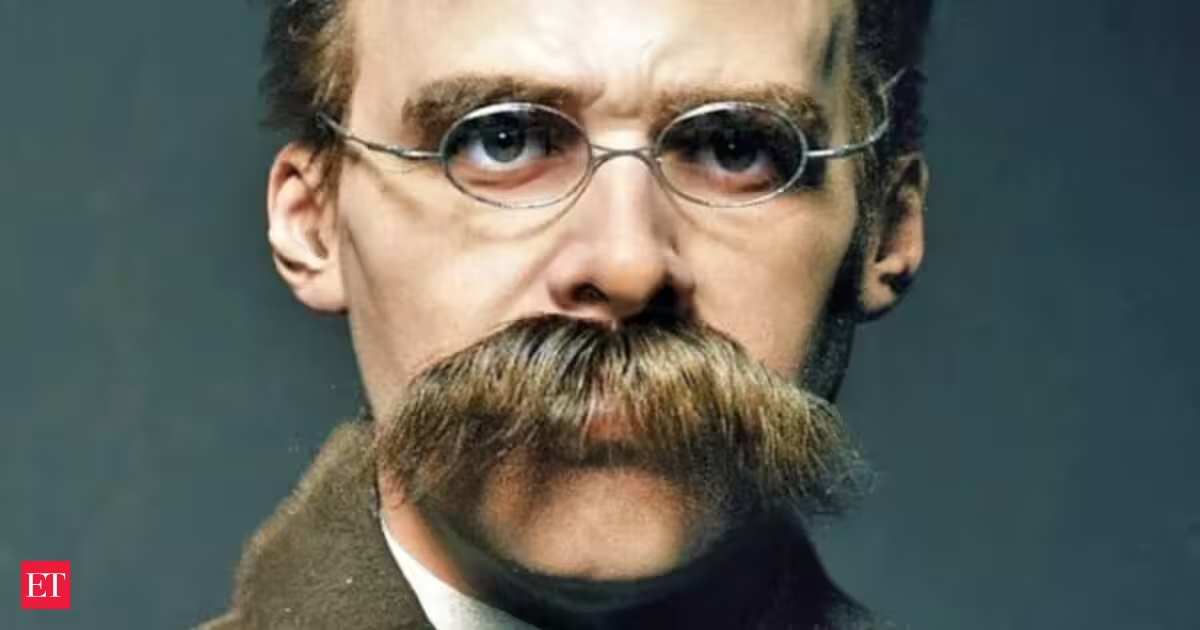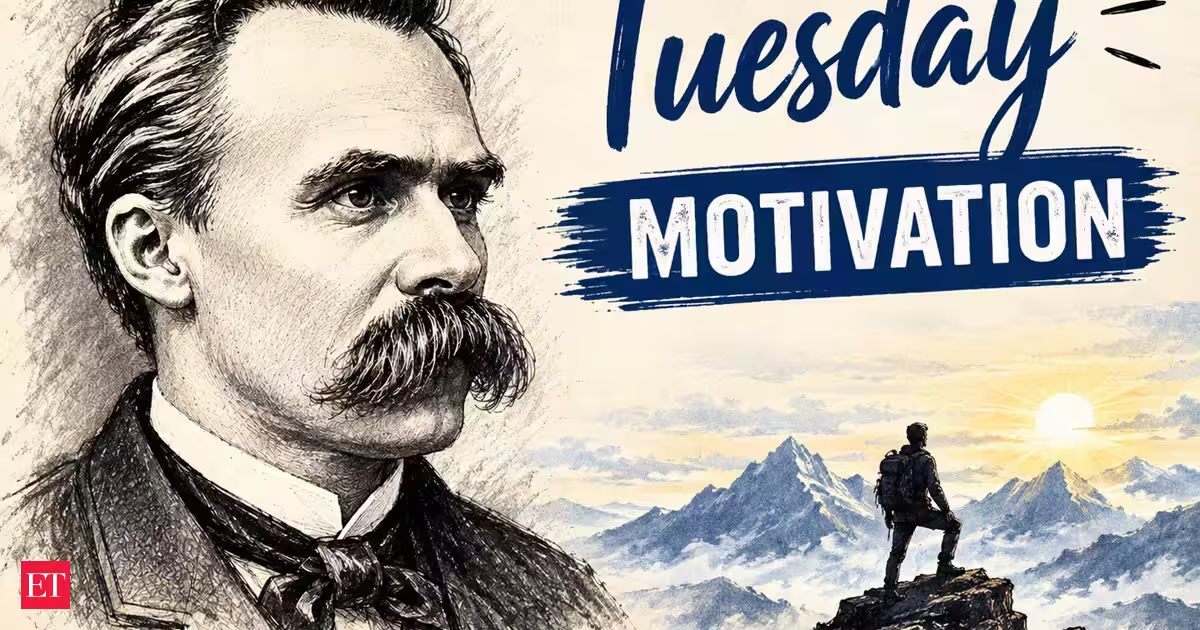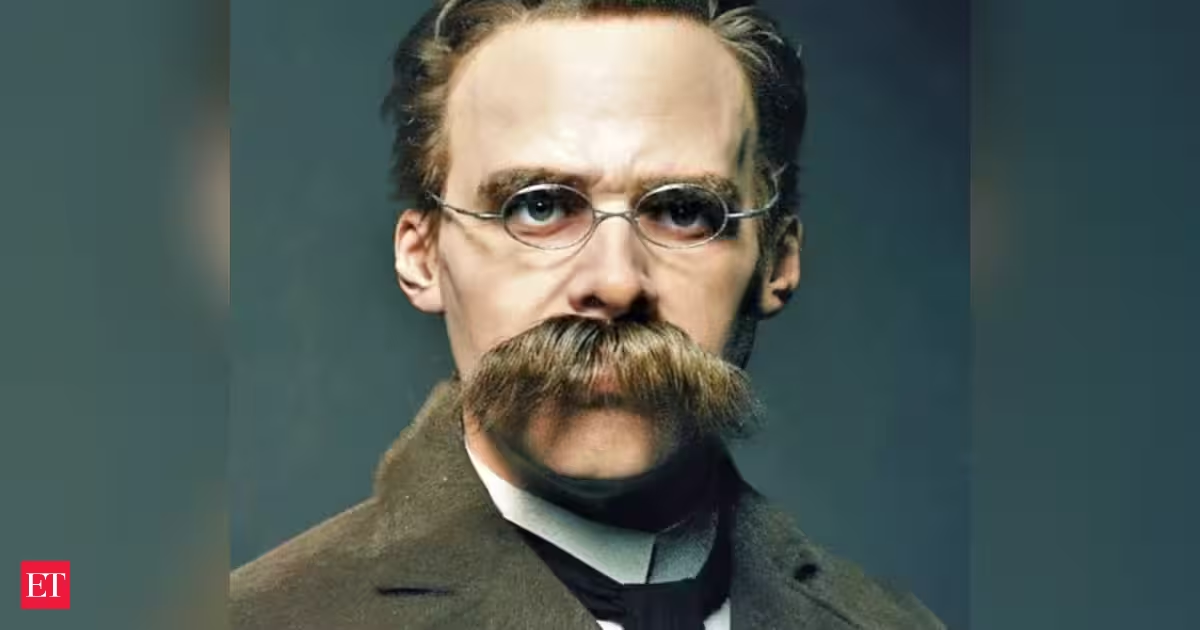
Quote of the day by Friedrich Nietzsche: It is natural to admire people who seem to have achieved extraordinary success, but what often goes unnoticed are the years of learning, persistence, and gradual improvement behind their accomplishments. Every new skill begins with uncertainty, every goal requires preparation, and every achievement is built on countless small victories. Although progress may sometimes feel slow, each step forward lays the foundation for the next. Today's quote by Friedrich Nietzsche reminds us that lasting success is the result of embracing the learning process rather than trying to skip it.Quote of the day today: Friedrich Nietzsche's lesson on the value of patience and steady progress to successToday's quote by Friedrich Nietzsche is, "He who would learn to fly one day must first learn to stand and walk and run and climb and dance; one cannot fly into flying," as per BrainyQuote.Friedrich Nietzsche's quote explains why success takes timeNietzsche uses the image of learning to fly to show that every great achievement begins with mastering the basics. Before reaching ambitious goals, people must first build the skills, experience, and confidence that make those achievements possible.His words encourage readers to see each stage of growth as an essential part of the journey rather than an obstacle to overcome.Why every stage of learning mattersWhether building a career, developing a talent, or pursuing a personal goal, meaningful progress comes through steady effort. Small improvements may seem insignificant at first, but over time they combine to create lasting success.You Might Also Like:Life lessons from today's quote of the dayToday's quote reminds us that there are no shortcuts to meaningful achievement. Friedrich Nietzsche's message encourages readers to stay patient, keep learning, and recognize that every small step taken today brings them closer to tomorrow's success.Friedrich Nietzsche's early lifeFriedrich Nietzsche (1844–1900) was a German classical scholar, philosopher, and cultural critic whose ideas transformed modern philosophy. He challenged traditional views on religion, morality, and culture, influencing generations of philosophers, writers, and psychologists, as per a Britannica report. Although he opposed nationalism and antisemitism, his ideas were later misused by fascists.Friedrich Nietzsche's career and famous booksNietzsche studied at the universities of Bonn and Leipzig before becoming a professor at the University of Basel in 1869. After leaving teaching because of poor health, he devoted himself to writing. His best-known works include The Birth of Tragedy, Thus Spoke Zarathustra, Beyond Good and Evil, The Gay Science, and On the Genealogy of Morals, as per the Britannica report.Friedrich Nietzsche's legacy and influence on modern thoughtNietzsche suffered a mental collapse in 1889 and died in 1900 at the age of 55. Today, he is regarded as one of the most influential modern thinkers, with his writings continuing to shape philosophy, psychology, literature, and cultural studies.You Might Also Like:Best motivational quotes by Friedrich NietzscheHere are a few more quotes by Friedrich Nietzsche.You Might Also Like:"The individual has always had to struggle to keep from being overwhelmed by the tribe. If you try it, you will be lonely often, and sometimes frightened. But no price is too high to pay for the privilege of owning yourself," as per BrainyQuote."Thoughts are the shadows of our feelings - always darker, emptier and simpler," as per BrainyQuote."The true man wants two things: danger and play. For that reason he wants woman, as the most dangerous plaything," as per BrainyQuote."It is impossible to suffer without making someone pay for it; every complaint already contains revenge," as per BrainyQuote."When one has finished building one's house, one suddenly realizes that in the process one has learned something that one really needed to know in the worst way - before one began," as per BrainyQuote."I do not know what the spirit of a philosopher could more wish to be than a good dancer. For the dance is his ideal, also his fine art, finally also the only kind of piety he knows, his 'divine service,'" as per BrainyQuote.
Quote of the day by Friedrich Nietzsche: 'He who would learn to fly one day must first learn to stand and...' - inspiring quote by German philosopher and author of The Gay Science, Ecce Homo and The Antichrist teaches life lessons on learning, growth mindset and why success begins with small steps
Quote of the day by Friedrich Nietzsche: Friedrich Nietzsche emphasizes the importance of patience and persistence in achieving success, reminding us that every great accomplishment starts with mastering the basics.
652 words~3 min read