Make sure that children don't share confidential financial information online.
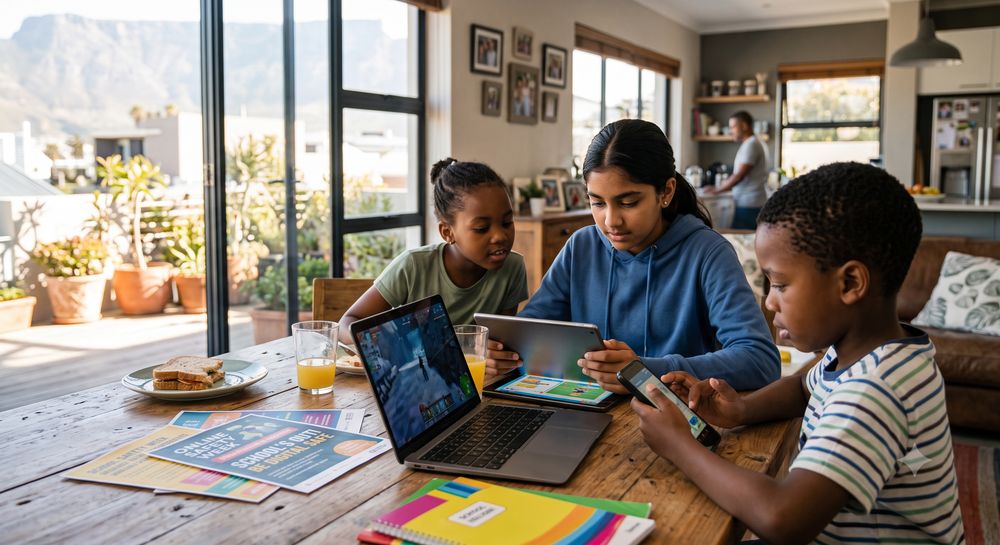
With the school holidays now underway, South African parents are preparing for a familiar challenge: how to keep their children safely entertained during long days at home. Today, however, this challenge extends far beyond physical safety to online security, too.
UNICEF research suggests that over 95% of South African children have regular access to the internet, yet only 41% have received any information on online safety. Even more alarmingly, more than half of these young people say they have added strangers to their online networks—a habit that can open the door to dangerous scams and exploitation.
School holidays often mean more screen time, less routine, and a greater likelihood of kids browsing the web independently. While exploring the internet is not inherently risky, it does create more opportunities for mistakes, particularly when money is involved.
Digital banking fraud in South Africa has risen sharply in recent years, with losses reaching billions of rands annually. Most of this damage is driven not by technical computer hacking, but by social engineering—clever tricks designed to manipulate you into sharing private information, approving transactions, or clicking on malicious links. Young people are especially vulnerable because they are highly confident online, yet they do not always pause to question what they are seeing.