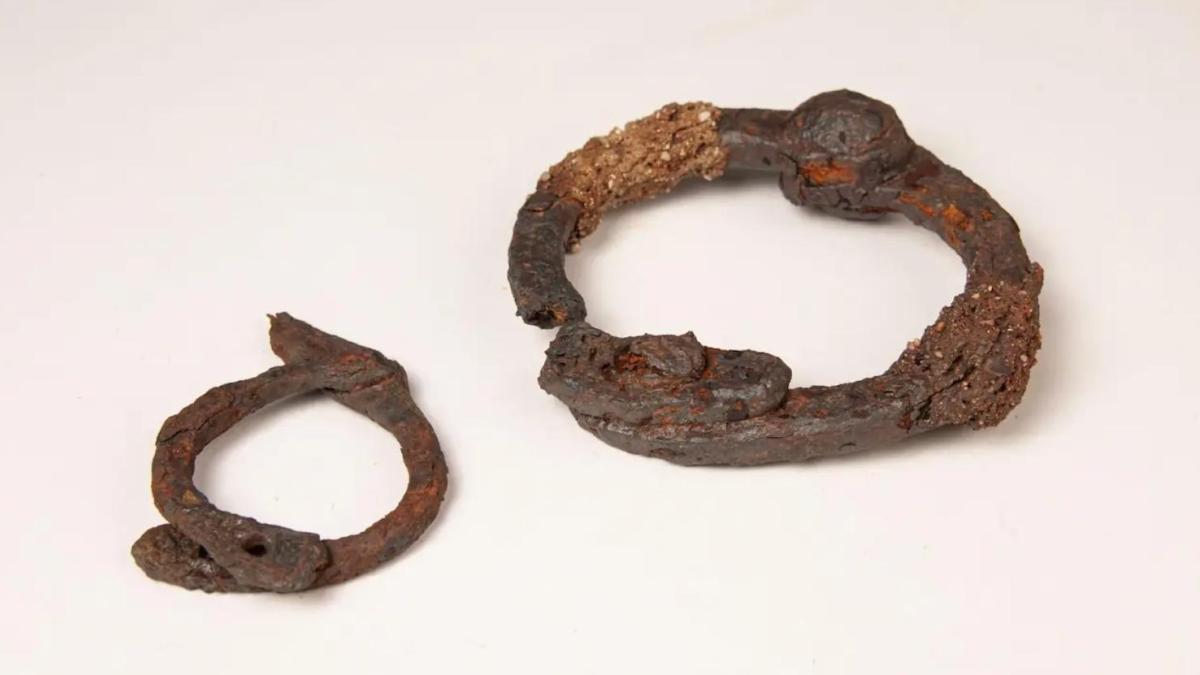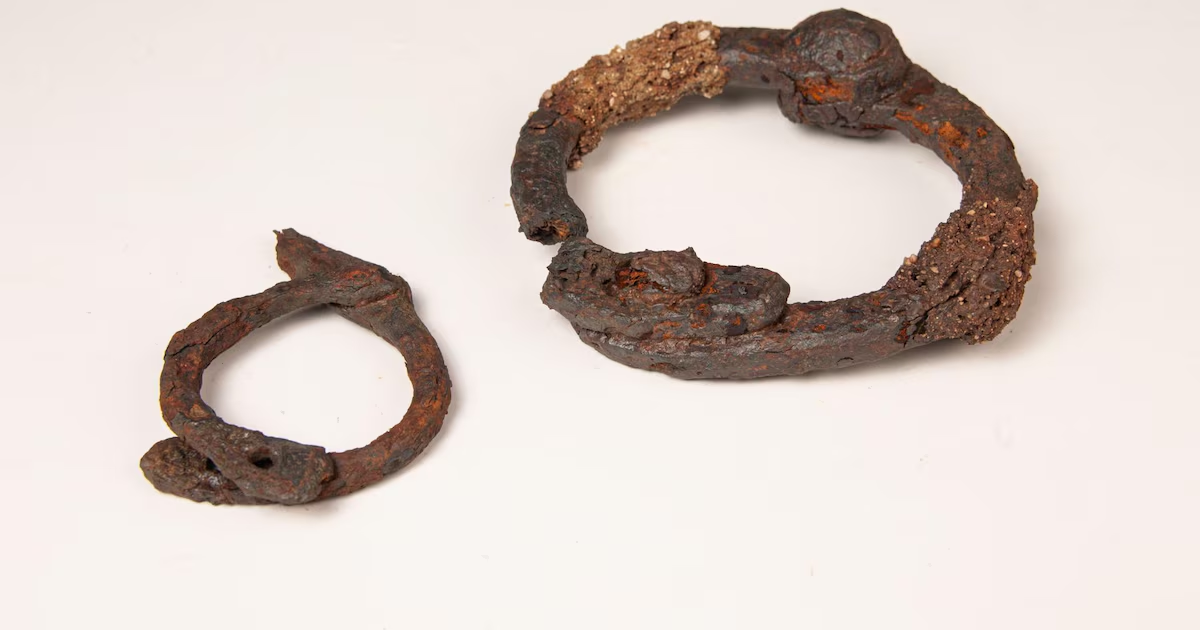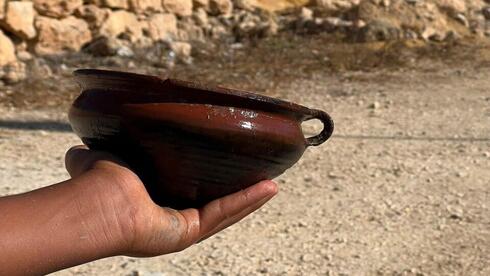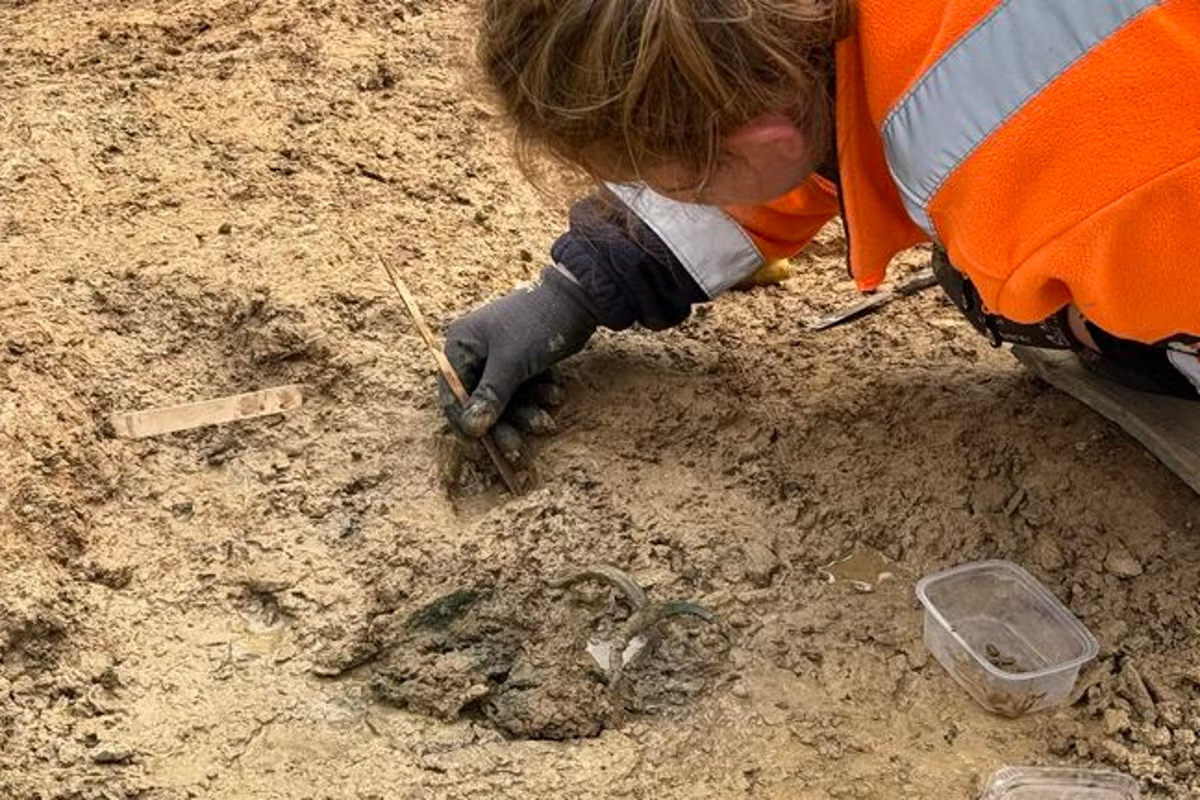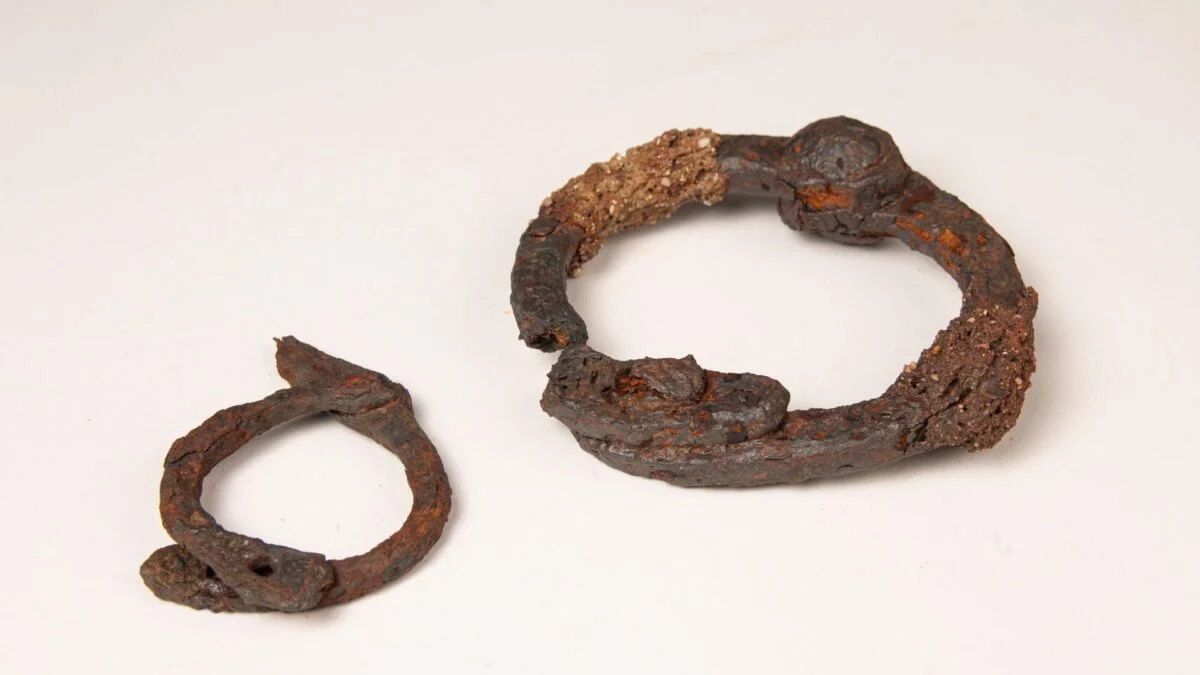
In 2019, French archaeologists unearthed an ancient Celtic settlement from the third century BCE. Things took somewhat of a grim turn when the team, while cataloging metal artifacts from the site, found some remarkably well-preserved shackles—likely relics from the region’s slave trade. The French National Institute for Preventive Archaeological Research (INRAP) published the results in a recent announcement (translated via Google Translate). In the statement, INRAP reported that the settlement of Allonnes turned up a rich collection of metal objects. In addition to the iron shackles, there were weapons, coins, jewelry, and more, made of iron and copper alloys. The team suspects that the settlement was home to a lively community of Gaulish artisans and merchants—and, in the shadows, individuals who, at the time, were “mere objects of property,” it noted in the statement. A set of metallic Gallo-Roman offering furniture. Credit: Emmanuelle Collado/INRAP “The Allonnes excavation yielded a rich assemblage of metal objects—remarkable for their number, variety, and quality, despite some degradation caused by soil acidity,” Thierry Lejars, director at the French National Centre for Scientific Research, said in an accompanying booklet (translated via Google Translate).
Archaeologists Unearth Rare Slave Shackles at Ancient Celtic Settlement
The discovery sheds light on a Gaul settlement at a critical location, likely frequented by metalsmiths and slave traders.
552 words~3 min read