(Getty Images Bank)
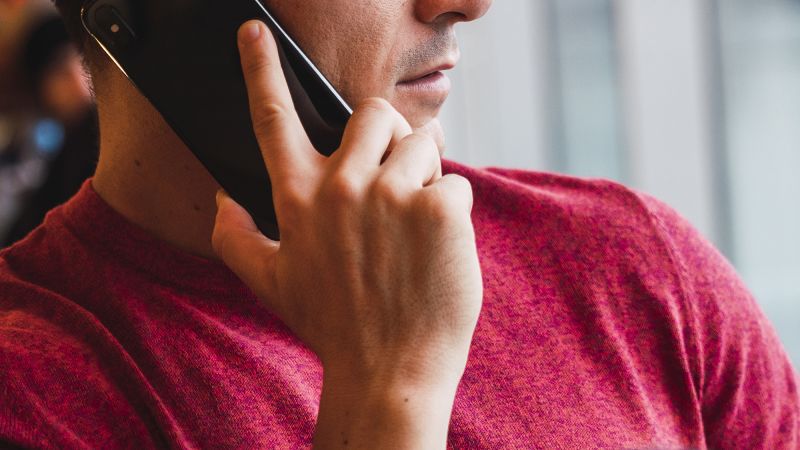
A recent online post has warned people about a new kind of scam. The scammers will call people and record their voices during short calls, then utilize AI to use the voice for phishing scams. A student of Sookmyung Women’s University posted her story on Everytime, an anonymous online forum for university students. “I avoided a voice phishing scam thanks to my professor,” she wrote. “I took a phone call from an unknown number. The person on the other end didn’t say anything. I was about to say ‘Hello?’ but then I remembered something my professor told me: ‘If the caller is silent, you should never say anything.’ I hung up immediately.” “If you speak into the receiver, the scammers will record your voice and use it to scam your family members. If it weren’t for my professor, I could have been scammed.” The professor mentioned in this post is Cho Soo-young, professor of law at Sookmyung Women’s University. During a phone interview with the Hankyoreh on Friday, Cho described the forum post as “A reference to my lecture on the increasing technological sophistication of voice phishing scams, ‘Law and the 4th Industrial Revolution.’ The student who wrote the post clearly paid attention.” “These days, voice phishing scammers will record your voice. They’ll then use AI to make that voice say things they type into their software to blackmail and scam other people,” Cho said.“They just need a few words, like ‘Hello?’ and ‘Who is this?’ to make their scams work.”Scammers use these “deepfake” voices to impersonate people, calling their family or friends and claim that they’ve been in a car accident and need an immediate wire transfer of money.During an appearance on the CBS radio program, “Kim Hyeon-jeong’s News Show,” Jung Sou-hwan, a professor of electronic engineering at Soongsil University, told listeners, “We are now in an era where it’s difficult to tell if a voice is a deepfake by simply listening to it.”“Technology has gotten so sophisticated that scammers just need a five-second sample of your voice. Lately, even a two-second sample yields surprisingly convincing results,” Jung added.In October 2021, a bank in the United Arab Emirates OK’d a wire transfer of US$35 million after being duped by a cloned deepfake voice of a business executive who frequently did transactions with the bank. Just last March, a Canadian couple was defrauded of CA$21,000 after being contacted by a scammer who used a deepfake of their son’s voice. By Kim Yoon-ju, staff reporterPlease direct questions or comments to [english@hani.co.kr]