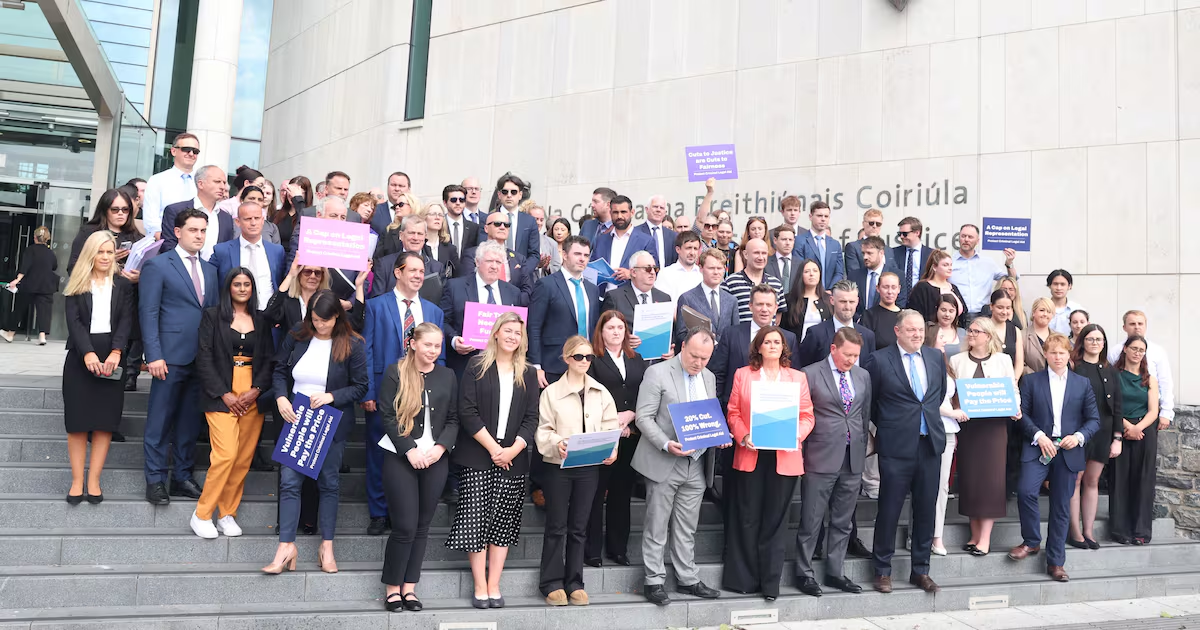
The State now faces 10 High Court claims brought by people accused of offences who were jailed after being unable to secure legal representation in the District Court.The challenges to the legality of their imprisonment arise amid a dispute over the Minister for Justice’s new criminal legal aid model.More than 100 solicitors in Dublin have signalled they plan to resign from the criminal legal aid panel. Many other criminal defence solicitors throughout the State have withdrawn services.The new legal aid scheme, introduced on July 1st, provides a flat €520 fee for solicitors representing clients in criminal cases at District Court level. This replaces an initial fee of €240 plus €60 for each additional hearing.Minister for Justice Jim O’Callaghan has said he would not relent on the matter and that the new regulations were introduced to prevent abuses of the system via unnecessary adjournments.Five of the 10 who were left unrepresented before the District Court have since been granted bail by the High Court. The first two of these cases came before the court last Friday.On Tuesday, Judge Mary Rose Gearty refused to grant bail to a sixth man, who is accused of causing criminal damage at his father’s house. The High Court judge said she would be open to reconsidering bail next week if testing shows he is now drug free. However, she said he has “quite a bad history” of bench warrants, having failed to show for nine court cases this year and seven last year, when he says he was in the throes of drug addiction. [ Analysis: Does Jim O’Callaghan’s reform of solicitors’ legal aid fees have support within Government?Opens in new window ]She scheduled the 10 challenges to the legality of the accused people’s detentions, brought under article 40 of the Constitution, for hearing on July 24th.Eoin McCullough, senior counsel representing the governors of the prisons in which the accused were detained, said some of the cases challenge the constitutionality of the regulations introducing the new legal aid scheme. He submitted it was not appropriate to challenge the regulations via an article 40 inquiry into the lawfulness of a prisoner’s detention. Rather, this should be done by way of judicial review. He noted there is already a judicial review challenge to the regulations under way. However, after a short break in the hearing, McCullough told the court the challengers were happy to delay this portion of their cases until after their other grounds have been determined.
Ten accused left unrepresented in court challenge legality of their imprisonment
High Court claims arise amid dispute over Minister for Justice’s new criminal legal aid mode
410 words~2 min read