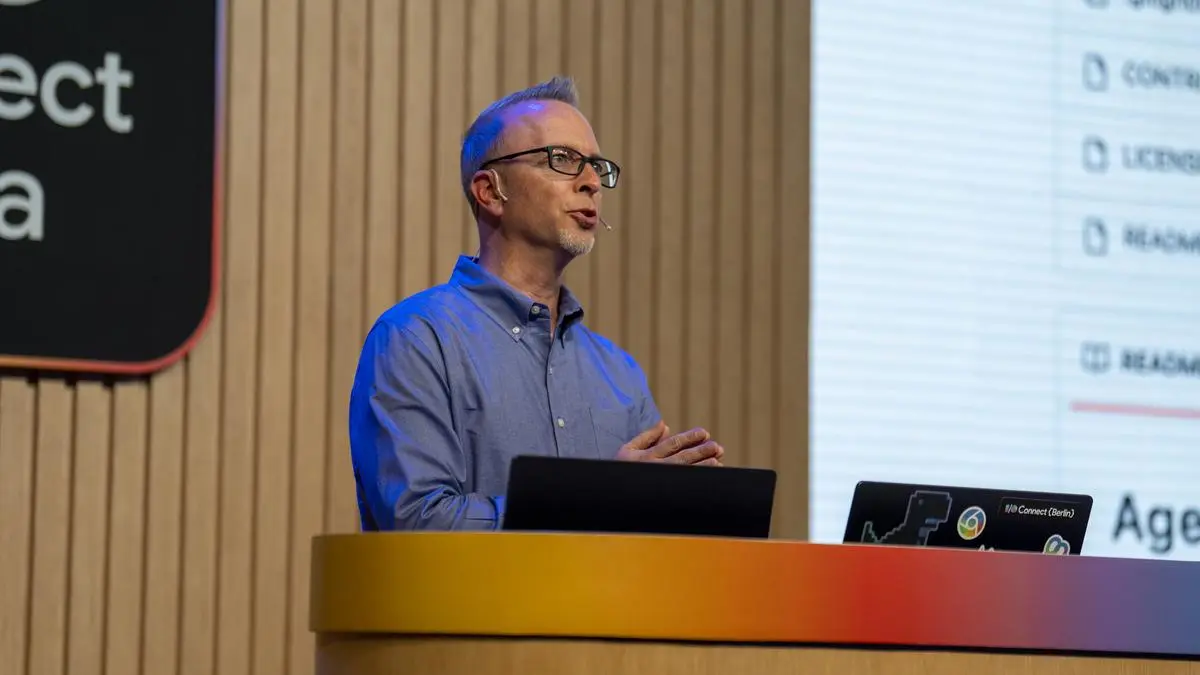
Richard Seroter, Chief Evangelist, Google Cloud, addresses the media at the Google I/O Connect India 2026 in Bengaluru on Tuesday
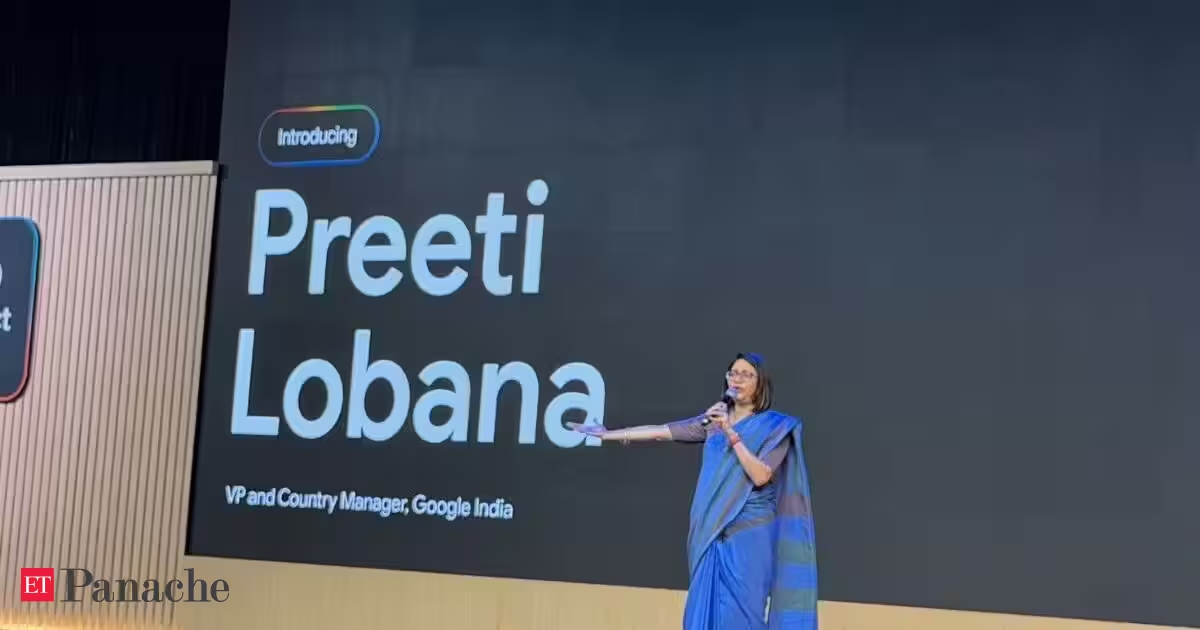
At Google I/O Connect India 2026 in Bengaluru on Tuesday, Google announced new sovereign AI capabilities for Indian enterprises, alongside localisation support to strengthen its commitment to India’s AI ambitions.Google had recently expanded its commitment to India’s digital sovereignty by making Gemini 3.5 Flash accessible to Indian enterprises and startups via the Gemini Enterprise Agent Platform and the Gemini Enterprise app. Starting now, this model will be available with strict in-country machine learning processing commitments.Google is also enabling Indian enterprises, including regulated industries and the public sector, to run Gemini on Google Distributed Cloud from within Indian data centres.Enterprises and public sector organizations can now build with frontier AI entirely within their own perimeter, with supporting services also fully disconnected from the public internet.Addressing the media, Richard Seroter, Chief Evangelist, Google Cloud, said, “India is one of our hottest markets and has one of our largest developer populations. There is also growth in the cloud. But plenty of people hold back from putting certain workloads in the cloud because of little trust. You can’t win a company unless you win their confidence and help reduce risk. We want to win the mission-critical workloads, and that requires a commitment to sovereignty. While plenty of workloads don’t need it and can run anywhere, our goal is to win the whole company. Bigger companies have to trust that they’re not accepting unnecessary risk by using Google Cloud.”He added that Google Cloud should emerge as a preferred option for customers who might run 80 percent of their workloads in the public cloud and a handful in something more sensitive.“We’re not a private cloud company. We’re a platform company that also offers an extension for people who can’t run everything on the shared platform,” Seroter said.Addressing rising token costs, he said Google had maintained a good price-performance balance. However, subsidised token costs had increased in general. He added that Google would continue striving to offer the best price and performance, while noting that token costs had become more transparent and were less subsidised than before.“People will pick the right model for the right thing. Google has the Gemma models -- the open models. There are plenty of cases where one doesn’t need a frontier model that charges per token. It’s a fixed infrastructure cost. Open models will have some success here because you will use them for certain workloads. Everyone using the same frontier model and paying the growing token cost is not sustainable, at least until inference costs come down,” he noted.Seroter added that the future will be a mix of a few big frontier models and small models that run on local infrastructure and devices.“Some of the small Gemma models sit on phones and are embedded in Chrome on desktop. Some of these small models can be fine-tuned for specific use cases, like healthcare, education, or legal. We will keep investing here. One doesn’t always need a trillion parameters. Sometimes, you just need a model that can run locally,” he highlighted.Published on July 14, 2026