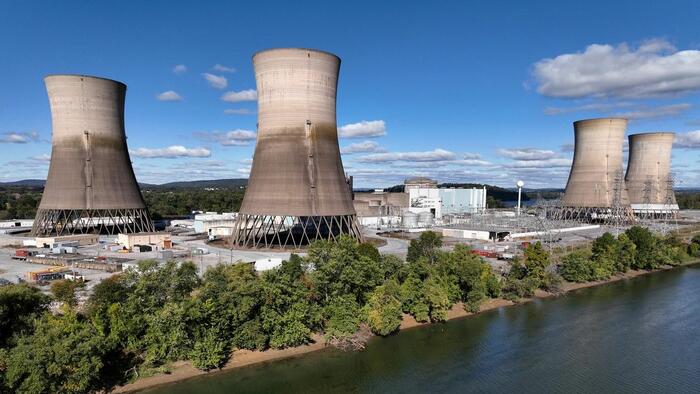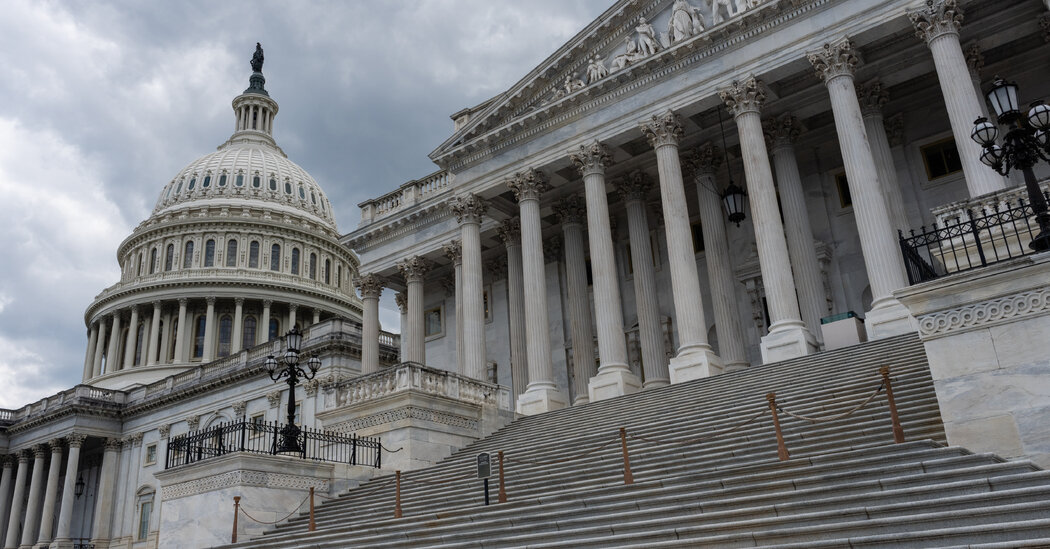
House Democrats are pushing back against a new bill advanced by Republicans that could limit independent reviews of new nuclear energy projects, such as the licensing for reactor designs that have never been built before. The legislation in question, the Nuclear Advisory Committee Reform Act, advanced out of the House Committee on Energy and Commerce’s energy subcommittee on Tuesday, and now heads to the full committee for further review and changes before it hits the House floor for a vote. The bill would reform and reduce the scope of the Advisory Committee on Reactor Safeguards, an independent review committee that has offered its insights, advice, and warnings to federal regulators on the Nuclear Regulatory Commission since 1954.
Scaling back the committee’s scope is in line with the Trump administration’s broader effort to reduce regulatory hurdles to the deployment of new nuclear energy reactors. Under current law, ACRS is required to examine proposals for new reactors that are unique, novel, and noteworthy, including new commercial nuclear power plants and new reactor designs. The bill would remove this requirement entirely, only allowing the committee to initiate these reviews once specifically requested by the NRC. Republicans argue that the bill would eliminate duplicative reviews, improve efficiency, and accelerate licensing decisions on the federal level.As President Donald Trump has moved to influence the NRC, firing a Democratic chairman and ordering an overhaul of its regulations and workforce, Democrats say they are concerned that making independent reviews subject to the federal regulator’s discretion will defeat the purpose of independent checks. “I absolutely share in the sentiment that we want to reduce bureaucracy and we want to reduce unnecessary obstacles between application and bringing energy online,” Rep. Alexandria Ocasio-Cortez (D-NY) said. “However … this would remove the ACRS’s ability to approve as the only independent technical check between a reactor application and an approval.“Right now, the United States is preparing to license a new generation of advanced reactors that have never been built before,” she said. “They’ve never been operated at commercial scale, and their risks are not fully understood, and this is exactly when independent scrutiny matters the most.” A recent review conducted by the Breakthrough Institute found that there is roughly 74 gigawatts of announced or prospective new nuclear reactor capacity in the U.S. For comparison, the city of San Francisco is estimated to require around 1 gigawatt of electricity. As of this spring, the U.S. had a total nuclear capacity of just over 94 gigawatts.Much of this new capacity is tied to the development of small modular reactors, which traditionally have a smaller footprint, allowing them to be built closer to local grids on an accelerated timeline.Typically, these small reactors can generate around 300 megawatts of power. There are no SMRs operational in the U.S. and only a handful in operation globally.The Trump administration has turned to this advanced technology as a way to meet surging energy demand from large-load facilities, such as data centers, to support its agenda of getting ahead of China in the race for artificial intelligence. Last year, Trump established a goal for the U.S. to quadruple its nuclear energy capacity by 2050. During Tuesday’s hearing, there was broad bipartisan support for building out new nuclear power. But Democrats emphasized that it was not worth doing so at the expense of sacrificing safety. “The ACRS is not comprised of bureaucrats,” subcommittee ranking member Kathy Castor (D-FL) said. “These are genuine nuclear experts taking time to serve their country by ensuring that nuclear energy is safe energy. While we want them to be efficient in their work, I cannot support any proposal that would silence them, especially in the wake of last month’s Supreme Court ruling ending the political independence of commissions like the NRC.” Castor was referring to the Supreme Court’s landmark decision at the end of June that approved the president’s ability to remove commissioners and heads of independent agencies without cause. Ocasio-Cortez also pointed to instances when the ACRS identified significant safety risks in new reactor designs that were not first reported by federal regulators. SMALL NUCLEAR REACTORS COULD BE OPERATIONAL BY 2030, REGULATOR SAYS IN FIRST INTERVIEW“I don’t think that we should be shifting to a model where the ACRS only has an ability to say something if the NRC asks them to,” she said. “That they are what mandatory independent review is designed to catch, and this is how our system is working.” As the bill heads to the full House committee, Democrats have one more chance to amend it and remove provisions restricting when the advisory committee can conduct its own reviews.