About 120 premature births a year in New Zealand might be caused by exposure to drinking water contaminated with nitrates from the country’s farming industry, a new national study said.Researchers at Canterbury, Otago and Massey universities found a “significant” association between nitrate-contaminated water and premature births, even at levels far below New Zealand’s legal limit for nitrates in drinking water of 11.3 milligrams per liter. The risk also increased as nitrate concentrations rose, “with stronger associations for more severe outcomes,” it said.
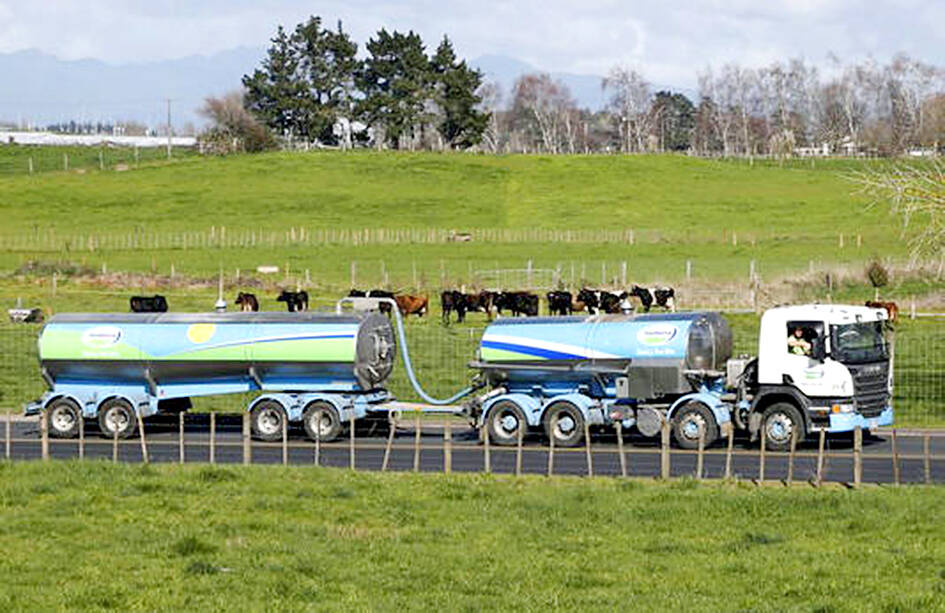
A Fonterra milk tanker drives past dairy cows as it arrives at Fonterra’s Te Rapa plant near Hamilton, New Zealand, in this August 6, 2013.
The issue is especially contentious in New Zealand, where agriculture plays a central role in the economy and nitrate is among the most common contaminants in drinking water.The dairy sector is New Zealand’s top export earner and is expected to bring in a record NZ$28.6 billion (US$16.6 billion) in revenue in the year to last month, government statistics showed.
Nitrate pollution is largely attributed to fertilizer use and livestock manure run-off.Environmental group Greenpeace said dairy companies such as Fonterra needed to be held responsible. “We need to stop nitrate pollution at the source. That means regulating the intensive dairy industry, and limiting the amount of synthetic nitrogen fertiliser that can be applied to the land,” campaigner Will Appelbe said in a statement.Fonterra directed a request for comment to industry body DairyNZ, which said questions about public health and drinking water standards are matters for health and regulatory agencies, which are responsible for assessing the scientific evidence. New Zealand’s Ministry of Primary Industries did not immediately respond to requests for comment.The study, set to be published in the peer-reviewed Environmental Research journal in September, analyzed more than 735,000 births from 2008 to 2021. Its authors said their research found associations across all categories of premature births and pre-natal nitrate exposure. When the study assumed a causal relationship, it found nitrate exposure could account for 120 premature births a year, or 4 percent of pregnancies that ended between 20 and 37 weeks.