By Crystal Hsu /
Landis Hotels & Resorts Corp (亞都麗緻) is on track for a recovery in the second half of the year as a rebound in international business travel and resilient premium dining demand help strengthen its earnings outlook.The hotel operator posted first-half revenue of NT$252 million (US$7.83 million), up 15.2 percent from a year earlier, driven by Taiwan’s economic performance, a wealth effect from the stock market rally and improved sales from accommodation and restaurants.Landis has benefited from a return of business travelers, particularly from the US and Europe, lifting room revenue and occupancy, while allowing the company to maintain premium room rates, Landis resident service manager James Ho (何昱人) said yesterday.
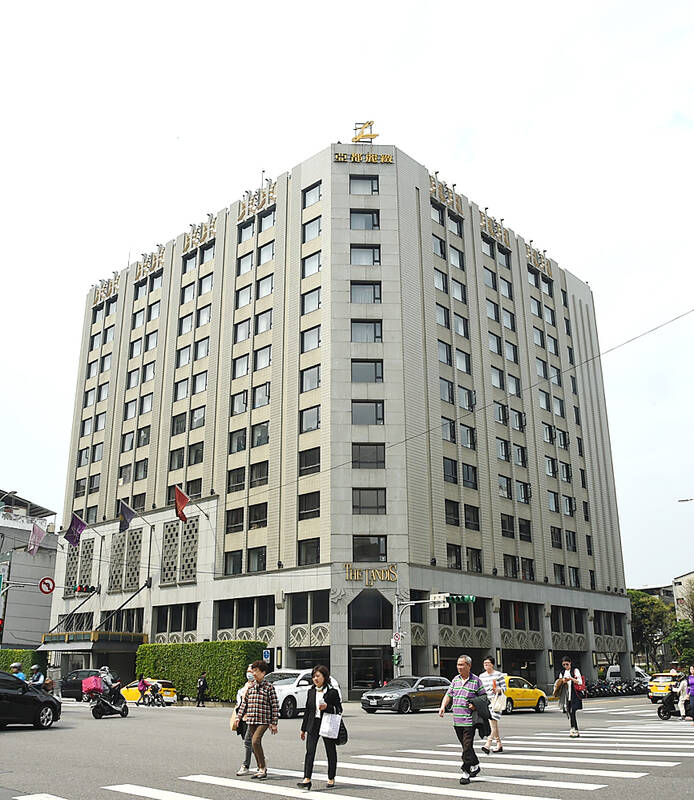
The Landis Taipei Hotel Taipei’s Zhongshan District is pictured on 2018.
The company remains cautious about the third quarter, traditionally a weaker period for Taiwan’s hotel industry as domestic travelers head overseas during the summer vacation season, reducing local demand for lodging and dining.Geopolitical risks, including renewed tensions in the Middle East, could weigh on corporate travel, if higher oil prices lead companies to curb travel, Ho said.
Still, Landis said they expect business momentum to improve in the fourth quarter, when hotels and restaurants typically benefit from year-end gatherings, he said.The company’s revenue is evenly split between accommodation and food-and-beverage operations, and its Chinese restaurant Tian Xiang Lou (天香樓) remains the largest contributor among its dining businesses, accounting for about 60 percent of restaurant revenue.French restaurant La Brasserie (巴賽麗廳) has emerged as a growth driver, with revenue rising about 30 percent in the first half from a year earlier. The restaurant plans to introduce a new menu this week to expand sales, Landis said. Beyond its core hotel and restaurant businesses, Landis is developing licensing and consulting services to create additional fee-based income without significant capital spending, it said.The move is part of a broader strategy to build an asset-light business model, allowing the company to benefit from the travel recovery while reducing dependence on expanding physical capacity, it added.