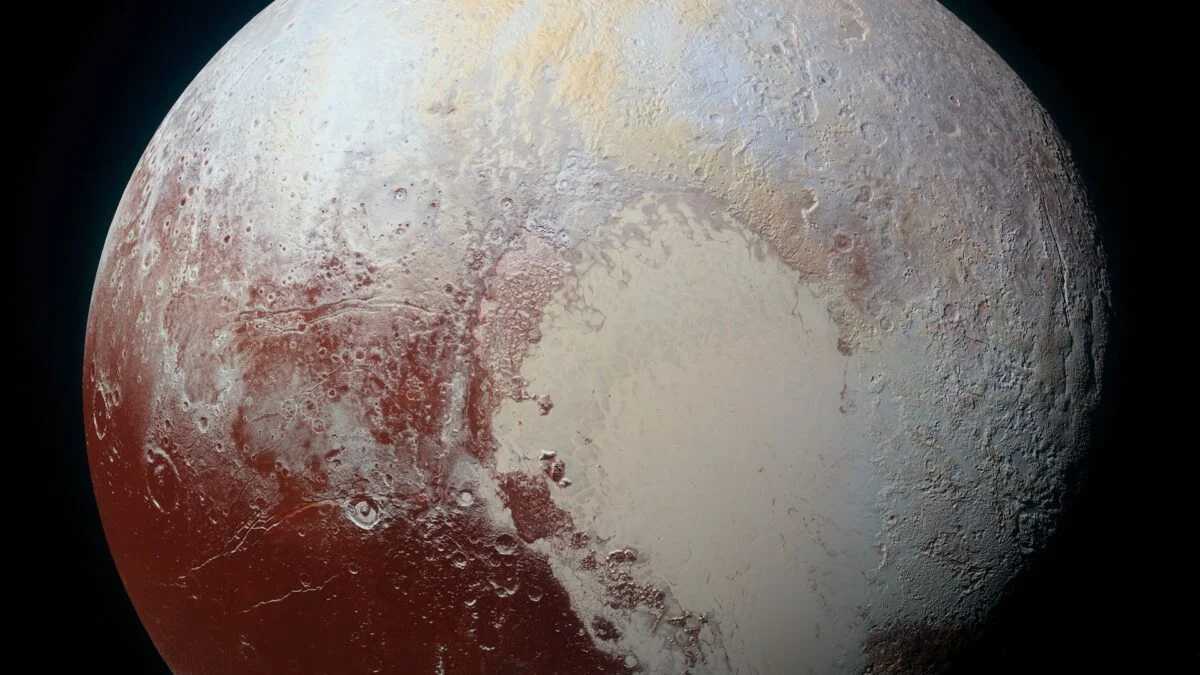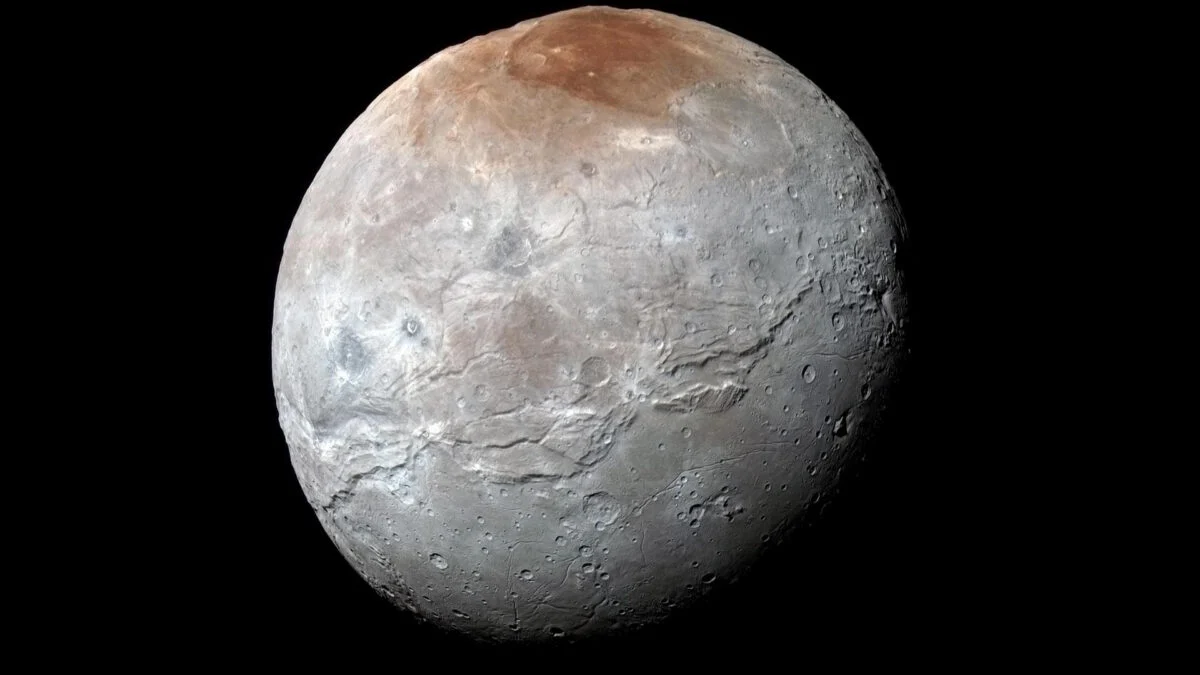
The solar system’s icy moons are natural labs for astronomy’s most fascinating discoveries. And Charon, Pluto’s largest moon, is no exception. According to a new study, this icy world might redefine how scientists understand the evolution of satellites in the outer solar system. In a paper published today in Nature Communications, researchers present new evidence that Charon’s rotation is slowing down, with the record of this change preserved in the moon’s geological features. Using observations collected during NASA’s historic New Horizons flyby of the Pluto system, the team built a modeling system to assess how despinning—a process in which tidal forces alter an object’s shape and internal temperature—affected Charon’s overall geology. The analysis suggested that Charon’s rotation period used to be around 14.3 hours—significantly shorter than its current period of about 153.3 hours. “This study drastically changed our understanding of the geologic history of Charon,” Hanzhang Chen, the study’s first author and a postdoctoral researcher at ETH Zurich in Switzerland, told Gizmodo.
Spinny round things In the paper, Chen and colleagues explained that it’s challenging to study the geologic and thermal evolution of planetary bodies in the solar system. Landscapes constantly shift on objects with active atmospheres, such as Pluto or Titan. On the other hand, bodies without atmospheres are either subjected to heavy cratering, like Callisto or Ceres, or experience frequent tectonic changes due to tidal dissipation, such as Enceladus or Europa, according to the paper.