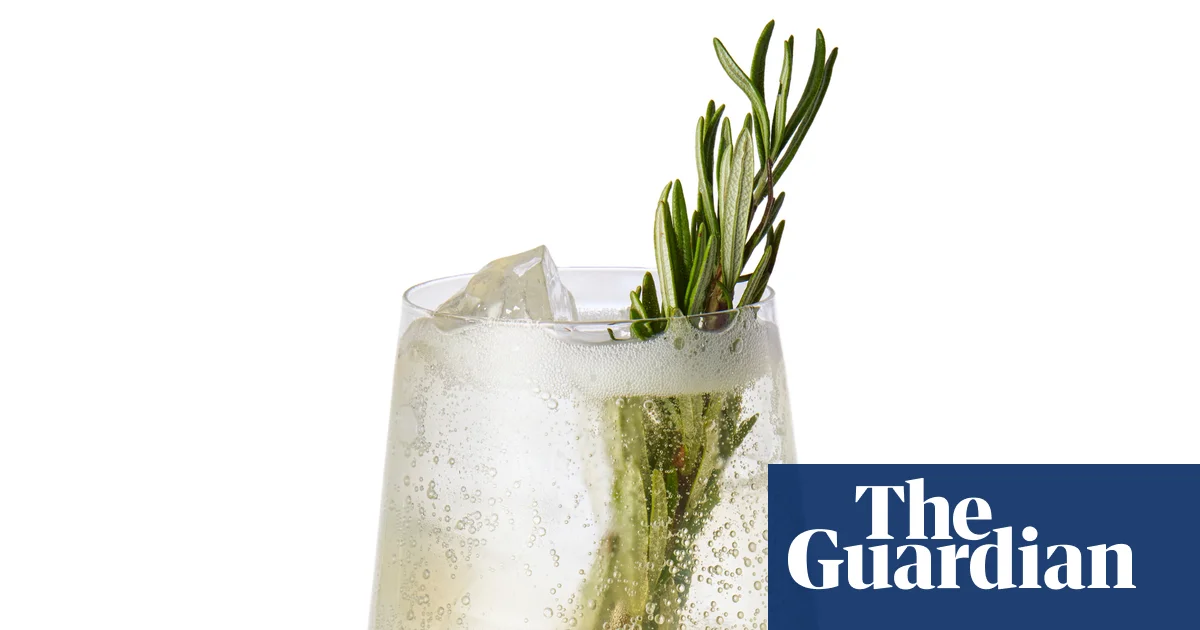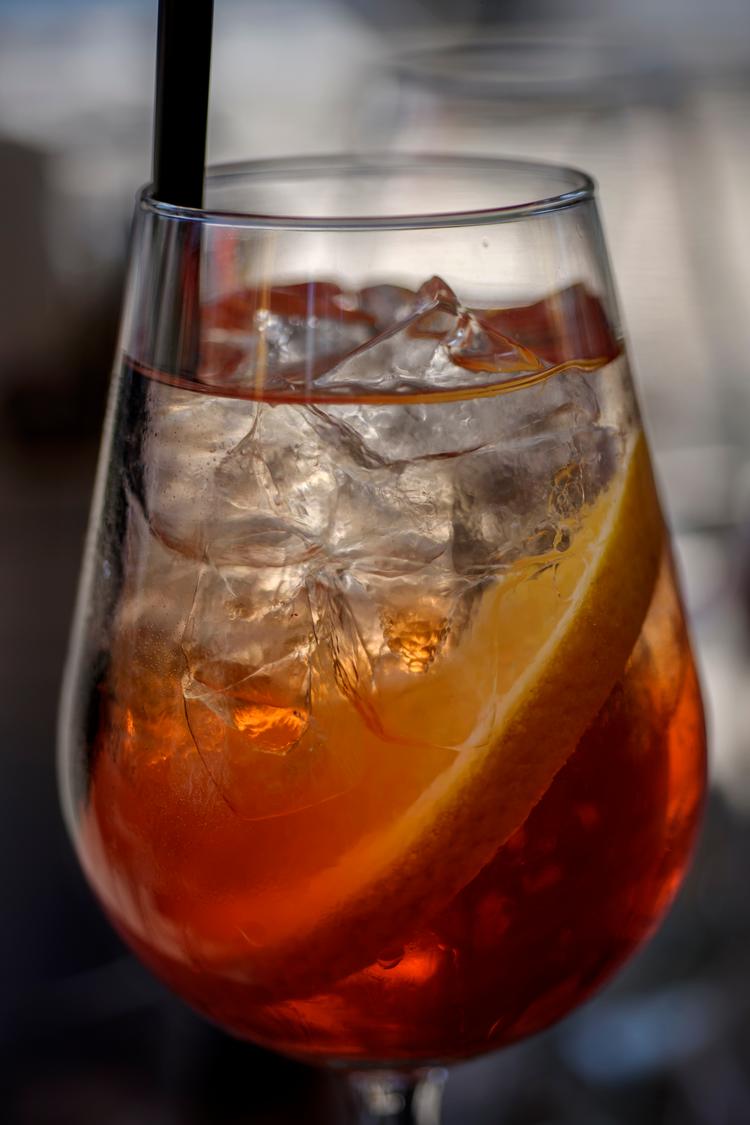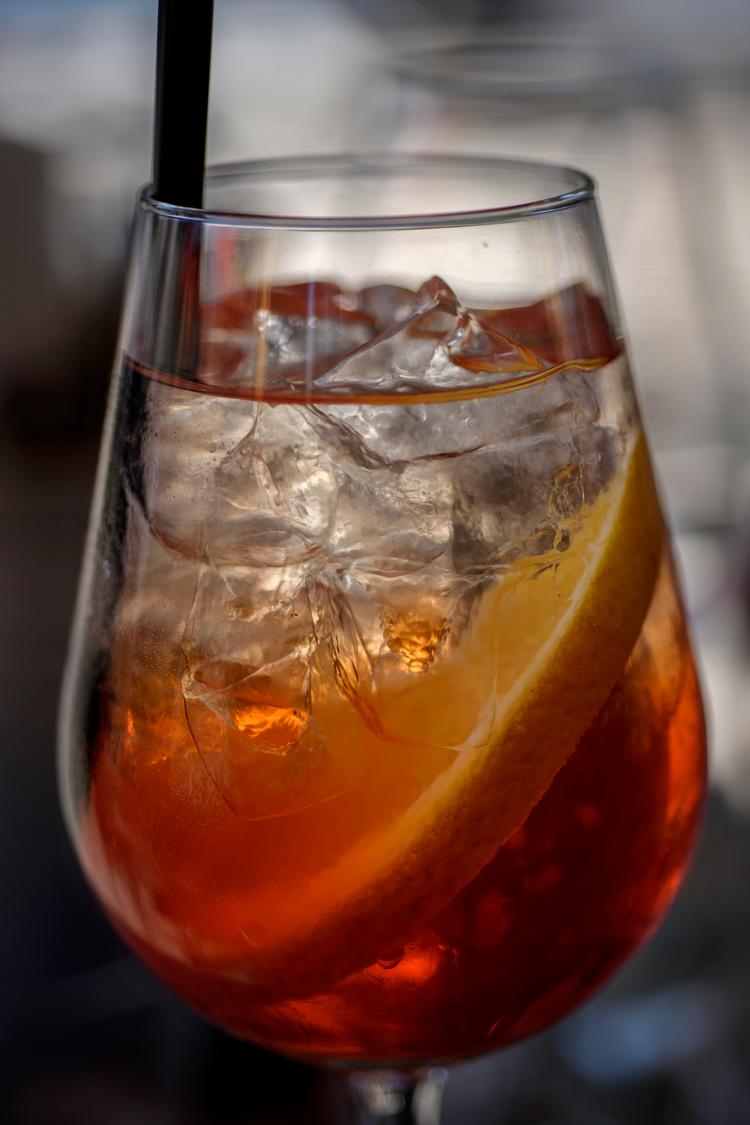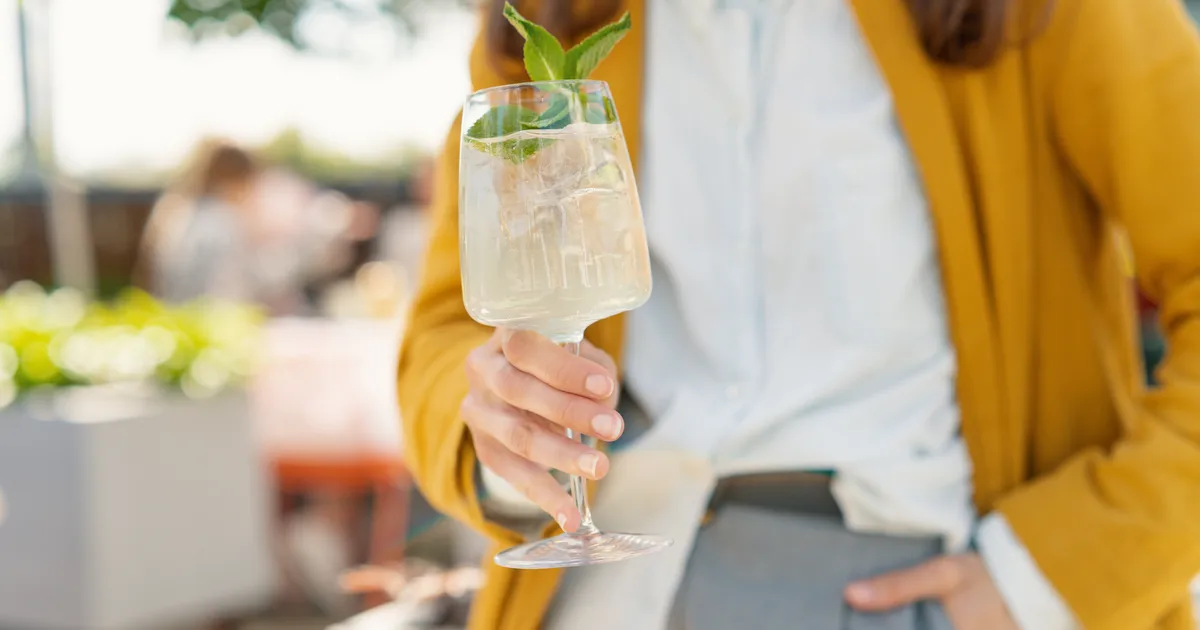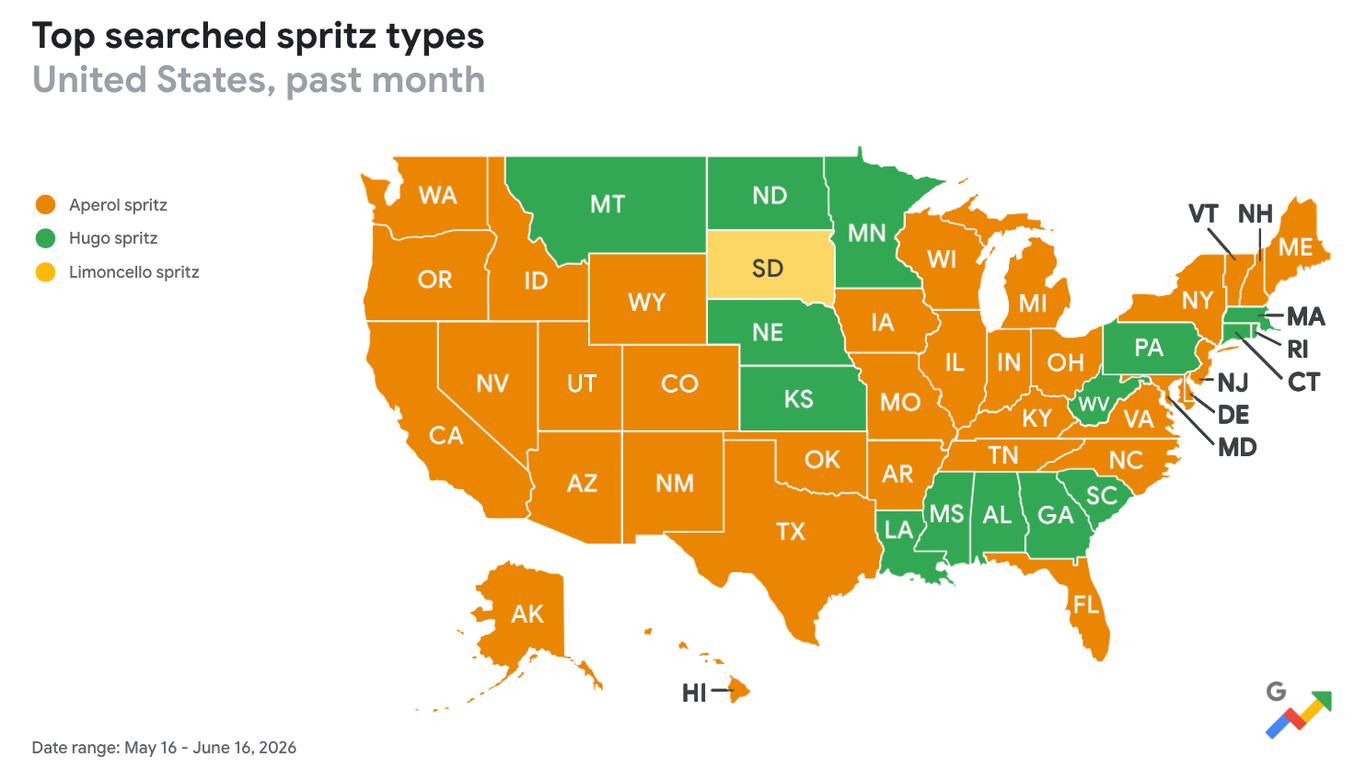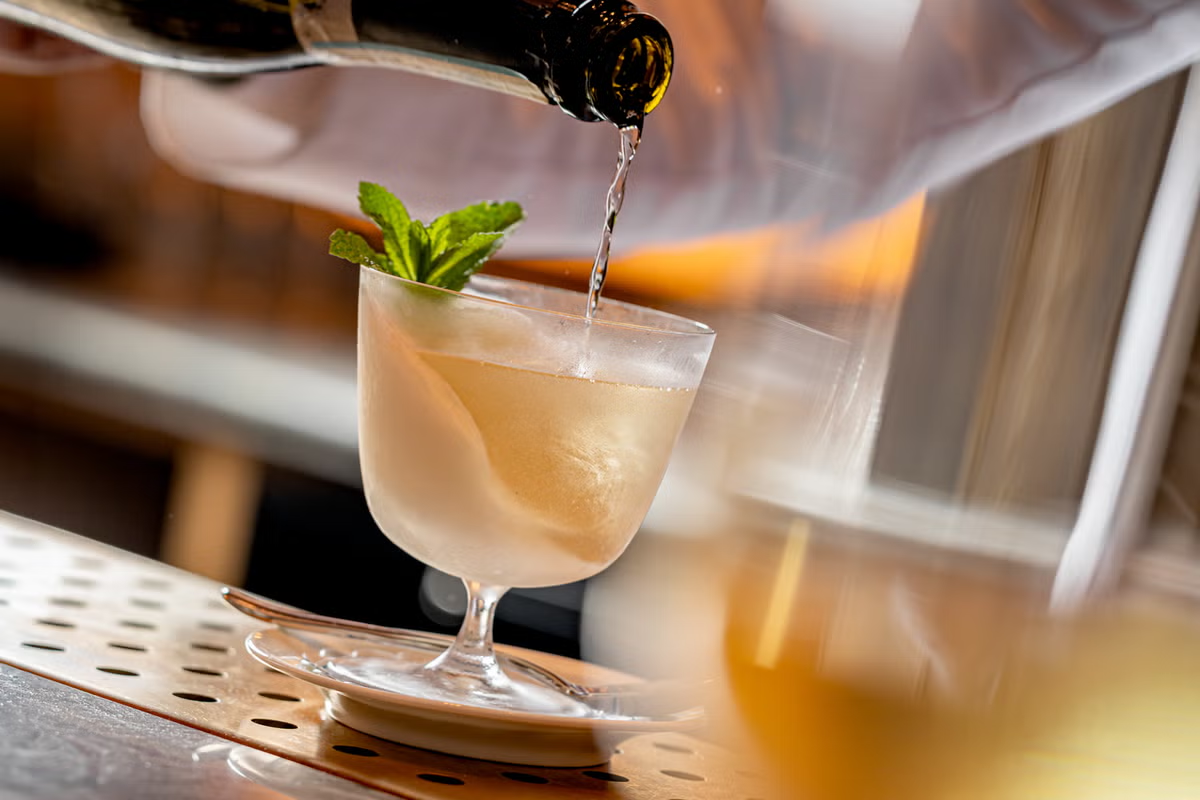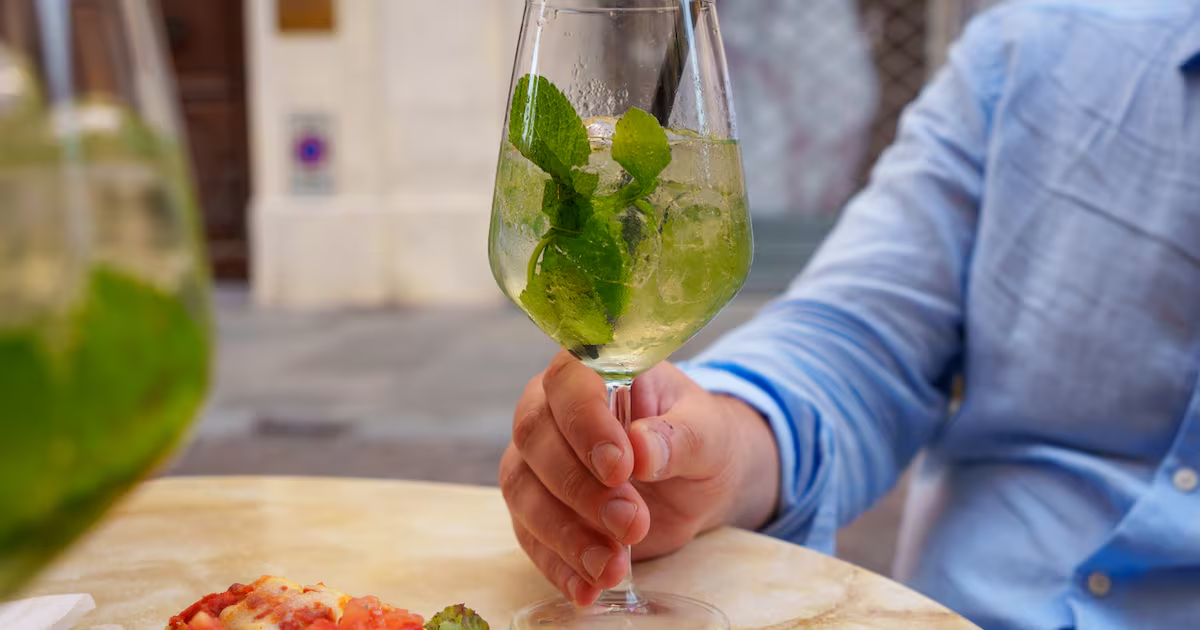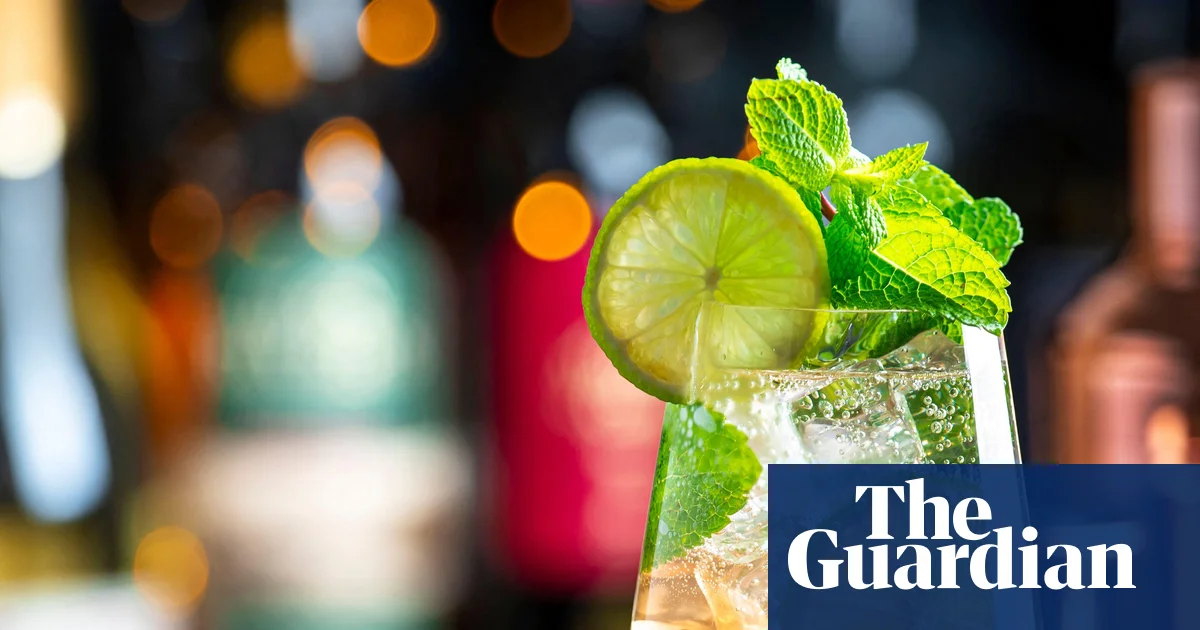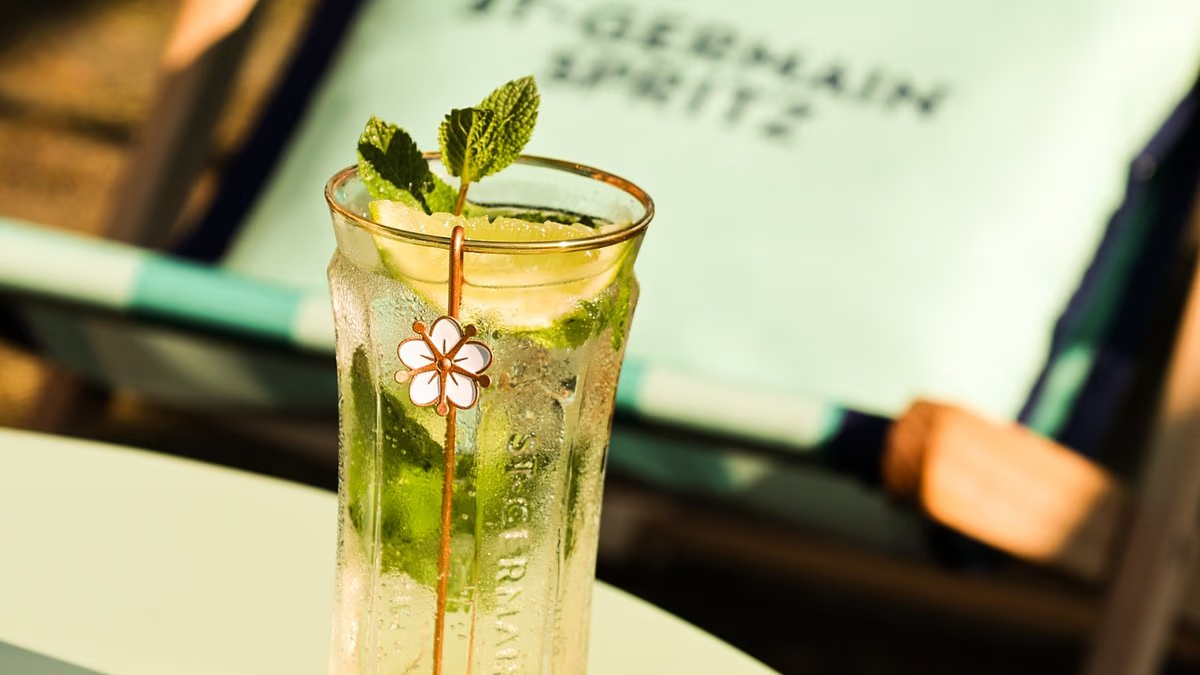
On a balmy Friday evening inside Claridge’s newest opening, Dante, the room glows the colour of an Italian postcard. White-jacketed waiters weave between marble tables carrying an endless procession of spritzes. But something has changed. The familiar flashes of Aperol orange are still there, yet they’re now sharing the stage with glasses tinted the palest shade of green, piled high with mint and cucumber ribbons.‘Hugo spritz?’ asks the waiter before I’ve even opened the cocktail menu.Around me, it’s impossible not to notice them. Nearly every other table has one.After almost two decades as the undisputed king of summer drinking, has the Aperol spritz finally met its match?If social media, supermarket sales and bartenders are to be believed, the answer is yes.The Hugo spritz – a delicate mix of elderflower liqueur, prosecco, soda water, fresh mint and lime – has become this year’s defining drink. Less bitter than its famous orange rival, lighter in alcohol and positively made for golden-hour Instagram posts, it feels perfectly suited to 2026’s softer approach to drinking.In fact, the Hugo isn’t some centuries-old Italian classic at all. It was only invented in 2005 by bartender Roland Gruber in South Tyrol. His original recipe used lemon balm syrup rather than elderflower, but when bars struggled to source it consistently, elderflower syrup – and later elderflower liqueur such as St-Germain – became the signature ingredient.The result is something floral, crisp and infinitely drinkable. If Aperol tastes like an Italian piazza at sunset, the Hugo tastes like an Alpine meadow in July.The numbers suggest Britain has fallen hard. Waitrose says searches for ‘Hugo spritz’ have increased by 364 per cent compared with this time last year. Sainsbury’s has seen searches for elderflower soar by 781 per cent year on year, while Marks & Spencer has sold more than 1.1 million cans of its ready-to-drink Hugo spritz since launching it just a year ago. It has now overtaken the retailer’s classic gin and tonic to become its bestselling cocktail can.Even brands built around the Aperol boom are seeing the tide turn.Black Lines, which bottles premium cocktails, says its Hugo spritz has become its biggest seller. ‘Consumers aren’t looking for an alternative to Aperol anymore,’ says co-founder Kuleen Khimasia. ‘They’re actively looking for a Hugo.’ A Hugo spritz at Claridge’s newest opening, Dante Back at Dante, co-founder Linden Pride tells me exactly the same thing.‘Hugo spritz is on every table,’ he says. ‘It’s a sea of green and orange.’For the first time since the group opened, the Hugo was last week’s bestselling cocktail across every Dante location – from Beverly Hills to New York to London.It’s remarkable considering the Aperol spritz has spent years becoming almost synonymous with summer itself. The orange drink conquered Britain by promising la dolce vita in a wine glass, even if you were actually sitting outside a pub in Surrey. The Hugo offers much the same fantasy, but with a slightly different mood.Where Aperol is bold, bitter and unmistakable, the Hugo is softer. Elderflower replaces bitter orange, fresh mint adds garden freshness and the overall effect is lighter, both literally and psychologically.That softer profile arrives at exactly the right cultural moment.Across the drinks industry there’s a growing shift towards longer serves with lower alcohol content. People increasingly want drinks they can sip over lunch or through an entire afternoon without feeling as though they’ve accidentally ordered a double Negroni.‘The Hugo captures where drinking culture is moving,’ says Numa Heathcote, co-founder of Della Vite, the Prosecco brand that also produces a range of canned spritz cocktails. ‘It’s lighter in style, more refreshing and more sessionable, but still has that sense of occasion people want from an aperitivo.’That idea of ‘drinking lighter’ crops up repeatedly.Sommelier Davide Traverso, from Edinburgh wine bar Sotto, believes younger drinkers are increasingly choosing cocktails that feel refreshing rather than overpowering.‘The Hugo has a lower ABV than many classic summer cocktails,’ he says. ‘People want to socialise and enjoy a drink or two without feeling the effects the next day.’In other words, it’s part of the same movement that has given rise to alcohol-free spirits and wellness cocktails. We haven’t stopped wanting treats – we’ve simply become more selective about how they make us feel.There’s another reason the Hugo feels so irresistible: it photographs beautifully.The drink practically comes pre-styled. Pale green, sparkling bubbles, fresh mint, slices of lime, elegant wine glass. It’s everything social media loves. Unlike Aperol’s aggressively bright orange, the Hugo’s muted palette feels more expensive and almost suspiciously tasteful.It helps that elderflower itself has quietly become one of summer’s defining flavours, turning up everywhere from supermarket desserts to premium soft drinks.And while many trends burn brightly before disappearing almost overnight, the Hugo may have more staying power than most. Edinburgh wine bar Sotto’s Hugo spritzUnlike some viral cocktails, it’s incredibly easy to recreate at home. Five ingredients, no complicated techniques and plenty of room for personal twists – cucumber at Dante, a slice of lime at Sotto, or even ready-mixed versions from supermarkets if you can’t be bothered to assemble it yourself.That’s probably why it has spread so quickly beyond fashionable bars into picnics, weddings, garden parties and airport lounges. British Airways has even added Della Vite’s canned Hugo spritz to its onboard drinks selection.Will Aperol disappear? Of course not.Like the espresso martini or the margarita, it’s become a modern classic that isn’t going anywhere. But perhaps that’s the point. Summer doesn’t have to be a zero-sum game.At Dante, as the evening rolls on, more green glasses arrive, followed by another tray of orange ones. Tables swap between the two without much ceremony.Maybe the real winner isn’t the Hugo or the Aperol at all. It’s the spritz itself – endlessly adaptable and somehow able to convince us that, with the right glass in hand, we’re all just one sip away from an Italian holiday.Our favourite ready-to-drink Hugo spritzes
How the Hugo spritz became the season's must-order cocktail
From Claridge's to supermarket shelves, discover why the Hugo Spritz has overtaken the Aperol Spritz as this summer's must-order cocktail.
977 words~4 min read