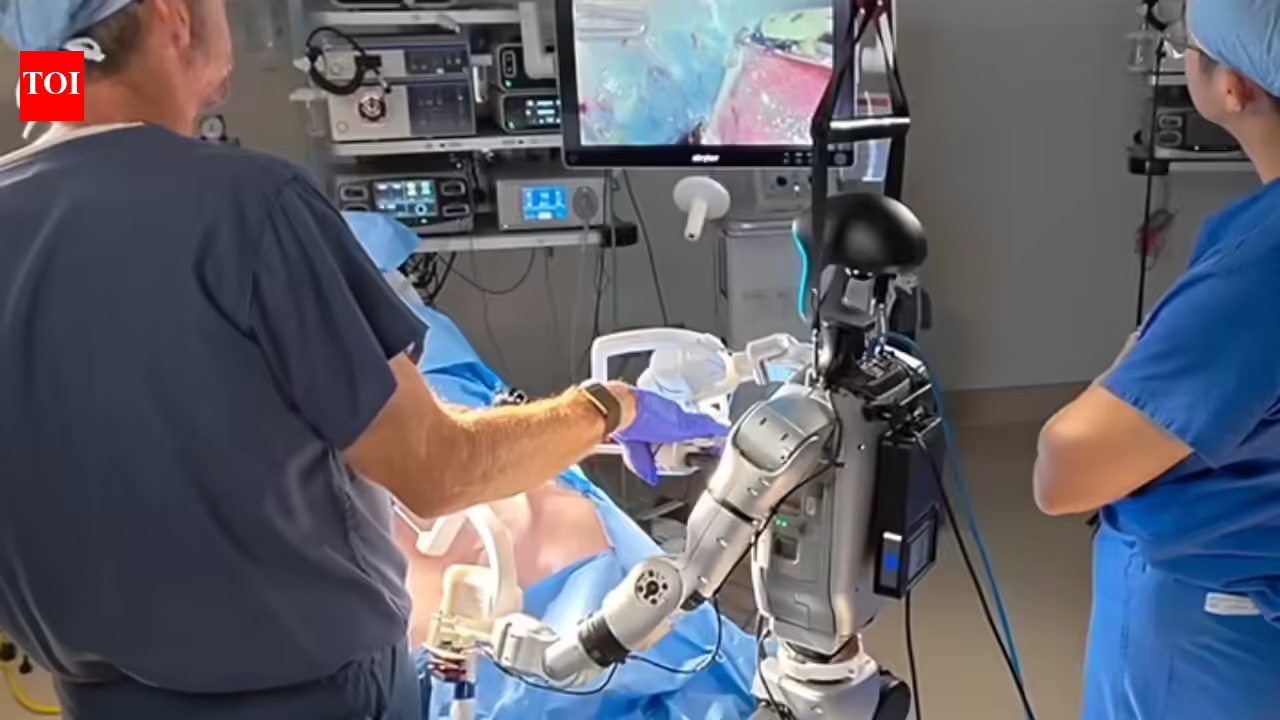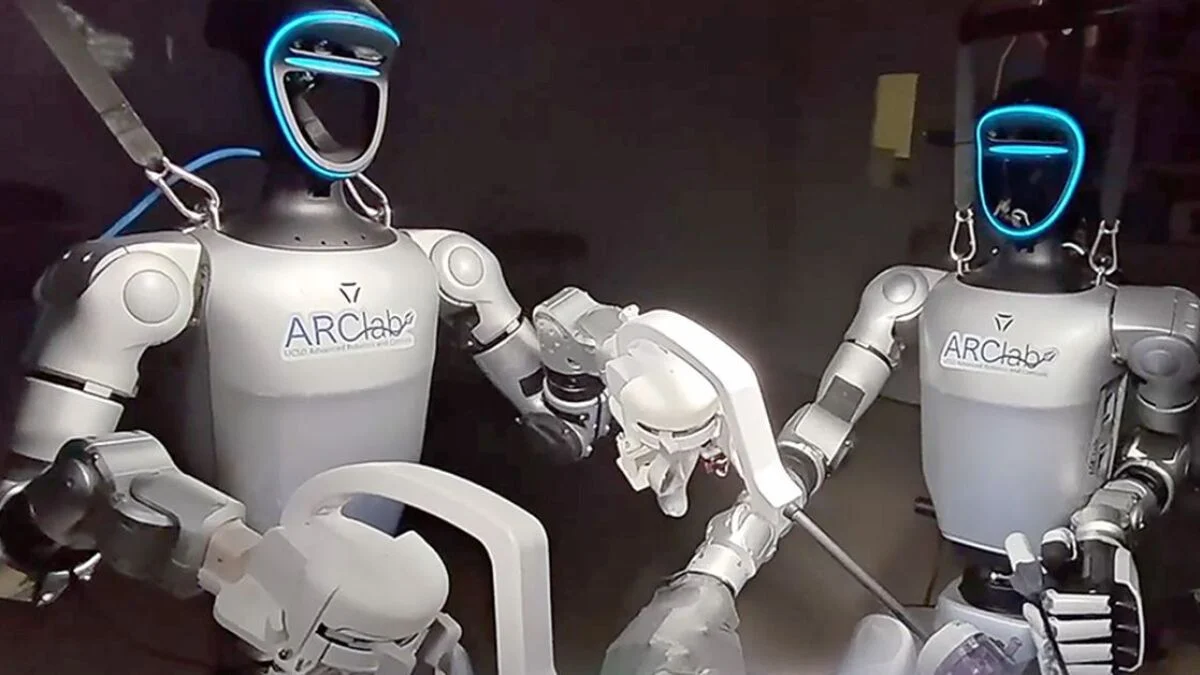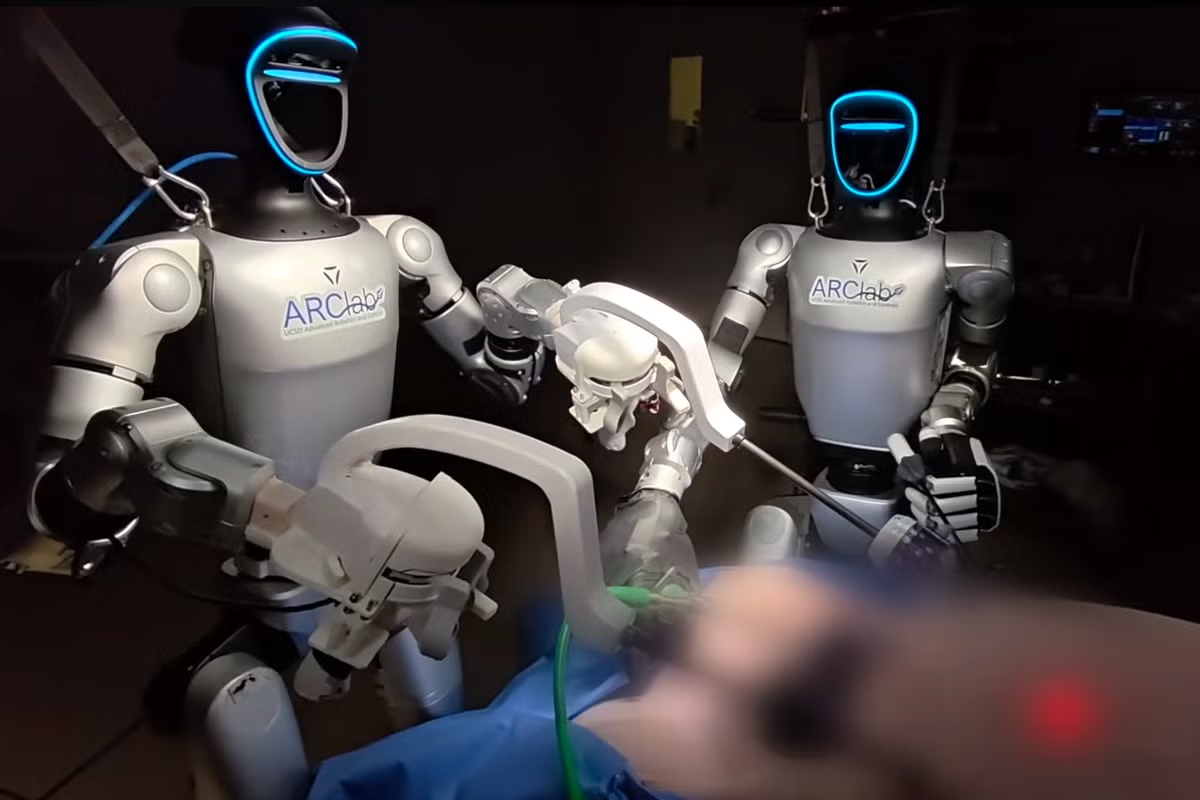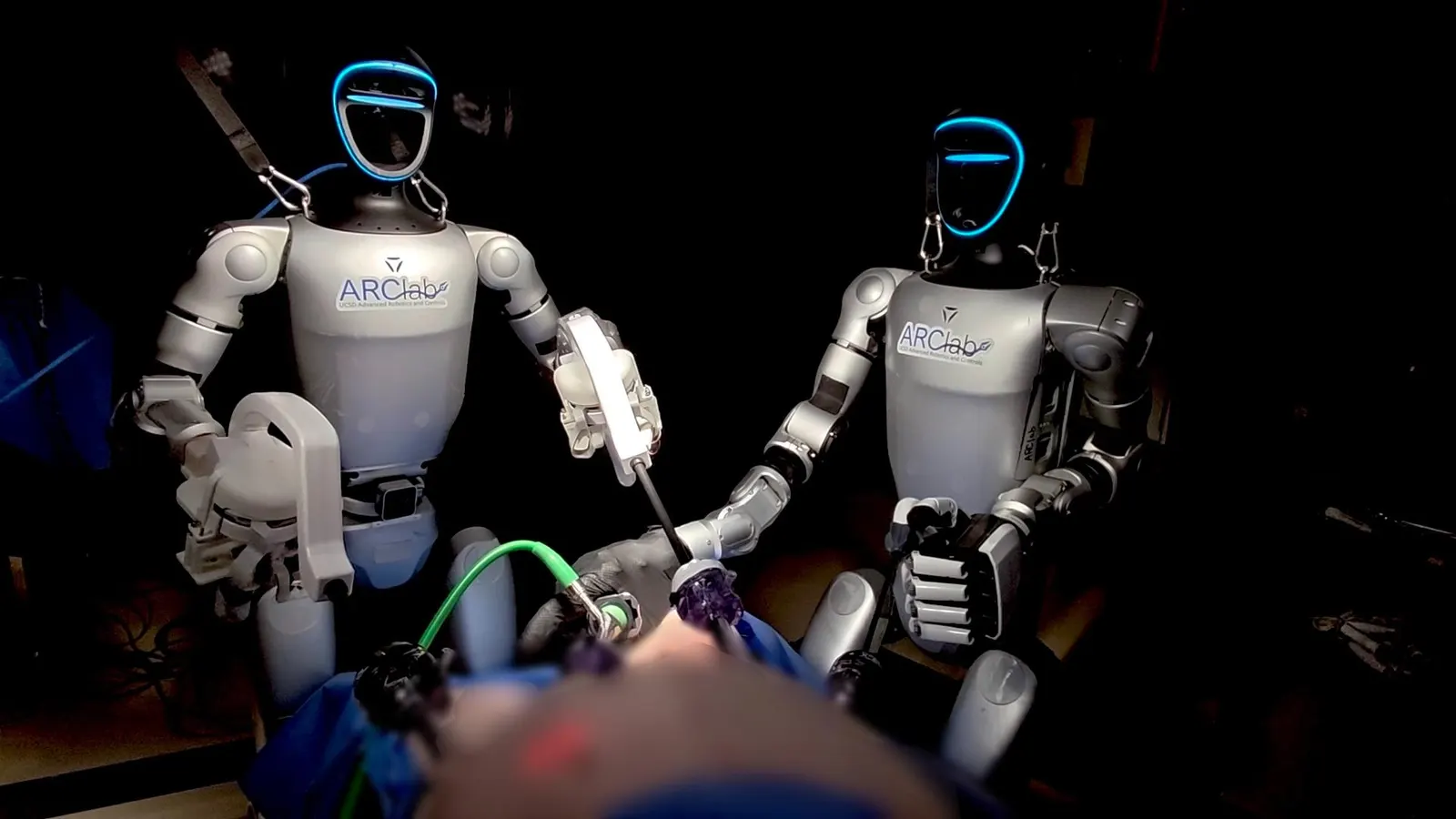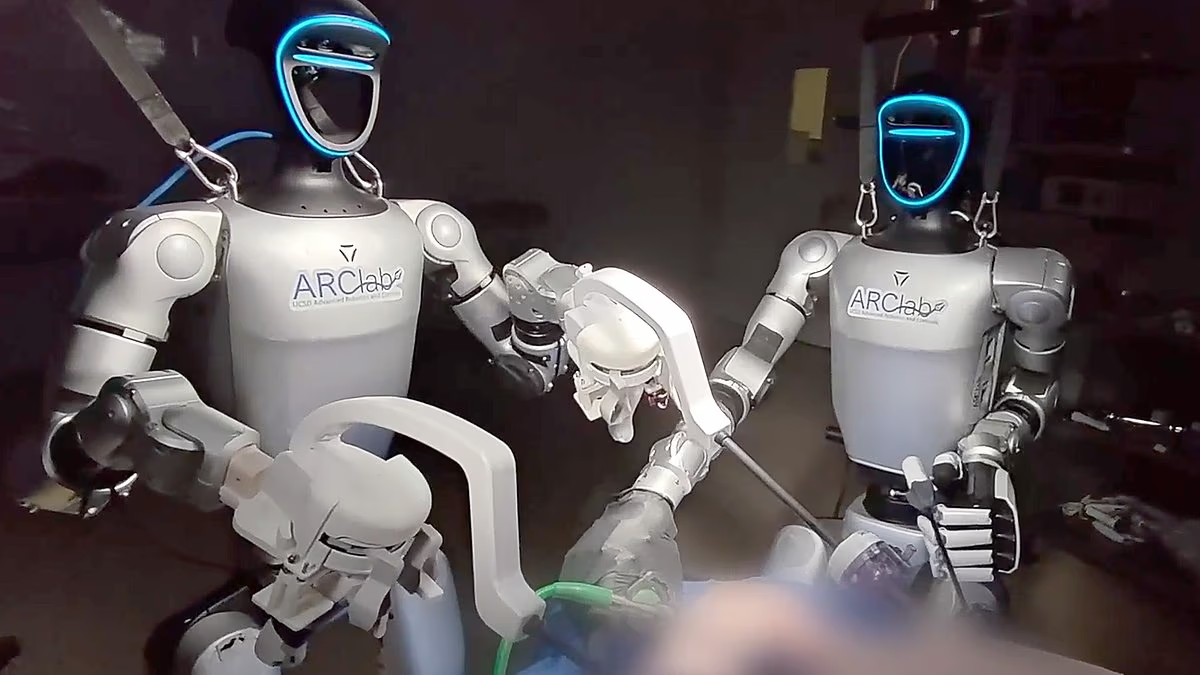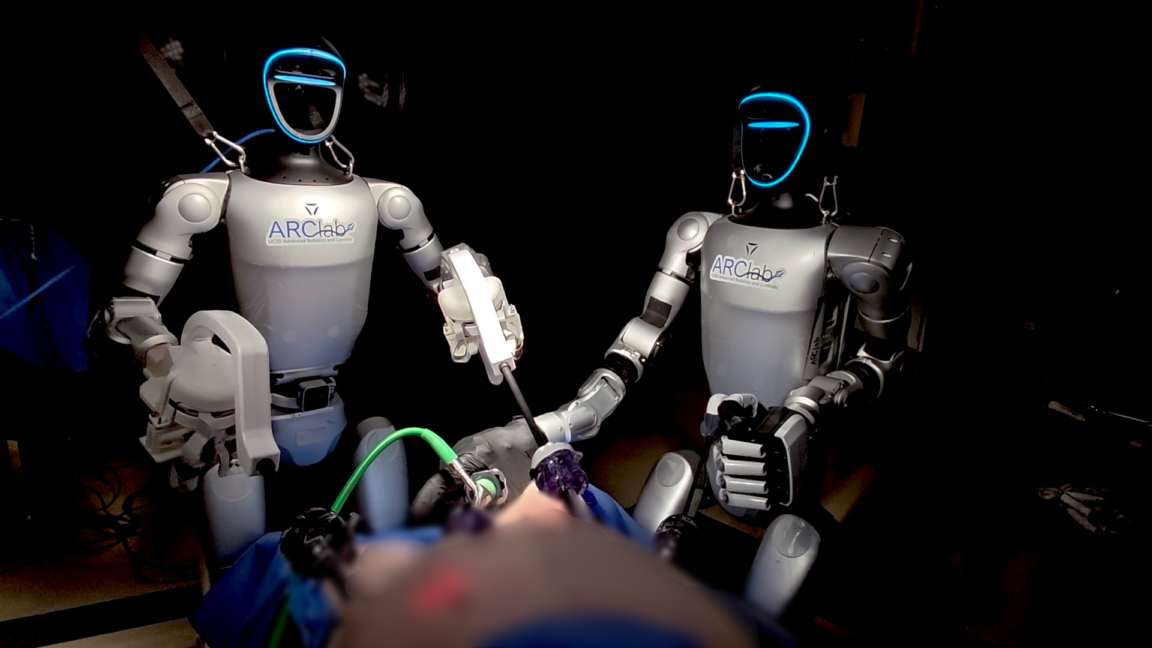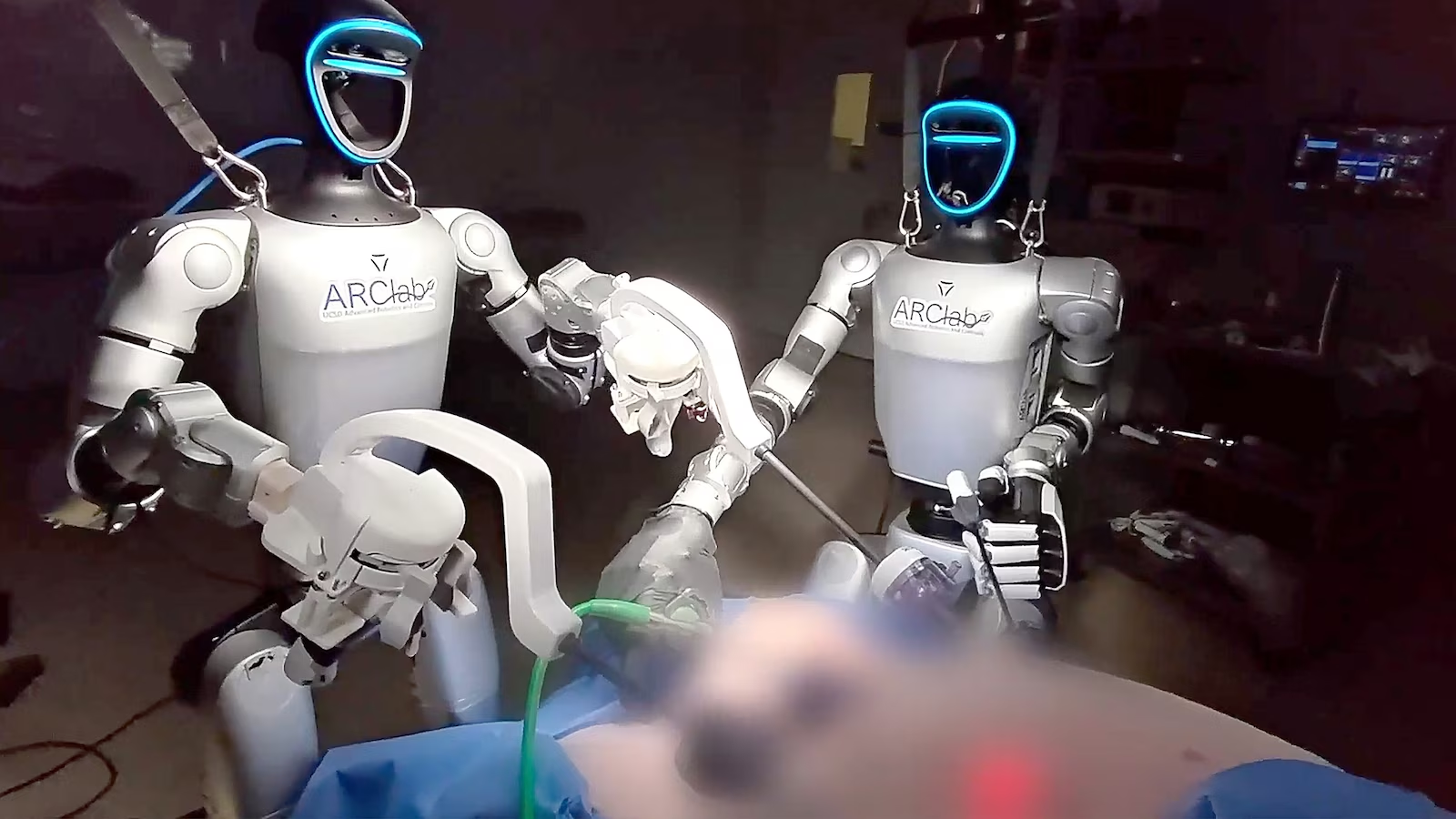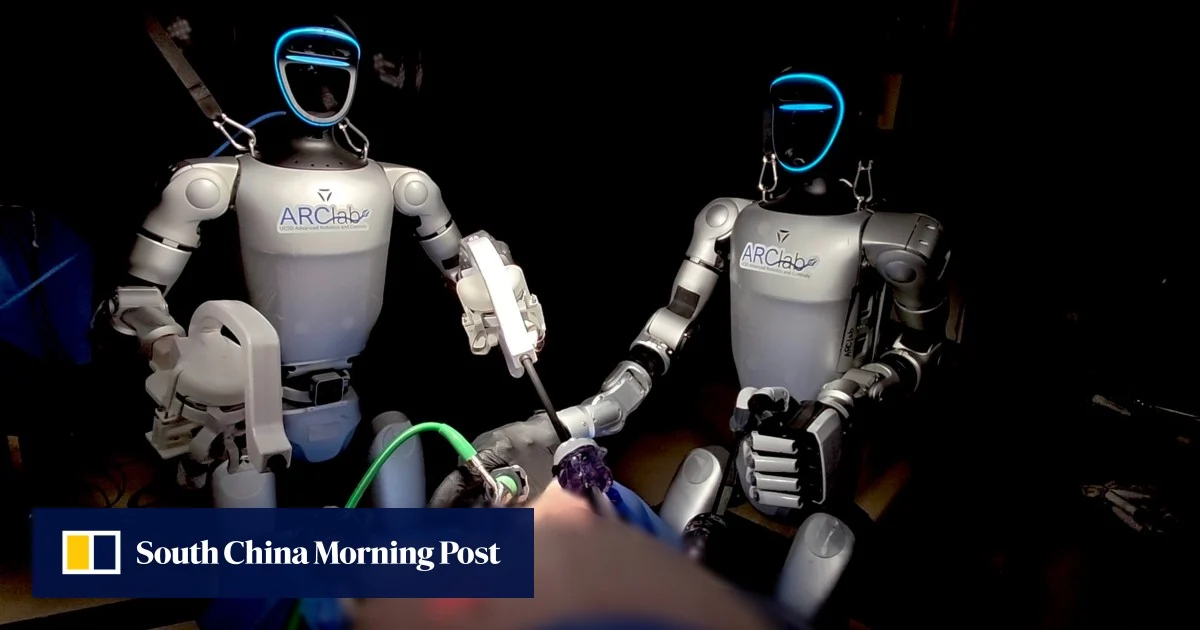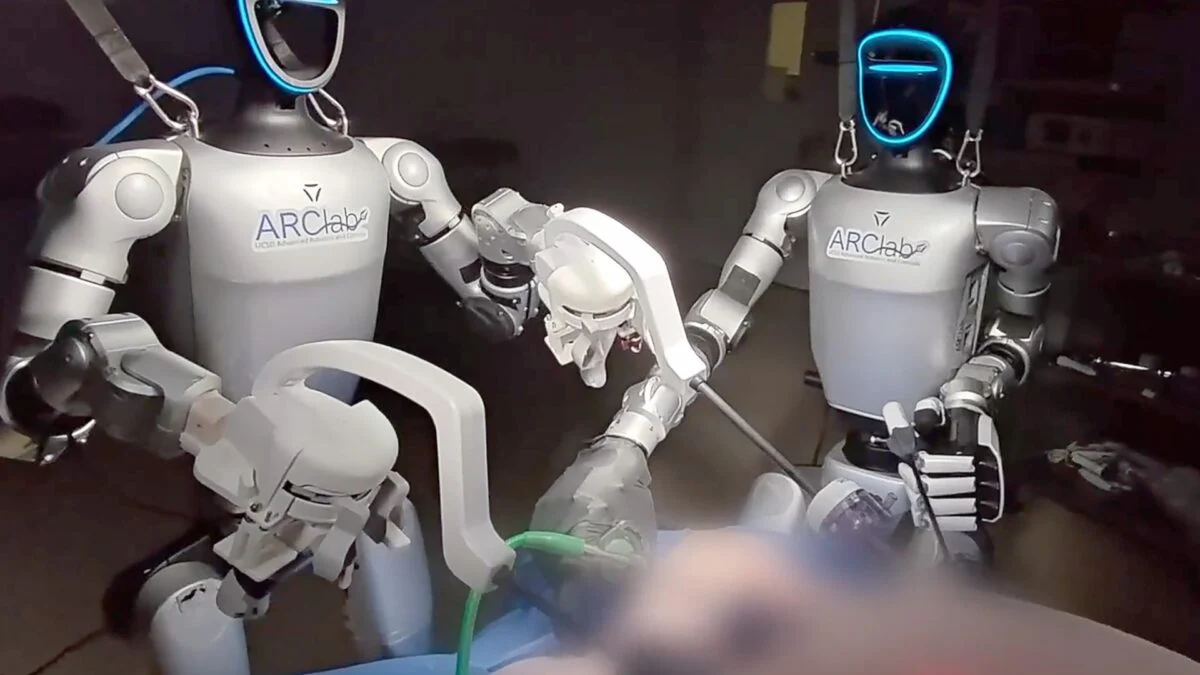
It’s a fact. Specialist surgeons who tackle rare and frequently challenging operations report some of the highest burnout rates among physicians, according to the American Medical Association. You can imagine why: emergency globetrotting, difficult high-stakes work even when the patient comes to you, and all the usual miseries America’s for-profit healthcare system has foisted upon its medical professionals. But a team of engineers and surgeons at the University of California, San Diego, just recently reported two successful pre-clinical trials that might help. Humanoid robots designed in collaboration with UC San Diego’s Jacobs School of Engineering performed two proof-of-concept surgeries using the typical, handheld surgical tools intended for human doctors. While plenty of remote surgeries have already deployed custom-made robotic arms (even in space), UC San Diego’s team noted that its trials were the first to incorporate android-like automatons capable of handling these surgical instruments just like a flesh-and-blood doctor. In one trial, UC San Diego’s robot surgeon worked with a human assistant to carefully remove the gallbladder of a living test animal (a pig) with a licensed veterinarian on call to supervise anesthesia and general welfare. In the second surgery, two of these robots worked together to conduct an identical gallbladder surgery.
Humanoid Robots Just Performed Surgery Using Standard Medical Tools
Two human-like robots just used regular surgical instruments and their bare android hands to competently operate on a living animal for the first time.
654 words~3 min read