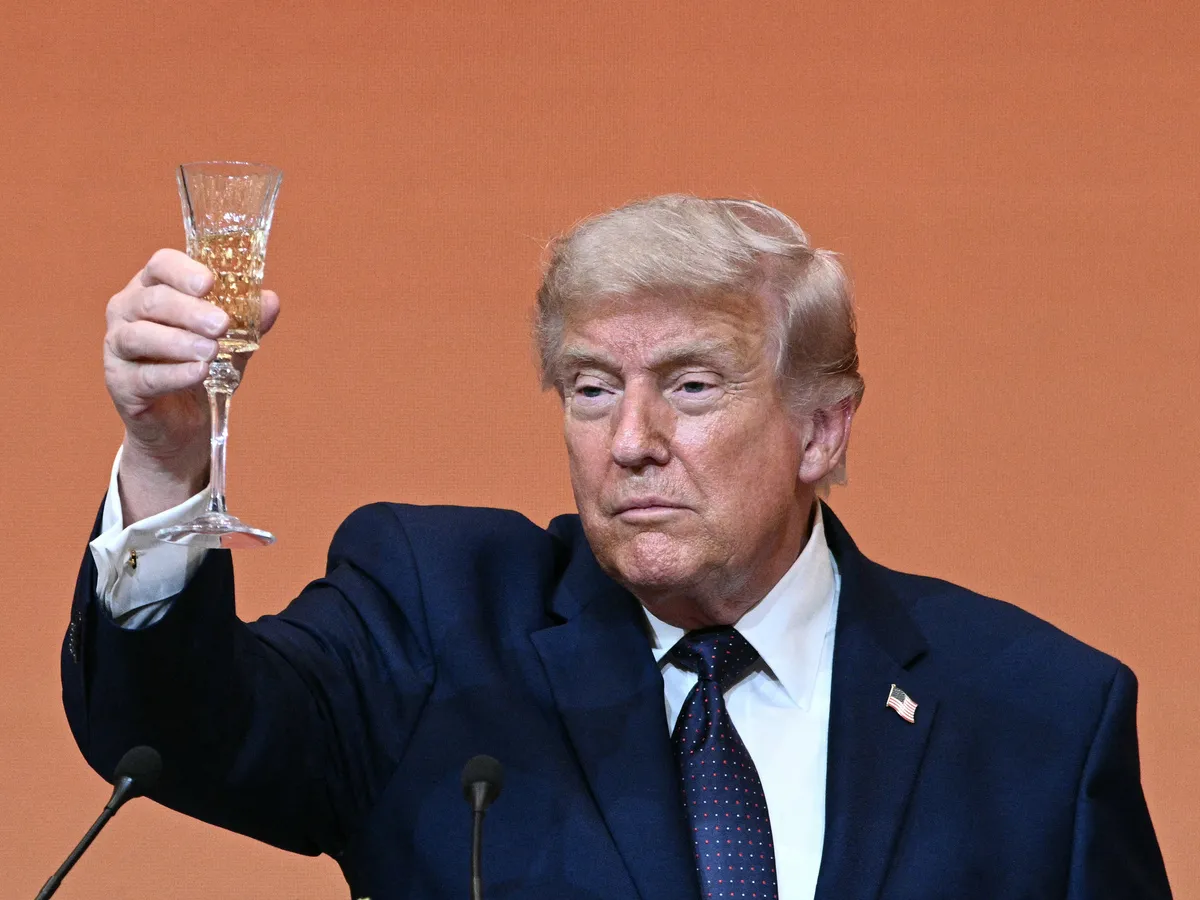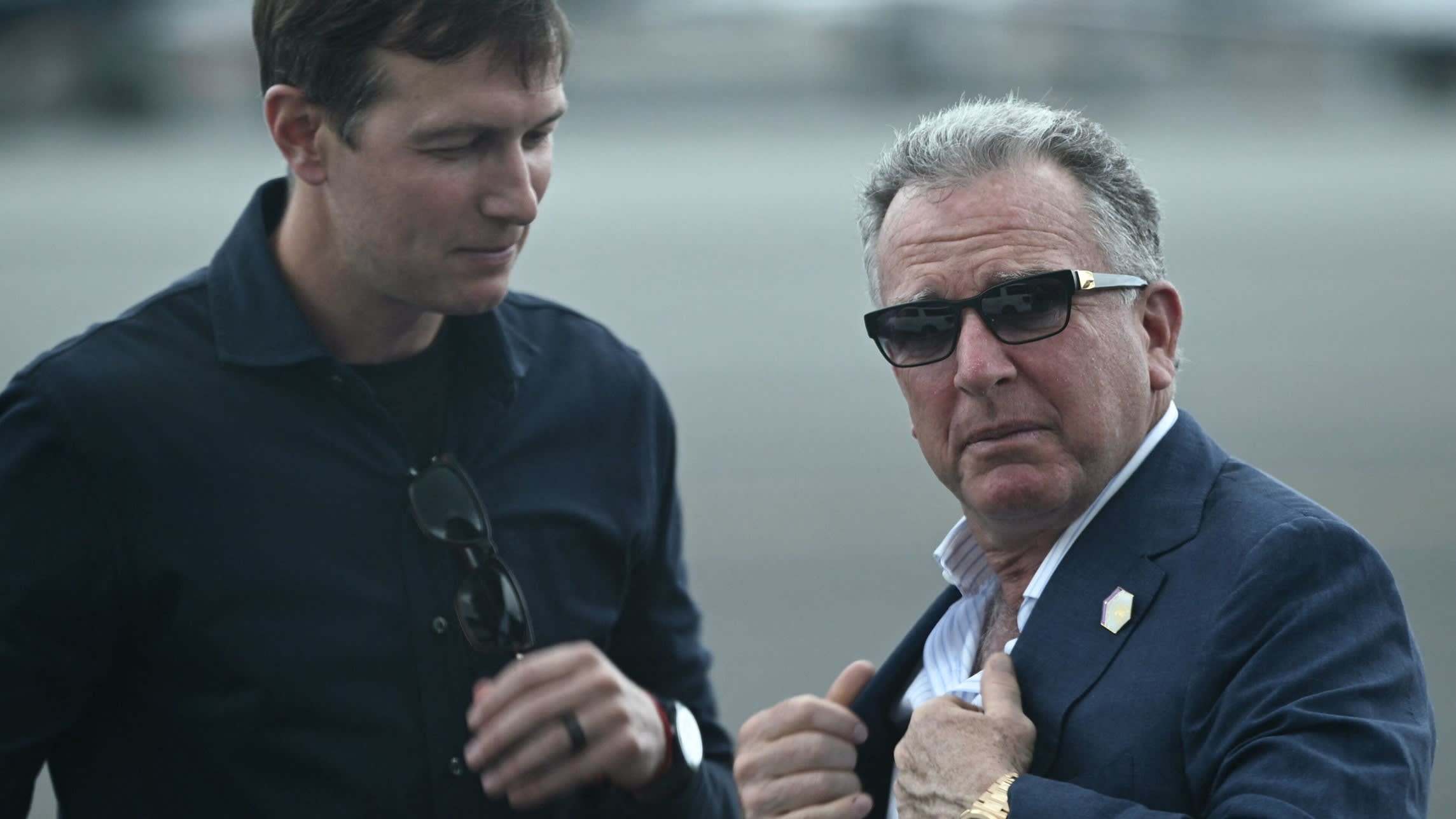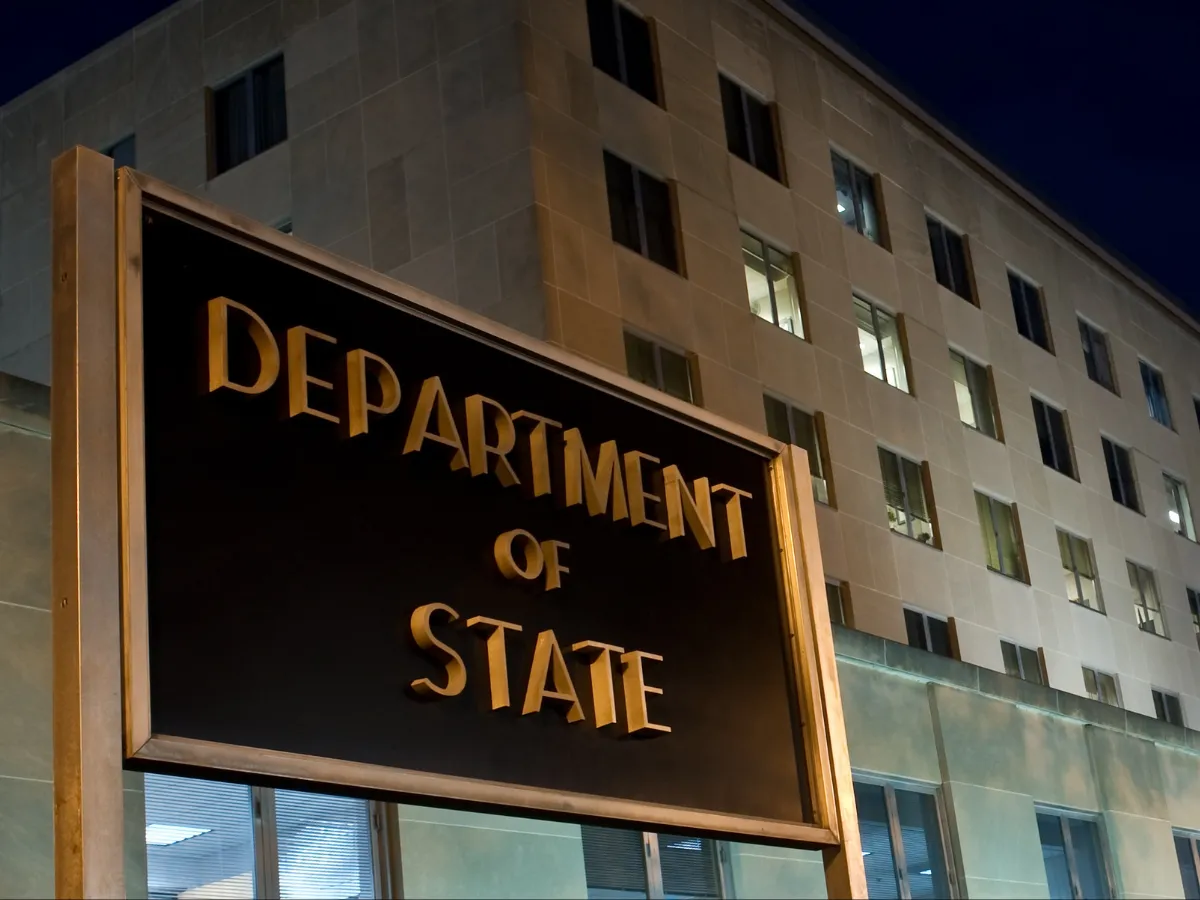
Skip to Content News Archives Economy Energy Oil & Gas Renewables Electric Vehicles Mining Commodities Agriculture Real Estate Mortgages Mortgage Rates Finance Banking Insurance Fintech Cryptocurrency Work Wealth Smart Money Wealth Management Investor Personal Finance Family Finance Retirement Taxes High Net Worth FP Comment Executive Women Puzzmo Newsletters Financial Times Business Essentials More Innovation Information Technology FP500 Podcasts Small Business Lives Told Tails Told Shopping Financial Post Store Obituaries Place a Notice Advertising Advertising With Us Advertising Solutions Postmedia Ad Manager Sponsorship Requests Classifieds Place a Classifieds ad Working Profile Settings My Subscriptions Saved Articles My Offers Newsletters Customer Service FAQ News Economy Energy Mining Real Estate Finance Work Wealth Investor FP Comment Executive Women Puzzmo Newsletters Financial Times Business Essentials HomeFinancial TimesRIP the U.S. state departmentAmerica's diplomats used to have global sway. Now they are besieged by their own presidentAuthor of the article: You can save this article by registering for free here. Or sign-in if you have an account.If there is one thing on which veteran diplomats and MAGA activists agree, it is that the state department is undergoing a sweeping change of culture. Photo by NICHOLAS KAMM/AFP via Getty ImagesFor an ambitious American diplomat it is quite the time to be scouting for a new role — at least on paper. As of late June more than half of American ambassadorships were vacant, including high-status posts from Germany to Saudi Arabia. For would-be Africa hands there is a particular opportunity: nearly 80 per cent of United States embassies on the continent do not have an ambassador.Subscribe now to read the latest news in your city and across Canada.Exclusive articles from Barbara Shecter, Joe O'Connor, Gabriel Friedman, and others.Daily content from Financial Times, the world's leading global business publication.Unlimited online access to read articles from Financial Post, National Post and 15 news sites across Canada with one account.National Post ePaper, an electronic replica of the print edition to view on any device, share and comment on.Daily puzzles, including the New York Times Crossword.Subscribe now to read the latest news in your city and across Canada.Exclusive articles from Barbara Shecter, Joe O'Connor, Gabriel Friedman and others.Daily content from Financial Times, the world's leading global business publication.Unlimited online access to read articles from Financial Post, National Post and 15 news sites across Canada with one account.National Post ePaper, an electronic replica of the print edition to view on any device, share and comment on.Daily puzzles, including the New York Times Crossword.Create an account or sign in to continue with your reading experience.Access articles from across Canada with one account.Share your thoughts and join the conversation in the comments.Enjoy additional articles per month.Get email updates from your favourite authors.Create an account or sign in to continue with your reading experience.Access articles from across Canada with one accountShare your thoughts and join the conversation in the commentsEnjoy additional articles per monthGet email updates from your favourite authorsSign In or Create an AccountorInside the U.S. Department of State, however, the job prospects for diplomats do not look so rosy. Since Donald Trump returned to the White House in January 2025, he has made clear his disdain for what he has called “a very foolish foreign policy establishment”.Get the latest headlines, breaking news and columns.By signing up you consent to receive the above newsletter from Postmedia Network Inc.A welcome email is on its way. If you don't see it, please check your junk folder.The next issue of Top Stories will soon be in your inbox.We encountered an issue signing you up. Please try againAs the official face and sometimes swaggering enforcer of America’s position in the world, the state department is accustomed to extraordinary respect abroad. Since the end of the cold war, U.S. ambassadors and envoys have often dominated their hosts with the authority of imperial satraps.But 18 months into Trump’s second term the department is not just sidelined; it appears under siege.Abandoning the precedent of the past 60 years, Trump has brushed aside the foreign service officers who have typically run at least two-thirds of embassies. Of the 101 nominations for ambassadorships in his second term, just nine were career diplomats.All this is against the backdrop of swingeing cuts to the department, whose workforce has shrunk by more than 3,000, over 20 per cent, since Trump resumed office.Administration officials present the shake-up as an overdue reform of a bureaucratic and out-of-touch arm of government. State has, they say, become obstructive, losing sight of its purpose to help achieve America’s national security objectives.Diplomats warn of a crude politicization and a purge of experts in an “America First” culture that scorns regional expertise.All the while, traditional U.S. allies bemoan the loss of the steadying voice of the state department from day-to-day global diplomacy — even as deals crafted by relative ingenues fail to take root.“We are looking at the most damaging crisis in the 102-year history of the foreign service,” says Nick Burns, who served 31 years in the U.S. foreign service, most recently as ambassador to China until Trump resumed office last year.State department veterans are aghast. Their alarm is not just over the loss of jobs and standing, but over what they see as a weakening of America’s authority through the loss of institutional knowledge and a pivot from diplomacy.“Things are quite bad,” says Bill Burns, who served in the U.S. foreign service for 32 years including as ambassador to Russia and deputy secretary of state before heading the CIA under President Joe Biden.Burns argues that Trump’s policies are doing even more damage to the department than the Joseph McCarthy era in the 1950s, when the then senator’s Red Scare campaign led to a loss of expertise on China.“That was on one relatively specific set of issues and it cost the United States in significant ways for the next 15 years or so until the Nixon-Kissinger breakthrough with China,” he says. “But this cuts across the board. It’s not just about one region or one set of expertise.”The former CIA chief highlights not just what he describes as the administration’s “retribution” against the department and career officers, but “almost even worse, the… dismissiveness towards professional diplomacy”.Trump has relied on confidants to broker deals such as last month’s memorandum of understanding with Iran, which has now all but fallen apart as the two countries trade strikes. Many of the president’s critics have blamed the fragility of that deal — and terms some say favoured Tehran — on Trump’s decision to sideline experts.“You need that kind of apolitical career expertise to be able to compete with, in this case, Iranian negotiators, who I know from personal experience are deeply versed in the issues,” adds Burns, who was involved in several Iran negotiations himself. “The same is true if we ever get to a point of serious negotiation on Russia and Ukraine.”Yael Lempert, a 27-year veteran of the department, who was fired as ambassador to Jordan on the first day of Trump’s second term, is blunter. “We were outplayed,” she says. “The Iranians are experienced negotiators and they brought teams of experts with them who knew these issues inside and out. The US did not, and so unilaterally put our side at a disadvantage.”In the spirit of the Trump administration’s broader battle against what it labels the “deep state”, officials frame the cuts to the department as “thoughtful and deliberative” plans to realign it with the America First agenda. They will, a spokesperson says, allow it to move “at the speed of relevance”.“What is the state department’s function?” asks one senior Trump administration official. “It likes to think it’s the foreign policy centre. That’s not true. Its job is to represent the president’s foreign policy, not to make it.”When Marco Rubio was appointed secretary of state at the start of Trump’s second term, he came into the department, the official says, and declared: “This isn’t working.”Department insiders acknowledge state was due a rethink. One veteran says it had not done enough in recent years to address flaws such as overlapping responsibilities. Another says the organization could sometimes be passive-aggressive in response to its political masters.But diplomats fear the reforms are a pretext for a wholesale downgrading. They also worry that the pace of change — as shown by last year’s sudden closure of USAID, the development agency founded by John F Kennedy — has sometimes calamitous consequences.“There is something to the argument that state was long overdue consolidation and modernization,” says Jacob Shapiro, the John Foster Dulles professor in international affairs at Princeton University. But, he adds, “it feels like it was done very quickly, without a lot of analysis of the consequences for U.S. diplomacy”.Allies of the administration cite the start of the cold war some eight decades ago as the last time the department faced such drastic change. What is clear is that the roots of the restructuring lie in Trump’s first four years in office, when he was infuriated by the department’s reluctance to do his bidding.James Carafano, of the conservative Heritage Foundation think-tank, says Mike Pompeo, secretary of state in the second half of Trump’s first term, followed the model of most of his predecessors, whether Democrat or Republican, of “doing my thing and letting the department do its thing”.He adds: “Pompeo did what the president wanted but didn’t mess with inside the department. His model was ‘keep the president happy and keep the institution happy’. In his second term, Trump wanted more alignment with his vision. It’s about exercising power from top to bottom and having the state department that he wants.”Trump has made his foreign policy hierarchy clear in his second term by his choice of mediators for global crises: business friends and donors, such as Steve Witkoff and Tom Barrack, and people with close ties to the Trump family, such as Jared Kushner, his son-in-law.For generations, presidents have appointed intimates as special envoys and allies and donors to occupy the most glamorous embassies, such as London and Paris; some have been hailed as effective diplomats.But presidents have previously balanced patronage with the deployment of experienced diplomats. The very rationale for the foreign service when it was set up in May 1924 was, says Nick Burns, to replace “the patronage and spoils system” of the 19th century with real expertise. The return of such an approach weakens, he argues, America’s insight into the world and ability to navigate it.“Many of our most experienced diplomats have been summarily fired,” he adds. “Now there are no career diplomats in the rooms where it happens… That’s an own goal.”The Trump administration dismisses much of the criticism as out of touch with the modern world. There is less use for cables back to Washington about atmosphere and local politics than in previous decades, they argue, adding that in the era of social media, 24-hour news cycles and direct communications between world leaders, the on-the-ground observations of a U.S. embassy are less necessary.“The role of an embassy is to be a logistical hub,” says the senior administration official.In this climate, U.S. diplomats are now routinely ignored — and not just by the administration. “The career officers I speak to are reading the newspaper at their desk or turning in circles writing a paper that doesn’t go anywhere,” says a former senior U.S. diplomat.Diplomats representing America’s allies from Europe and the Middle East to east Asia acknowledge they have gravitated from cultivating their traditional interlocutors at the state department to Trump’s inner circle and the envoys.The shift is not just because of where influence lies, but because U.S. diplomats may have little more insight into Trump’s foreign policy than their foreign counterparts. They can also fall prey to self-censorship.Career diplomats are still meeting foreign officials but they are “very cautious” about what they say, says the former senior U.S. diplomat. “Deputy chiefs of mission and ambassadors are largely not doing real reporting. They are very careful about what they send back to Washington.”Rubio, who serves as Trump’s national security adviser as well as secretary of state, spends far more of his time at the White House — where the decisions are made, officials say — than at the department’s Foggy Bottom headquarters. Such developments deepen the impression inside and outside the department that it is embattled — if not at bay.The gutting of the department is like a medieval siege, says the former senior diplomat: “First they lob the cannonballs into the town… then they salt the fields.”If there is one thing on which veteran diplomats and MAGA activists agree, it is that the state department is undergoing a sweeping change of culture.Trump’s team has moved fast to impose its America First vision on a department they see as being liberal, hostile and prone to leak to the press. The spirit of revenge as well as revolution is in the air.“There were a lot of people who thought they were the policymakers and they would just argue and dissent,” says the senior administration official. “It was very hard to get things done. In the end you’d get some mealy-mouthed memo.”Career foreign service officers reply that they traditionally saw themselves as apolitical public servants, and warn of a climate of fear, with people “looking over their shoulder” and worried that they are being tested for their loyalty to a MAGA worldview.Nick Burns disputes Trump’s allies’ claim that the department had virtually become a liberal echo-chamber.“We tried in my decades at state to make sure we created an environment where people could speak up… and argue when they thought the policy was wrong,” he says. “Our argument was if you create that environment, then when the decision is made, you salute and move on.”Bill Burns highlights a new focus in the state department on “fidelity”. He equates this with a test of “what people’s political inclinations might be… from the entry process all the way through promotion and evaluation”.“I just think it’s deeply unhealthy,” he adds. “For all its flaws, in my experience with the state department, people generally check their political views at the door.“You start to beat that out of people, you end up kind of imitating a lot of authoritarian systems who browbeat career public servants and wind up making bad choices.”In the 20th century and the first decade of the 21st, transitions between Republican and Democratic secretaries of state tended to be smooth, not least because the parties usually shared the same centre ground regarding America’s role in the world.But the takeover of the Republican Party by its America First wing has changed all that.The lightning rod for internal argument over this change is the Ben Franklin Fellowship, a body of conservative current and former foreign service officers, founded two years ago with the declared aim of promoting conservative ideas, personnel and recruits.Matt Boyse, one of the three founders, joined the state department in the 1980s when Ronald Reagan was president.In the past three decades he says “it drifted further and further to the left. It started under [Bill] Clinton and then during Biden it went on steroids.” As examples of liberal bias, he identifies the intensified focus in the Barack Obama and Biden administrations on diversity, equity and inclusion appointments, and the increase in USAID programmes, which he says “did not advance the national interest”.“There were lots of good things happening in the department but it was moving to the left in atmosphere and policies,” he adds. “If you are a liberal you don’t notice it or think it’s perfectly normal. They also think reforms just require more money, more employees, more programs… If you are part of the 50 per cent of America that is not progressive or liberal, you say: ‘Wait a second, this is going in the wrong direction.'”Boyse insists the BFF is a big-tent conservative network rather than exclusively MAGA. “There’s a mixture of people from Reaganites to libertarians to America First Trump supporters to people who liked John McCain,” he says, referring to the interventionist former Republican presidential nominee. “Their common denominator is they are not liberals.” Many members have lost their jobs during the cuts, he adds.Career diplomats, however, talk nervously of the BFF as being at the heart of a new culture in the department that polices people’s politics. Some ambassadors are being asked for their views on the January 6 2021 storming of the Capitol by Trump supporters, says the former senior U.S. diplomat.“There’s a clear sense there are political minders around,” says Lempert, the former ambassador to Jordan under Biden. “There’s an unprecedented fear factor where people are afraid if they offer criticism or alternative policy approaches it can be perceived as disloyalty and they could lose their jobs.”Boyse has little sympathy for diplomats’ talk of a chill political wind. “Some foreign service officers are defending their legacy and others are baselessly crying discrimination,” he says.“It’s a little rich when people have been on top for decades suddenly to suggest they are being discriminated against. BFF strongly supports the administration as it tries to move the ship of state back to where it belongs.”How much should Trump’s foes seek to restore the state department to its old self? This is one of the big questions Democrats will face if they regain the presidency in 2028.Some foreign policy thinkers aligned with the party accept that in today’s America it would be politically unacceptable to push for a return to the country’s pre-Trump role of global hegemon.They contend that the challenge is to reimagine U.S. diplomacy. For example, they say that, given that America’s partial retreat from the world seems irreversible, it is harder to justify the cost of the full suite of embassies, even at a time when China is pushing hard to win the hearts of the global south.Indeed, one strategist argues that a Democratic administration should take advantage of Trump’s “very badly motivated” reforms to rethink the department and adjust it to the needs of a world where leaders routinely WhatsApp each other.Veteran diplomats concur that a turning point has been reached. Bill Burns, the former CIA chief, suggests the old state department may never return.“Whereas in the first Trump term the assumption was that with a different administration and a different outlook, in a four-year cycle you could recover and repair a good bit of the damage, this time it’s more of a generational kind of challenge,” he says.What is more, he adds, it would be an error to try to resurrect the old model. “The one cardinal mistake that I think people could make if you had a different administration in the beginning of ’29 is to think that this is just a question of turning the clock to the way things were.”© 2026 The Financial Times Ltd Join the Conversation This website uses cookies to personalize your content (including ads), and allows us to analyze our traffic. Read more about cookies here. By continuing to use our site, you agree to our Terms of Use and Privacy Policy.
RIP the U.S. state department
18 months into Donald Trump's second term, the U.S. State department is not just sidelined; it appears under siege. Find out more here
3,159 words~14 min read