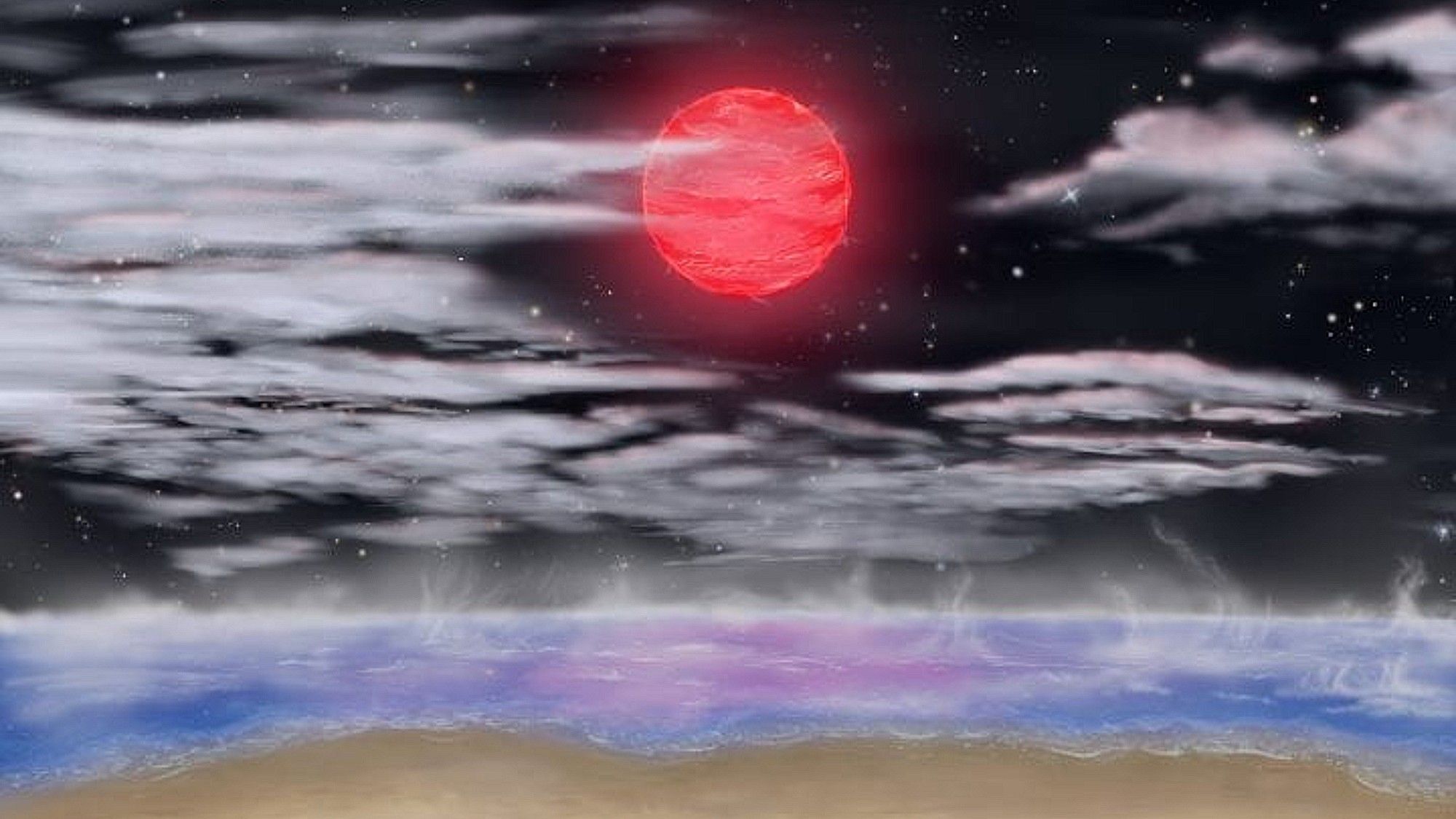
K2-18b has become one of the most closely watched exoplanets in recent years. The planet lies about 124 light years away in the constellation Leo and orbits within the habitable zone of a red dwarf star. Observations from the James Webb Space Telescope have revealed an atmosphere rich in carbon dioxide and methane, making K2-18b one of the leading candidates for a "Hycean" world, where a thick hydrogen rich atmosphere may surround a global ocean of liquid water.
Because of its potential to host conditions favorable for life, K2-18b has also become a prime target for the Search for Extraterrestrial Intelligence (SETI). Researchers recently used two of the world's most powerful radio telescopes to search the system for signs of artificial radio transmissions. Their findings, published in The Astronomical Journal, found no evidence of narrowband radio signals comparable to technology currently used on Earth, despite identifying millions of possible candidate signals during the observations.
The project combined observations from the Karl G. Jansky Very Large Array (VLA) in New Mexico and the MeerKAT radio telescope in South Africa. Coordinating facilities of this scale for a single observing campaign is highly unusual and provided an exceptionally sensitive search of the K2-18b system.