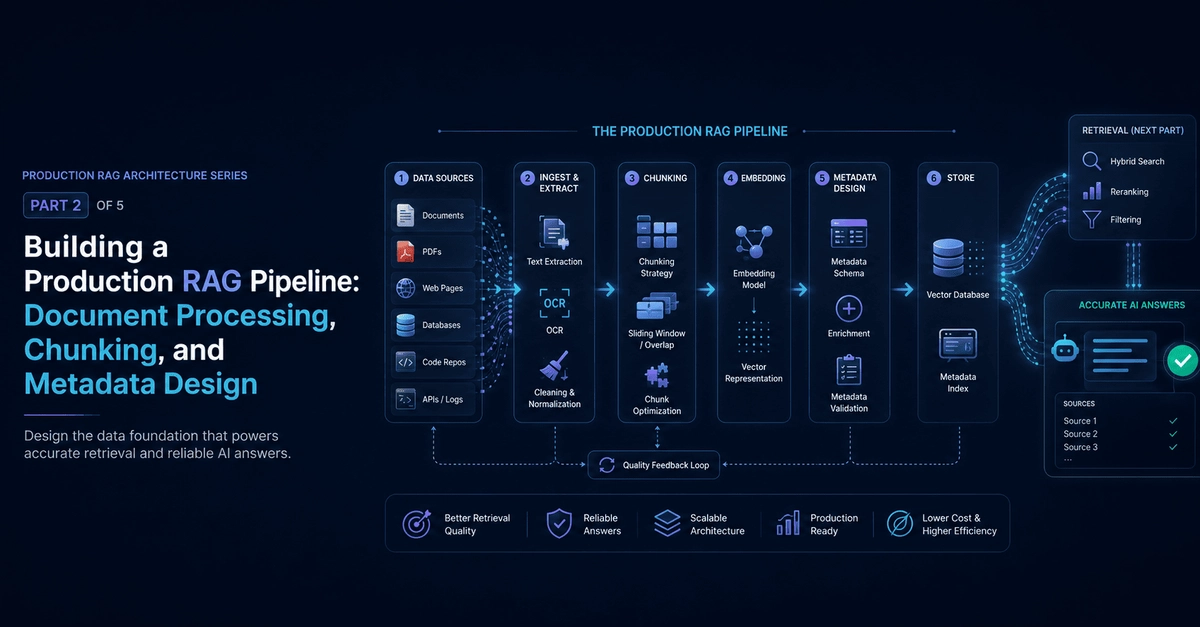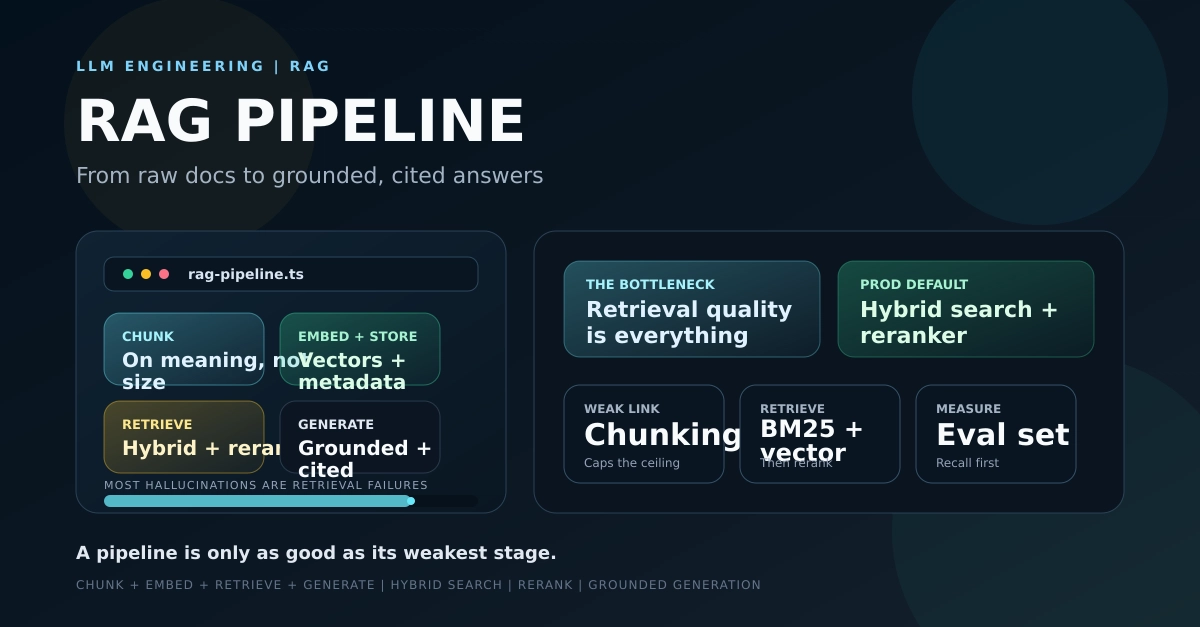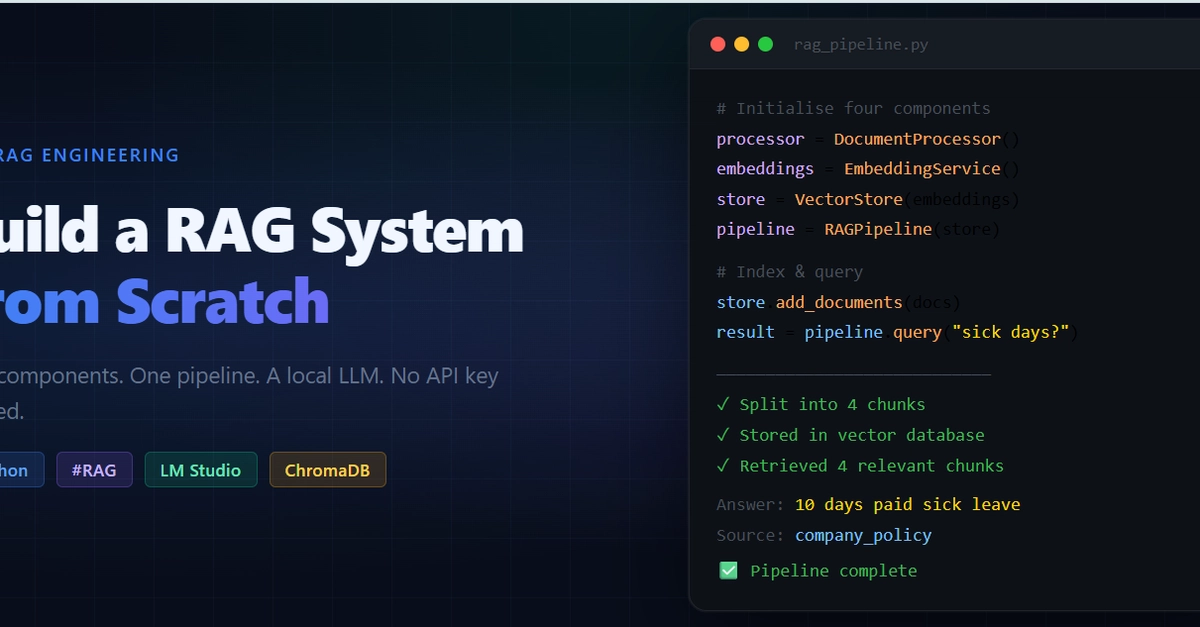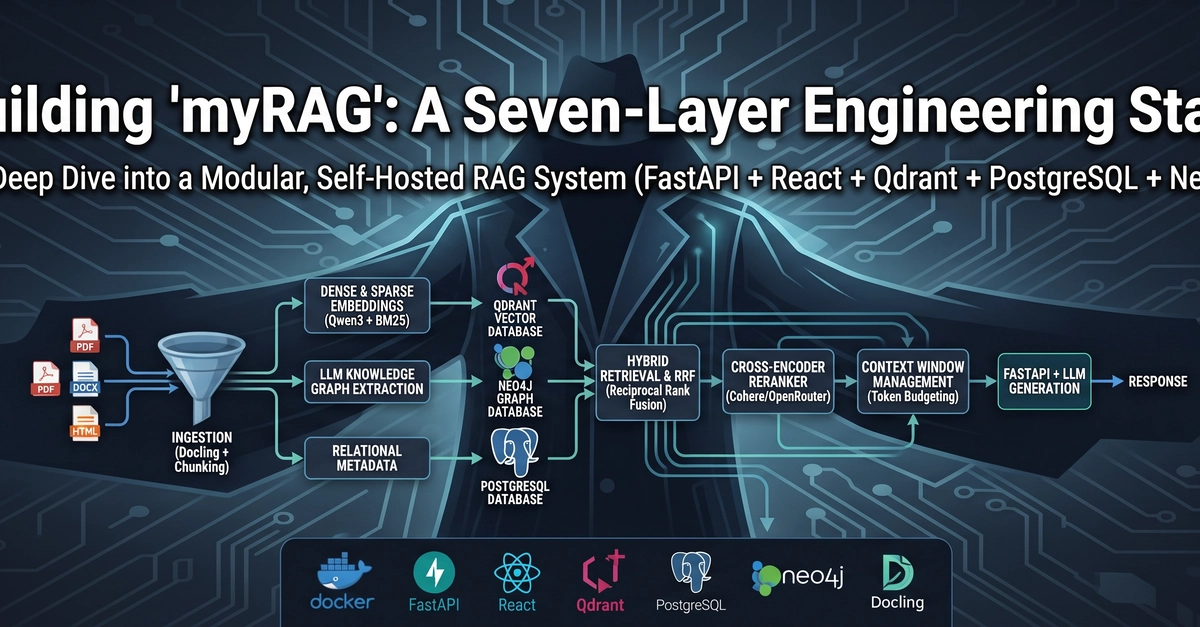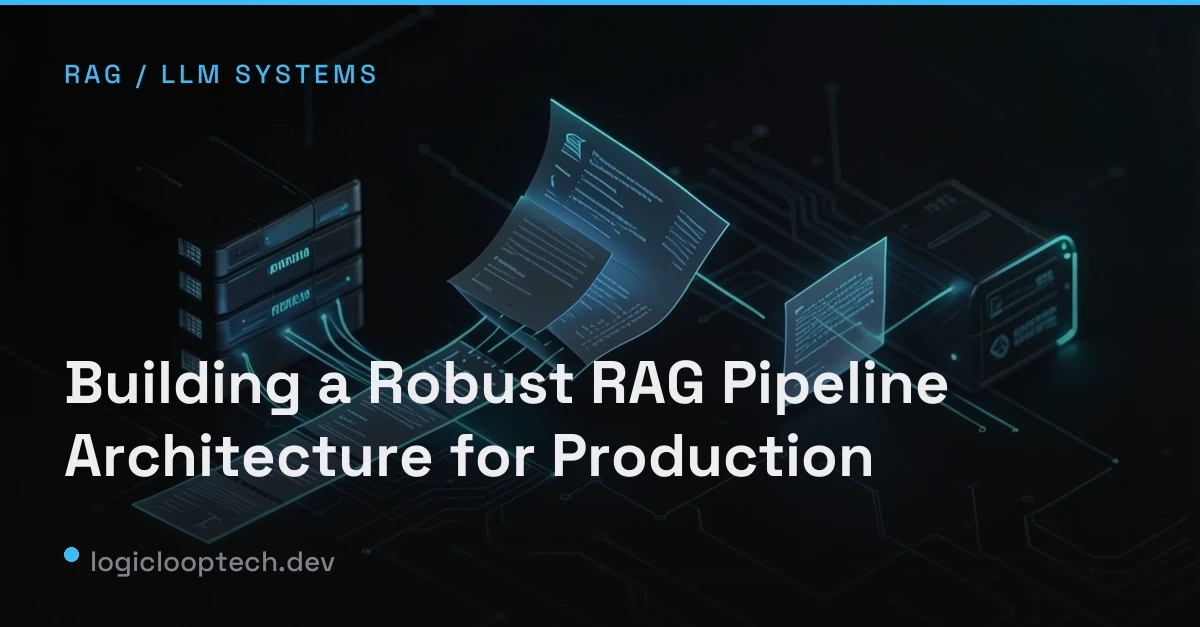
Answer up front: A RAG pipeline architecture is a set of connected services that ingest raw documents, turn them into embeddings, store them in a vector database, retrieve the most relevant chunks, and finally feed those chunks to a language model for generation. In practice you need a modular design, solid chunking, a fast vector store with hybrid search, and observability that lets you spot bottlenecks before they break your service.
Below I walk through each piece of that puzzle, share the code I run in production, and point out the trade-offs that kept me up at night.
What are the core components of a RAG pipeline?
A RAG pipeline architecture typically consists of:
Ingestion Layer – pulls data from PDFs, web pages, DB rows, or streaming APIs.