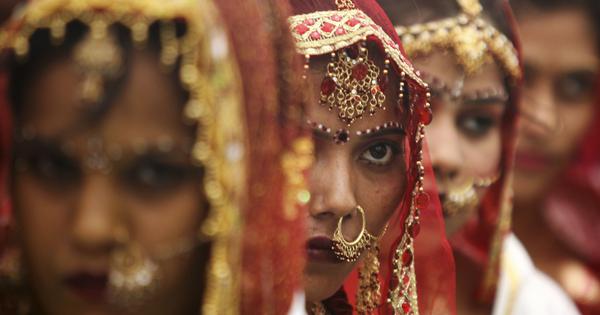
Public radio’s longest-running daily global news program.AboutContactDonateMeet the TeamPrivacyTerms of use©2026 The World from PRXPRX is a 501(c)(3) organization recognized by the IRS: #263347402.Despite policy change, dowry deaths persist in IndiaThe death of a newlywed woman in Delhi last weekend is among a string of cases this year rekindling public discussion in India about dowry deaths. Thousands of women are reportedly killed in India every year in dowry-related disputes despite laws on the books intended to penalize this violence. The World’s Carolyn Beeler learns more from Kriti Kapila, an anthropologist at King’s College London, who has studied this phenomenon. 7:11A Kashmiri Muslim bride looks through her veil during a mass wedding event in Srinagar, Indian controlled Kashmir, Thursday, June 15, 2023. Mass weddings in India are organized by social organizations primarily to help families who cannot afford the high ceremony costs as well as the customary dowry and expensive gifts that are still prevalent in many communities.In India, the recent death of a newlywed woman in Delhi is the latest in a string of cases drawing renewed attention to dowry deaths. Twenty-eight-year-old Akriti Sutar died last week after falling from a building, a few months after her wedding. Her family says she was murdered over her dowry, the traditional practice of the bride’s family giving money and gifts to the groom’s family. Government data shows thousands of suspected dowry deaths are reported in India every year, even though giving and receiving dowries have been illegal for decades. Kriti Kapila is an anthropologist at King’s College London who has studied dowry deaths. She explains that dowries in India were traditionally a symbolic gift.“Basic household goods, maybe sometimes some cash, whatever parents could do. And over time, the components of dowry have changed radically. It involves cash transfers. It includes now asset transfers, it includes other financial products.”Kriti Kapila: Exactly, and much more of a wealth transfer. And the young men or sons became a commodity, you know, who commanded a price. So that price that they could command was the dowry. How much dowry they could beget, that dowry was still calculated in terms of class, caste, educational background, and professional status, all of that. And if it’s seen that you’ve either gone back on your word, or you could just be very greedy in-laws, which, you know, most of them tend to become, they can start demanding more and more, saying, you may have said X amount, but can you also now ask your father or your brother or, you know, your mother to now give us more?Brides wait inside a room prior to a mass community marriage in Bahirkhand, about 70 kilometers (44 miles) northwest of Kolkata, India, Feb. 2, 2014. Bikas Das/APIn this May 27, 2004 file photo, an in-law accused of dowry crimes sleep at a communal cell in Tihar Jail’s dowry wing, in Asia’s largest prison in New Delhi, India. An Indian report released in August 2013 says a woman dies every hour in disputes over how much her family has paid in dowry to the groom for her marriage. Elizabeth Dalziel/AP File PhotoIndian woman Pooja Chauhan, in her undergarments and carrying a baseball bat and bangles in her hands, marches to the police commissioner’s office to protest dowry harassment by her husband and in-laws, in Rajkot in the western Indian state of Gujarat on July 4, 2007. AP File PhotoParts of this interview have been lightly edited for length and clarity.
Despite policy change, dowry deaths persist in India - The World from PRX
The death of a newlywed woman in Delhi last weekend is among a string of cases this year rekindling public discussion in India about dowry deaths. Thousands of women are reportedly killed in India every year in dowry-related disputes despite laws on the books intended to penalize this violence. The World’s Carolyn Beeler learns more from Kriti Kapila, an anthropologist at King’s College London, who has studied this phenomenon.
576 words~3 min read