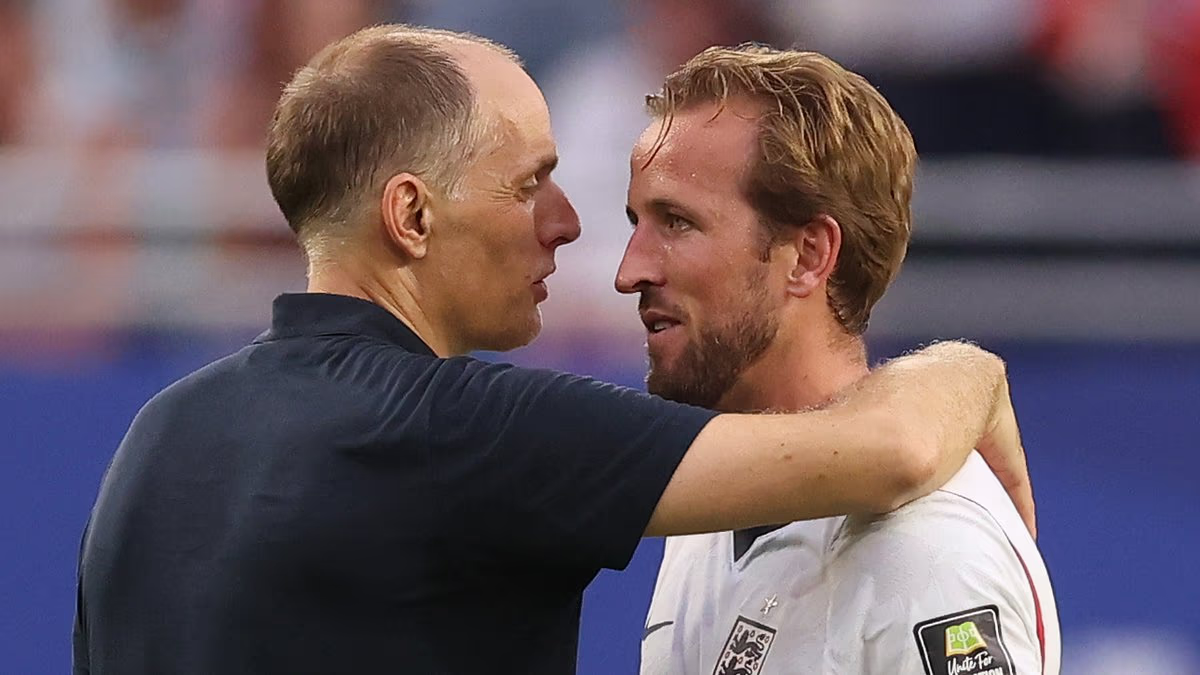
The England captain and mental health advocate has spoken about how food fuels his performance12:24, 14 Jul 2026Updated 12:32, 14 Jul 2026All eyes are on Harry Kane ahead of the FIFA World Cup semi-finals. As the England captain prepares his team for the clash against Argentina on Wednesday, nutrition will be a key part of his pre-game preparation.The mental health advocate often talks about health and well-being in interviews, emphasising the importance of nutrition for staying fuelled on and off the pitch. Kane has previously shared details of his go-to meals with England Football, including his tasty yet healthy lunches.Kane explained that his lunches are designed to help him 'remain lean' while staying energised as an athlete. The captain, who has worked with chef and nutritionist Dan Sargeant to fine-tune his diet, said he varies his lunches, but he makes sure to include salad and vegetables with every meal."I love salmon, rice and veg. I will have salad and veg with every meal. I try to get as many nutrients as I can from food. I balance protein and carbs, leaning more towards carbs before a game. On lighter training days, I might cut out carbs for a meal and go for protein and veg. The aim is to remain lean but also ensure you aren’t missing out and I have enough energy," Kane shared.For dinner, it's usually a similar combination. "It's mostly the same for dinner. I tend to eat fish or chicken, sometimes beef. I eat white fish, and salmon. I vary it for lunch and dinner," the captain said.However, Kane added that he also enjoys other meals, including pizza and sushi, when he fancies something different. Kane explained: "It is about having that balance. When I am working, I am working and I am eating healthily but after a game when I've burned a lot of calories and had a good game, I'll go out and enjoy eating some good food. It could be sushi, pizza, whatever I fancy at the time."The NHS shares healthy eating guidelines for the general public. The health service says people should try to eat at least five portions of a variety of fruit and vegetables every day, base meals on higher-fibre starchy food, have some dairy or dairy alternatives, and eat some beans, pulses, fish, eggs, meat and other protein.Salmon is often a staple in lunches and dinners, thanks to the potential health benefits. Healthline explains: "Salmon provides essential nutrients like omega-3 fatty acids, protein, B vitamins, selenium, and potassium. These nutrients can support heart health, brain function, and bone strength — among other benefits."Regular salmon consumption may help reduce inflammation, support weight management, and lower risk factors for chronic diseases, such as heart disease. Eating two portions of oily fish, such as salmon, per week can help you get the benefits."The NHS says: "A healthy, balanced diet should include at least two portions of fish a week, including one of oily fish. Most of us are not eating this much. A portion is around 140g. However, for certain types of fish, there are recommendations about the maximum amount you should eat."Article continues belowThe health service also says girls, pregnant or breastfeeding women, and women who are planning a pregnancy or may have a child one day, should eat no more than two portions of oily fish a week.
Harry Kane's healthy lunch helps him 'stay lean' and 'energised'
The England captain and mental health advocate has spoken about how food fuels his performance
558 words~3 min read