Welcome to Wider Europe, RFE/RL's newsletter focusing on the key issues concerning the European Union, NATO, and other institutions and their relationships with the Western Balkans and Europe's Eastern neighborhoods.I'm RFE/RL Europe Editor Rikard Jozwiak, and this week I'm drilling down on two issues: the EU enlargement “Super Tuesday” and Ukrainian civil detainees held by Russia.
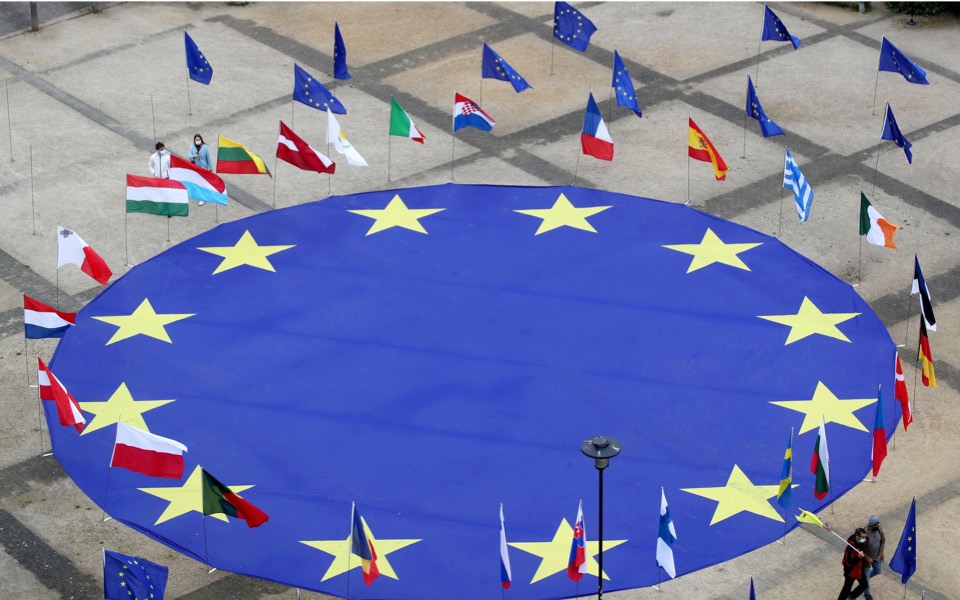
Briefing #1: EU Enlargement's 'Super Tuesday'What You Need To Know: On June 15, the EU celebrated what Brussels officials dubbed “Mega Monday” with the bloc finally opening accession talks with both Ukraine and Moldova, following a blockage that had lasted a couple of years. The EU also closed two accession chapters with Montenegro, marking the halfway line in wrapping up talks with the small Balkan country, which has completed 16 out of 33 policy chapters needed to become member 28 of the bloc.Now, on July 14, we will have what is being referred to in Brussels corridors as “Super Tuesday,” a reference to the biggest single day of voting in the US presidential primary election cycle. In a sense, it is very much a continuation of what happened last month. Montenegro will close two additional chapters; Albania will close three, the first ones since Tirana managed to open talks on all 33 back in 2024/2025; Ukraine and Moldova will move forward as well by opening two more chapters -- taking their tally to seven out of 33.Deep Background: While Brussels will be triumphant that day and present it as yet another exhibit that the bloc, after many years of enlargement fatigue, is finally serious about adding more members for the first time since Croatia joined back in 2013, there are frustrations behind closed doors. Moldova, Ukraine, the European Commission, and the majority of EU member states would have preferred to have all chapters opened by now. In fact, both Kyiv and Chisinau are ready, at least technically speaking. Now, it is all about politics. The 33 chapters are divided into six clusters and, after having opened cluster one, known as the “fundamentals” as it contains the important rule of law issues that will be “closed” at the very end of the process, the two countries will now only open cluster 6, which is seen as the easiest one as it only contains two chapters that deal with foreign policy issues. Ukraine is nearly completely aligned with the EU on foreign policy even though it still sometimes doesn’t sign up to the bloc’s statements on countries known as the “global south” in order to secure more international support for its war efforts against Russia. Kyiv also hasn’t fully ratified the International Criminal Court’s (ICC) Rome Statute. For Moldova, the foreign policy alignment isn’t as impressive as Ukraine as it hasn’t complied with all EU sanctions on the Kremlin -- notably some trade restrictions as it still has a certain economic dependency on Russian imports. The hope now is that the four remaining clusters can be opened by October even though some EU officials that RFE/RL has spoken to believe that this is doubtful. Firstly, the new Hungarian government, while willing to start talks with Kyiv, has signaled to Brussels that there is no need for “fast tracking.” EU officials familiar with the file have told RFE/RL that anti-Ukrainian sentiment is still considerable in Hungary and that there is a reluctance to open too much too soon.