One of the biggest mistakes people make while buying a laptop is choosing the processor before deciding what they actually need the laptop for. It is easy to assume that Intel is always better or AMD offers better value, but after testing laptops across different price segments, I have found that the answer is rarely that straightforward. The processor is only one part of the overall experience, and its strengths depend entirely on how you plan to use the machine.
That is exactly why comparing Intel laptops vs AMD laptops needs a practical approach rather than looking at benchmark numbers alone. Whether your priority is battery life, multitasking, gaming or content creation, understanding where each platform performs best can help you spend your money more wisely. In this comparison, we break down the differences that actually matter in day to day use.
Intel laptops vs AMD laptops: quick comparison
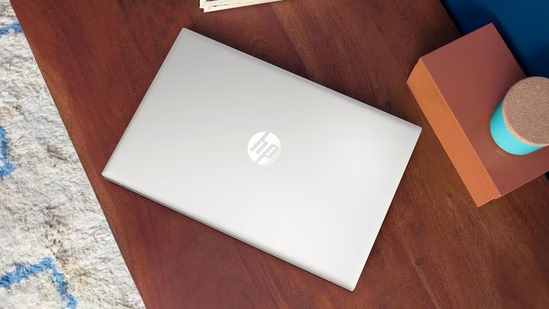
HP 15 fd1354TU is a mainstream 15.6-inch laptop built around Intel Core Ultra 5 125H, 16GB DDR5 RAM, and a 1TB SSD. It uses an FHD IPS anti-glare panel and Intel Arc graphics, so it is aimed at everyday productivity, office work, and light creative tasks. HP positions it as an AI powered model, and the FHD camera with shutter is a useful privacy touch. Amazon buyers praise the display and speed, but battery life and thermals get mixed feedback.