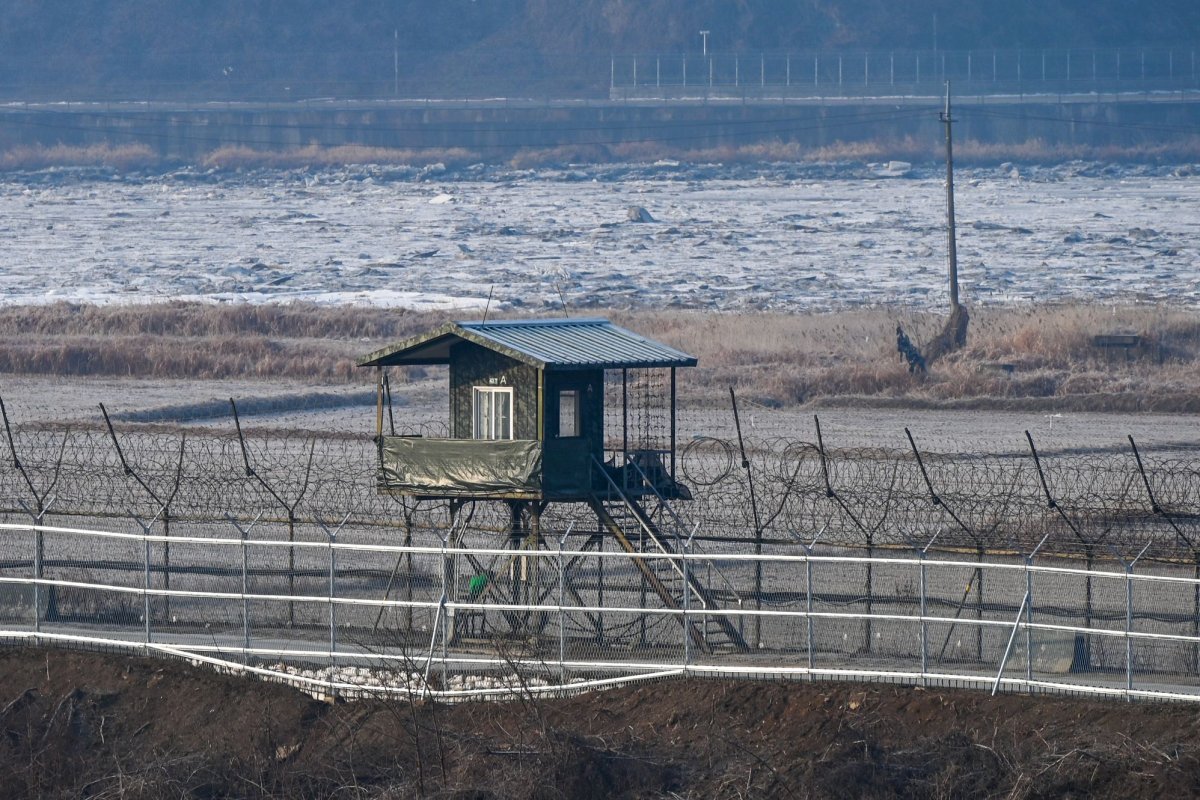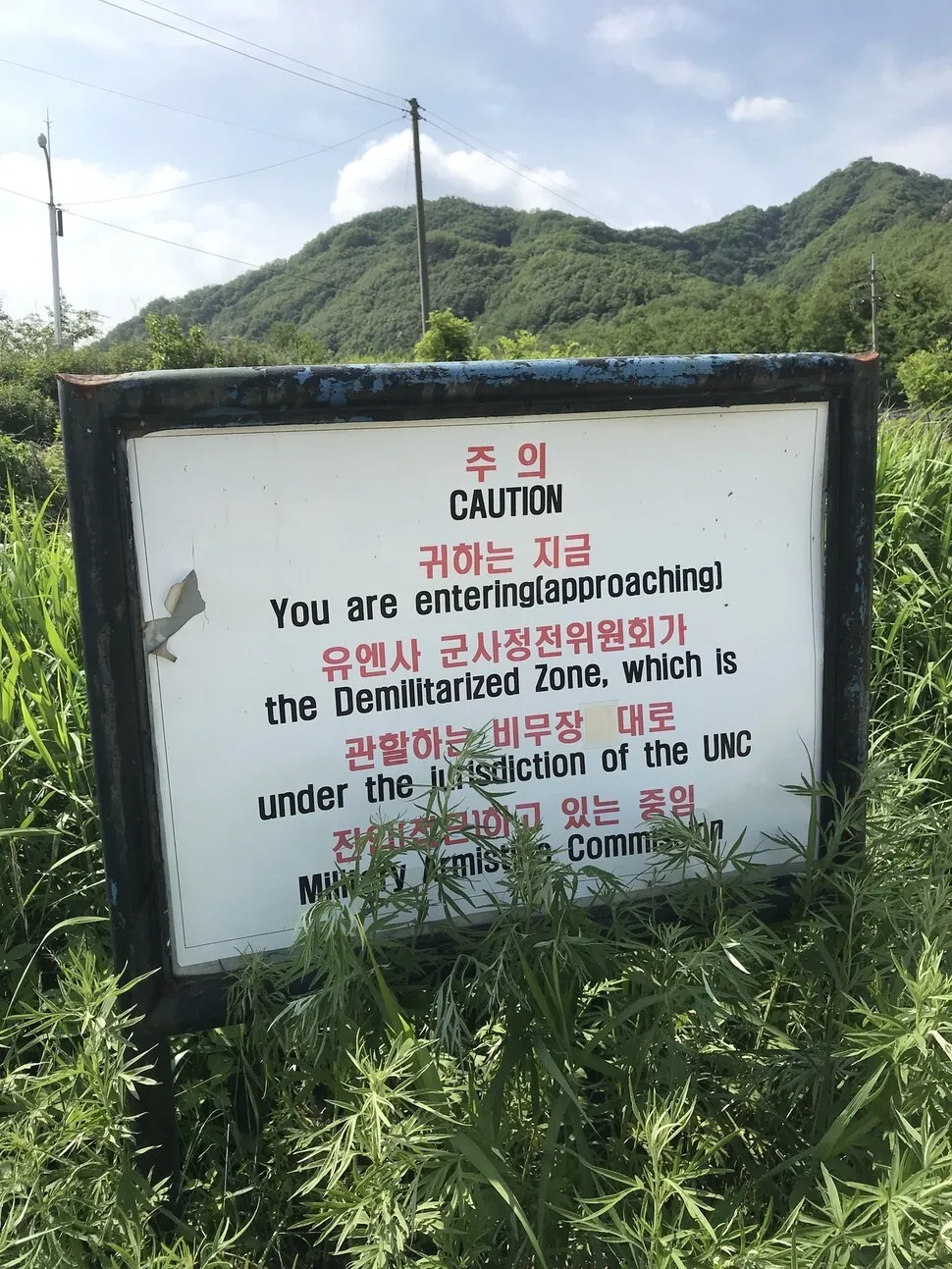
A sign near the DMZ in Cheorwon, Gangwon Province, that describes the DMZ as under UNC jurisdiction. (Kwon Hyuk-chul, staff reporter)
In his New Year’s address for 2020, South Korean President Moon Jae-in announced plans for an independent inter-Korean cooperation effort to usher in an era of “individual tours” to North Korea in a bid to achieve a breakthrough in inter-Korean relations amid UN Security Council sanctions against the North. This was then fully contradicted by US Ambassador to South Korea Harry Harris, who said in a talk with the foreign press that Seoul’s policies for individual tours in the North needed to be discussed within the South Korea-US working group framework. To date, the UN Command and the US have obstructed South Korea’s efforts on numerous occasions to enter the DMZ to conduct inspections for the linkage of South and North Korean railways and roads or for other non-military purposes.These kinds of remarks from the US ambassador and obstructions of inter-Korean exchange and cooperation efforts by UNC have been enough to infuriate South Koreans. The public has begun to catch on to the fact that the main reason inter-Korean agreements have not been implemented has to do with UNC and the US.What are the legal issues surrounding UNC, and what sort of exit strategy might be developed for the future? To answer this question, we should first consider UNC’s history and legal standing.After the Korean War broke out on June 25, 1950, the UN Security Council adopted Resolution 84 (S/1588) on July 7 of that year. This resolution assigned the name of “unified command” to the unit commanding armed forces deployed from 21 countries to aid South Korea, with the US government appointing its commander and permission granted to use the UN flag alongside the flags of the participating countries. The unified command was also required to report all of its activities to the UNSC. The unified command unit was formed the following July 24 in Tokyo. Without consulting with the UN, the US government changed its name to “United Nations Command” (UNC) and appointed Douglas MacArthur as its commander. The result was to give the appearance that the unified command represented the UN’s armed forces.As the UNC headquarters were relocated to Seoul on July 1, 1957, the commander assumed the concurrent roles of USFK commander and commander of the South Korea-US Joint Chiefs of Staff Command. Seven UNC branches are currently in Tokyo, where they are to provide logistical support alongside the Japan Self-Defense Forces (JSDF) in the event of an emergency on the Korean Peninsula.After the Korean War ended, then-South Korean President Rhee Syng-man refused to sign the Korean Armistice Agreement in 1953, leaving UNC as the only signatory on the South Korean side. On July 14, 1950 – 10 days before UNC was established -- Rhee transferred operational control for the South Korean military to the unified command (UNC). When the South Korea-US Combined Forces Command (CFC) was established on Nov. 17, 1978, the UNC’s operational command was transferred once again to the CFC, where it remains to this day.