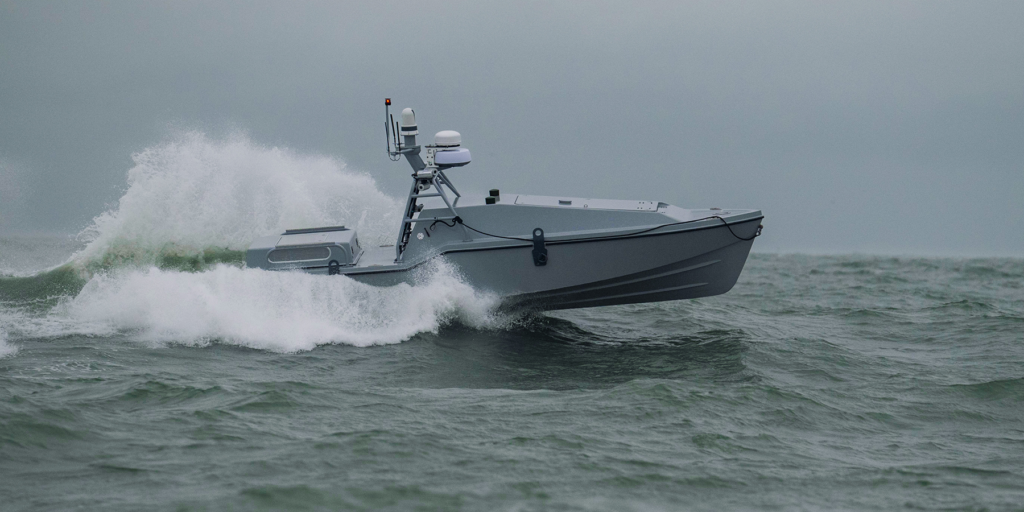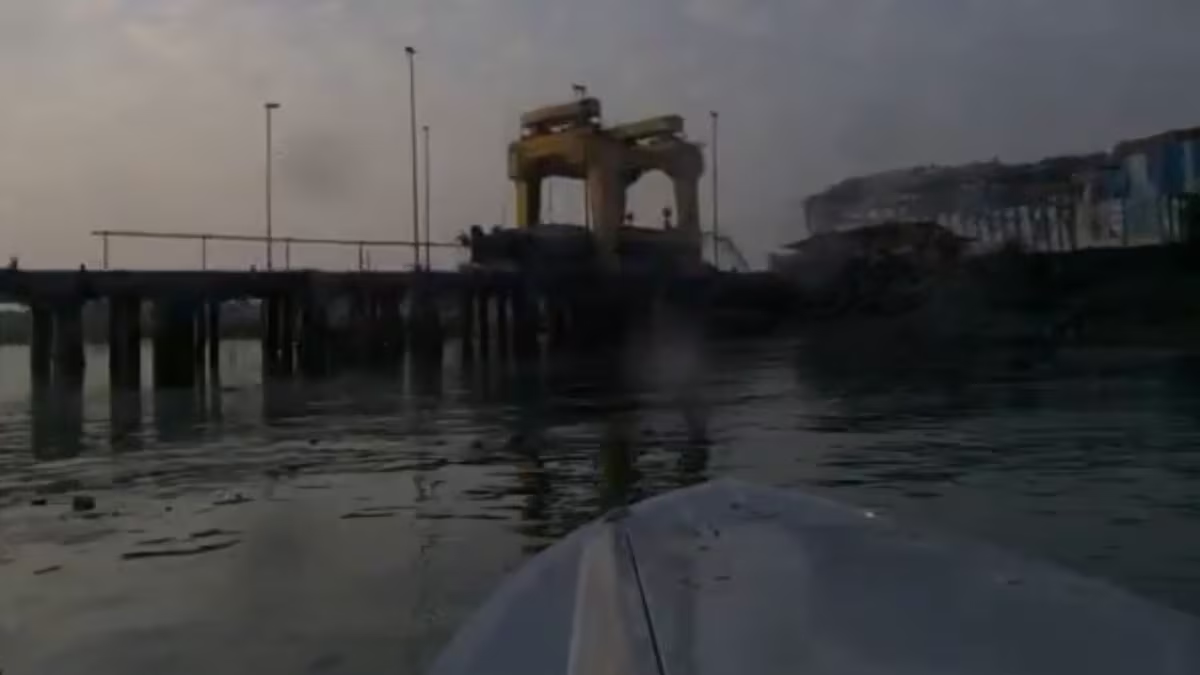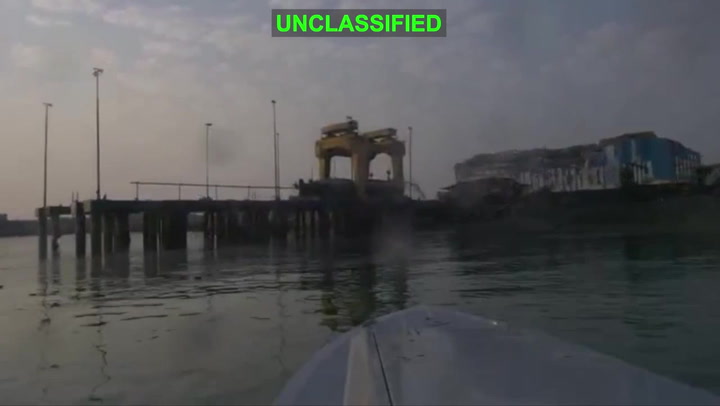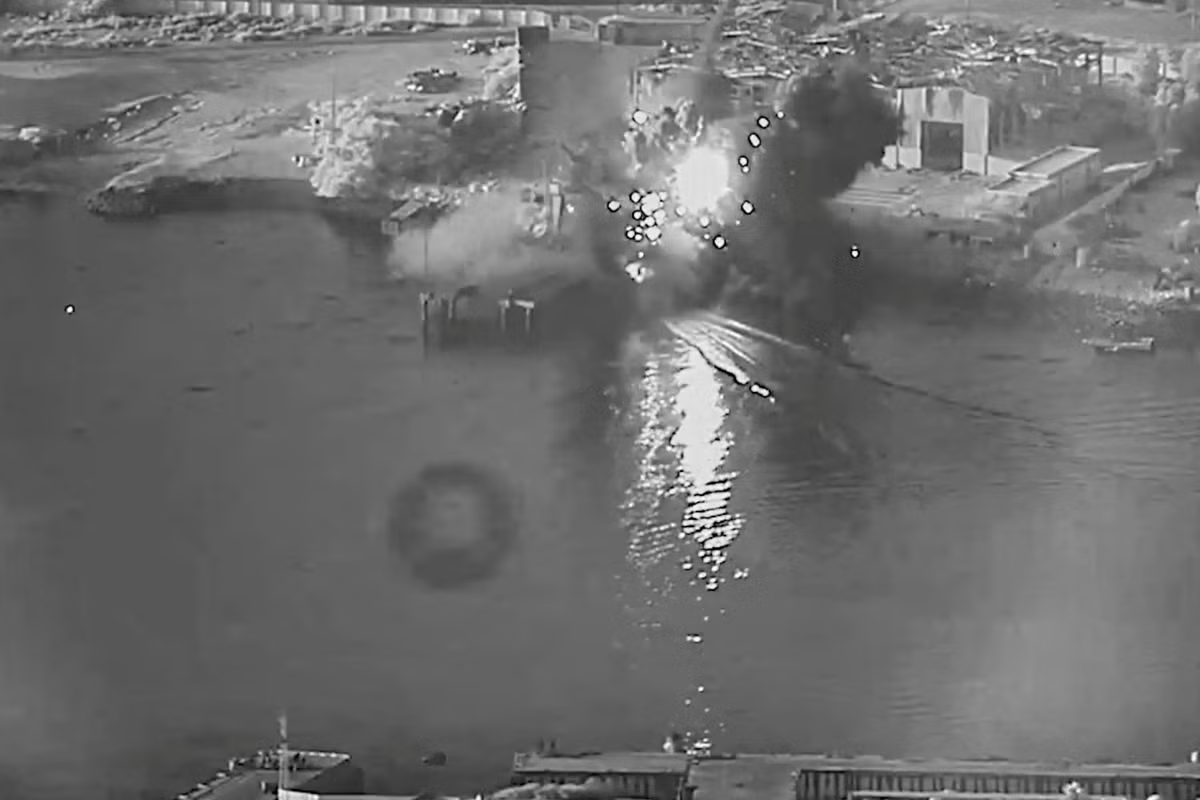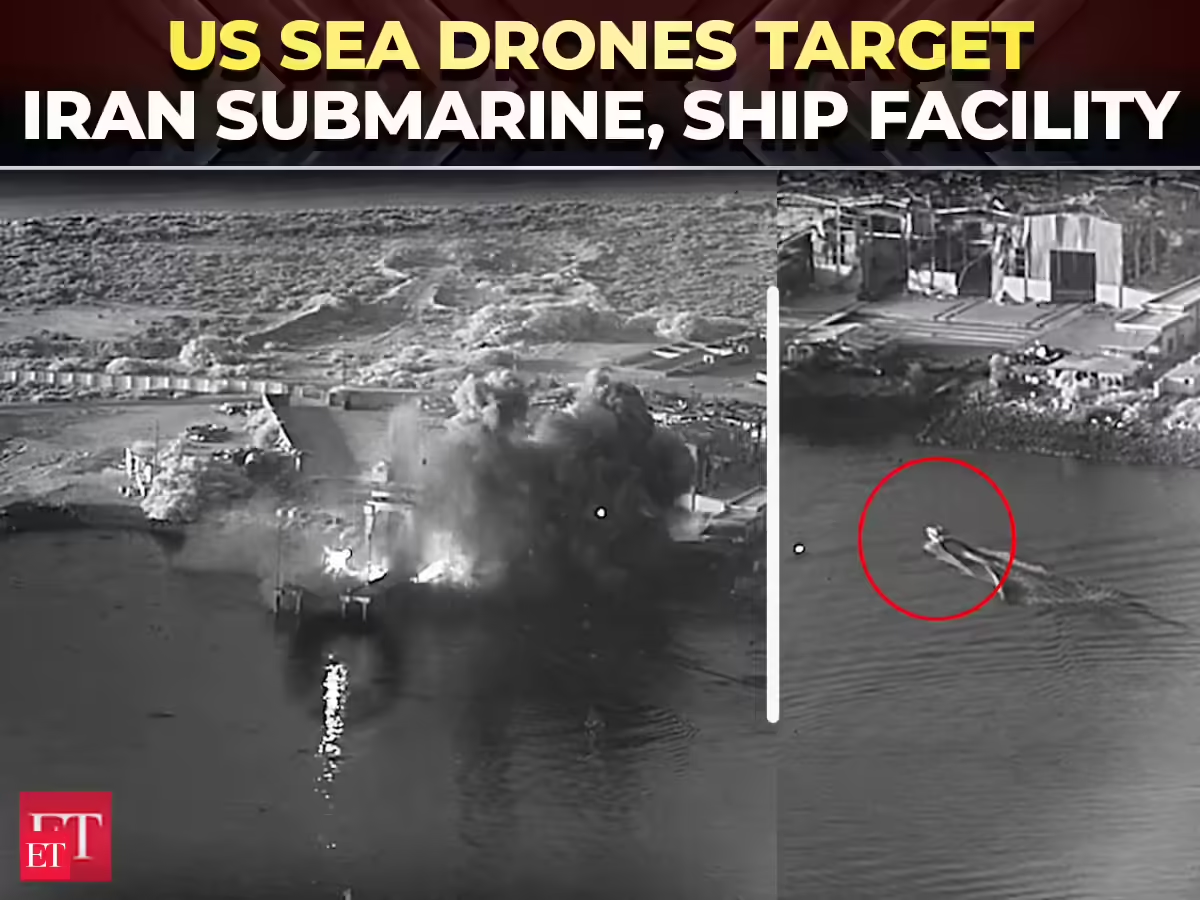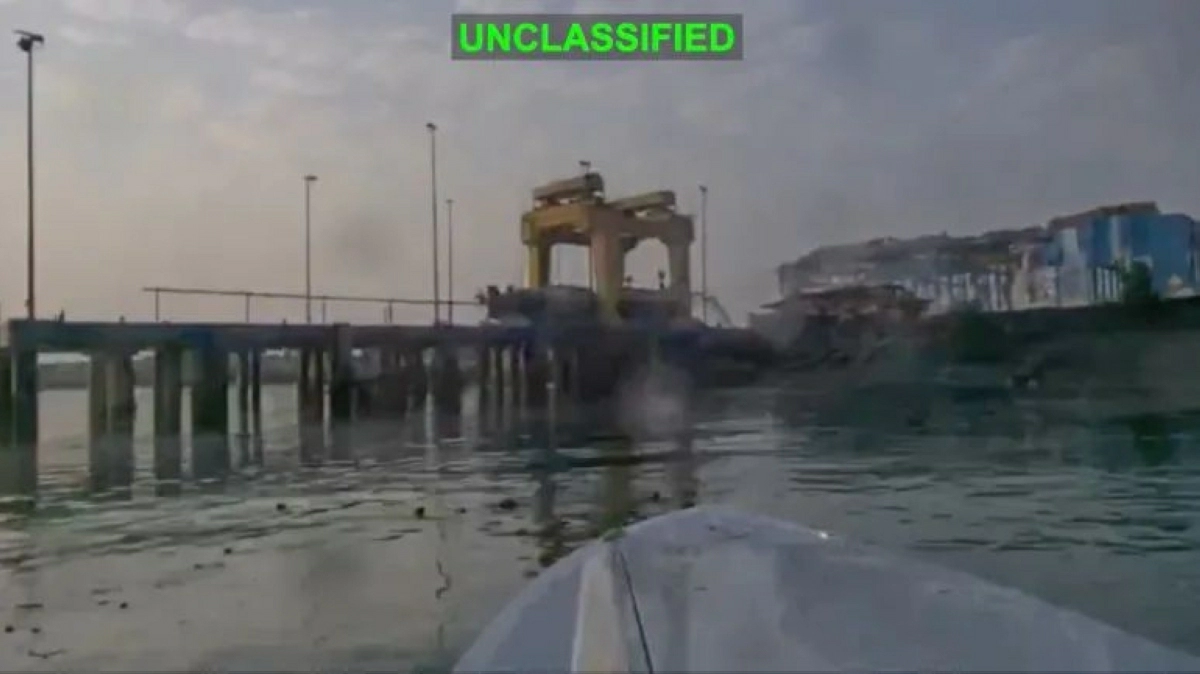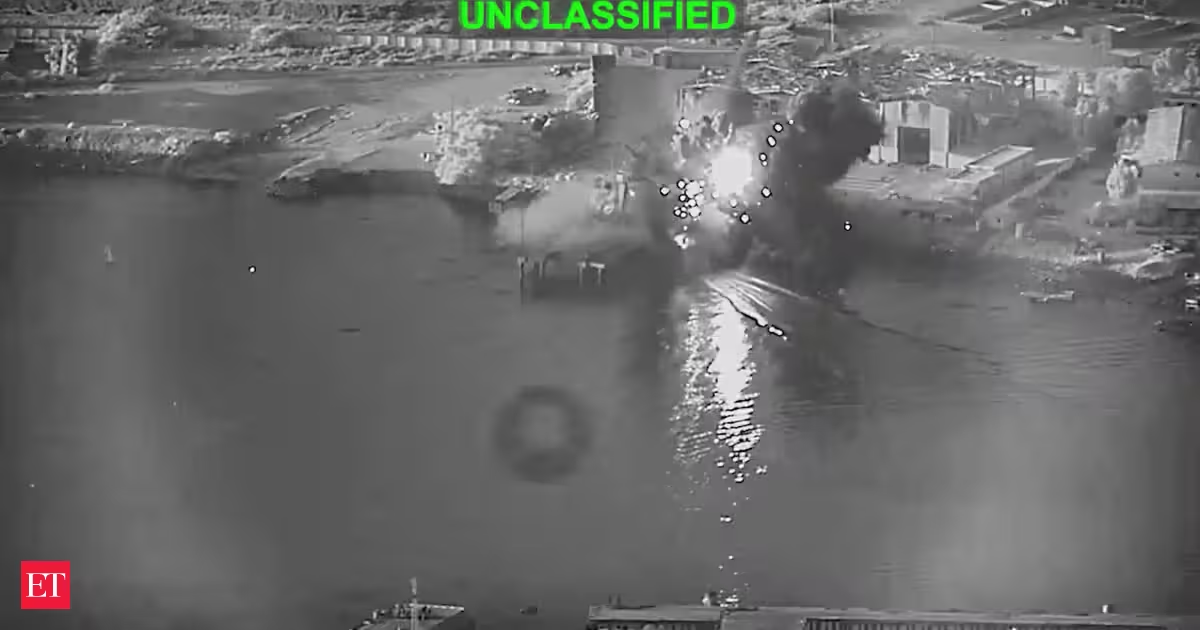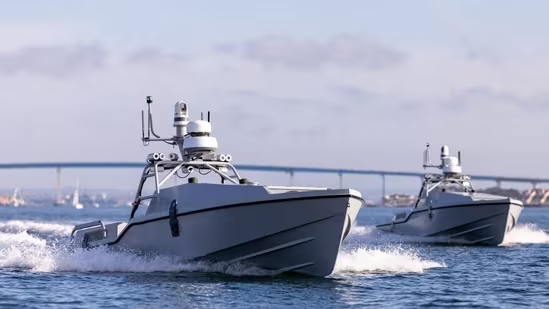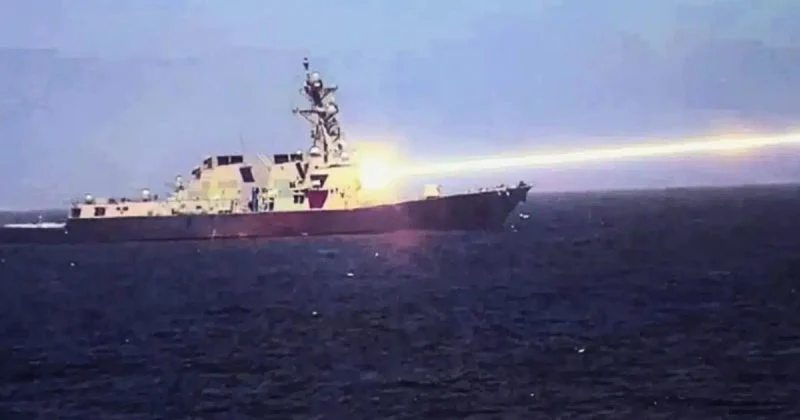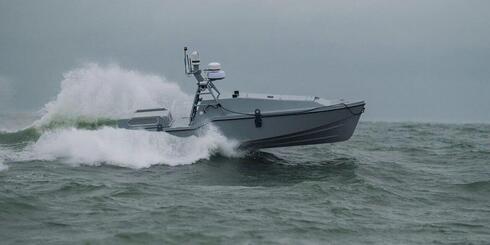
Three long-range Corsair unmanned vessels struck a naval facility at Bandar Abbas in their first US combat deployment, targeting Iran’s ability to attack commercial shipping near the Strait of HormuzThe United States used unmanned attack boats in combat for the first time this week, sending three long-range vessels toward the Iranian port city of Bandar Abbas in an effort to weaken Tehran’s ability to target commercial shipping near the Strait of Hormuz.The vessels, known as Corsair, can travel more than 1,600 kilometers at speeds of about 65 kilometers per hour and carry payloads weighing up to 450 kilograms.US forces strike an Iranian submarine and ship maintenance facility (Video: CENTCOM)“This is only a glimpse of what is to come when fighting resumes following the collapse of negotiations with Tehran,” a senior U.S. official told The Washington Post.U.S. Central Command said the strike targeted a maintenance facility used by Iranian submarines and ships.“Three Corsair unmanned surface vessels manufactured by Saronic took part in the operation,” CENTCOM said. “The vessels struck the port at the Bandar Abbas naval base, marking the first time U.S. forces have used unmanned surface vessels in combat operations.”Corsair Autonomous maritime drone costs less than $1 million (Photo: Saronic)The military said the attack degraded Iran’s ability to continue striking commercial shipping.The seven-meter Corsair boats are manufactured in Texas by Saronic, an American defense technology company founded about four years ago by a former U.S. Navy commando.Each vessel costs less than $1 million to produce, according to The Washington Post.The boats are designed for autonomous or remotely controlled missions over long distances, allowing military forces to send explosive payloads toward heavily defended targets without placing personnel directly at risk.The vessels arrived in the Middle East in late March, according to a U.S. official cited by the newspaper.A Saronic vessel was also reportedly used in June to rescue two crew members from a U.S. Apache helicopter downed by Iran near the Strait of Hormuz.The strike highlights the growing importance of unmanned military technology being tested by the United States in the Middle East.Beyond its use against Iran, the Pentagon is seeking to purchase large quantities of unmanned systems to deter rivals including China, drawing lessons from the war in Ukraine.Ukraine has made extensive use of unmanned surface vessels against Russia, particularly in the Black Sea, where the low-cost craft have been used to strike ships and naval infrastructure.Kyiv has also equipped some unmanned boats with antiaircraft weapons and claimed that the systems were used to shoot down Russian aircraft and helicopters.The American strike at Bandar Abbas marked a significant step in that technological shift, turning systems previously used mainly for surveillance, testing and support missions into offensive weapons deployed in active combat.Comments
US deploys autonomous ‘suicide boats’ in combat for first time in Iran strike
Three long-range Corsair unmanned vessels struck a naval facility at Bandar Abbas in their first US combat deployment, targeting Iran’s ability to attack commercial shipping near the Strait of Hormuz
451 words~2 min read