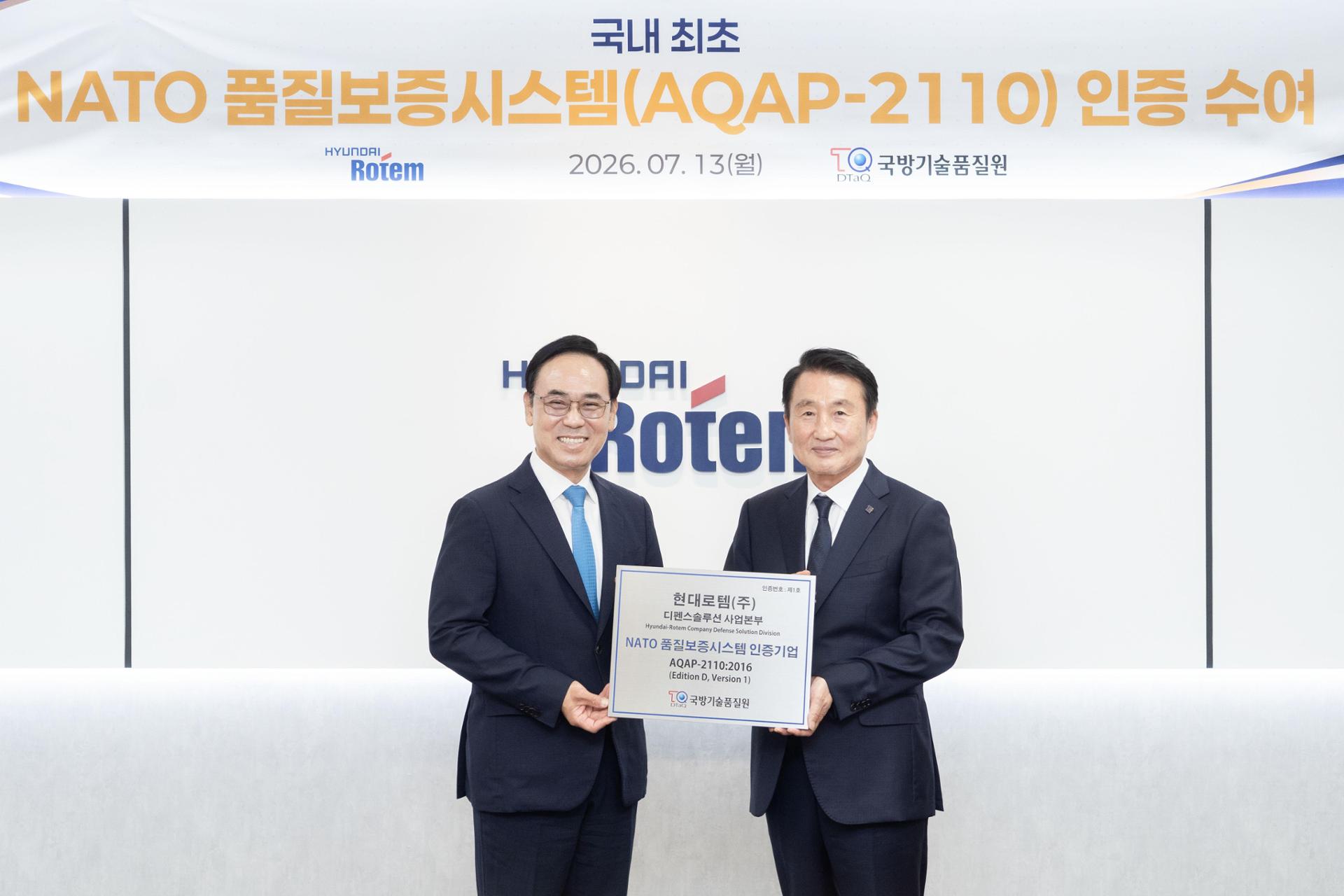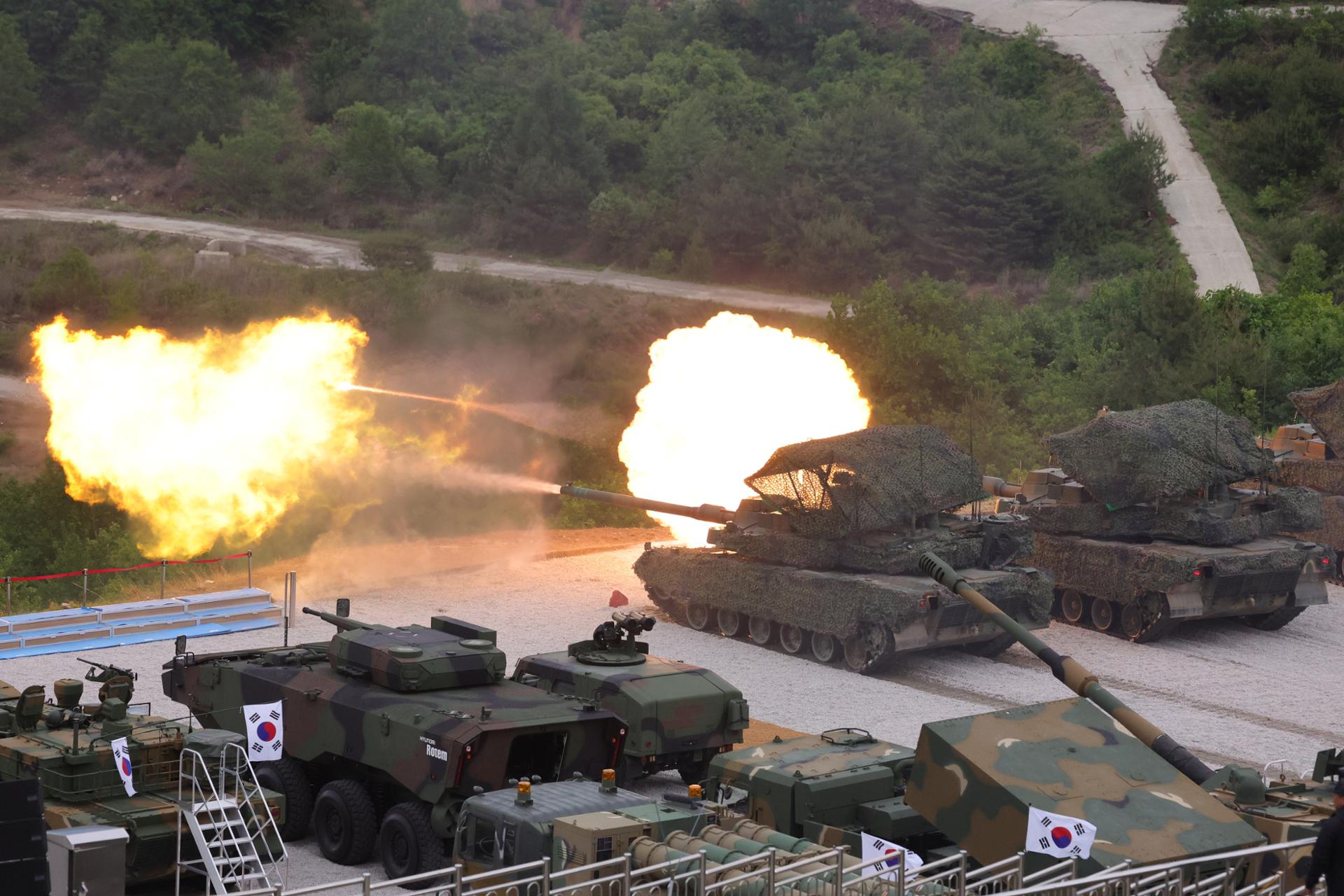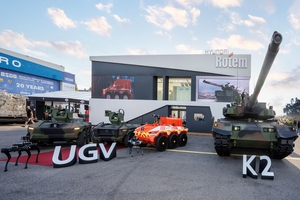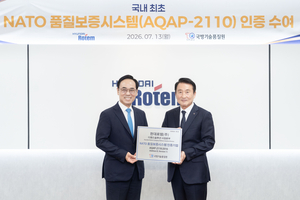
Shin Sang-beom (right), president of the Defense Agency for Technology and Quality, and Hyundai Rotem CEO Lee Yong-bae pose for a photo after a ceremony marking the company’s NATO quality assurance certification at Hyundai Rotem’s headquarters in Uiwang, Gyeonggi Province, Monday. (Hyundai Rotem) Hyundai Rotem has received certification under NATO’s quality assurance system for its K2 main battle tank, becoming the first South Korean company to earn the qualification in a move expected to boost exports to NATO member states.Hyundai Rotem, the defense and railway systems affiliate of Hyundai Motor Group, said Tuesday that it received Allied Quality Assurance Publications 2110, or AQAP-2110, certification at a ceremony held Monday at its headquarters in Uiwang, Gyeonggi Province. Officials from the Defense Agency for Technology and Quality attended the ceremony.AQAP-2110 is a quality management standard applied to defense procurement by NATO member states. The certification is considered a key requirement for companies seeking to bid for contracts or supply defense products and services to NATO countries.Hyundai Rotem is the first Korean company to earn the certification.It is also the first AQAP-2110 certification issued by the state-run DATQ since the agency secured official authority to certify companies under NATO's quality assurance system.The certification covers the K2 main battle tank and its family of armored vehicles, including recovery, bridge-laying and mine-clearing variants. Hyundai Rotem said it planned to expand the list of certified products in line with future market demand.The certification demonstrates that the K2 meets NATO quality requirements, potentially strengthening Hyundai Rotem's position in defense tenders involving member states. Hyundai Rotem expects the qualification to give it an edge in bid evaluations and contract negotiations going forward.The development comes amid rising NATO defense spending, driven by heightened geopolitical tensions. NATO members collectively account for about 55 percent of global military spending, and many are moving to raise defense spending toward 5 percent of gross domestic product, potentially opening further opportunities for defense manufacturers.South Korea has recently begun negotiations on a basic procurement agreement with NATO to improve Korean companies' access to the alliance's commonly funded procurement market, estimated at 15 trillion won ($10 billion) annually.“We will strengthen our efforts to enter global markets together with our suppliers and contribute to improving the competitiveness of Korea’s defense industry,” said a Hyundai Rotem official.
Hyundai Rotem’s K2 tank earns Korea's first NATO quality certification
Hyundai Rotem has received certification under NATO’s quality assurance system for its K2 main battle tank, becoming the first South Korean company to earn the
380 words~2 min read