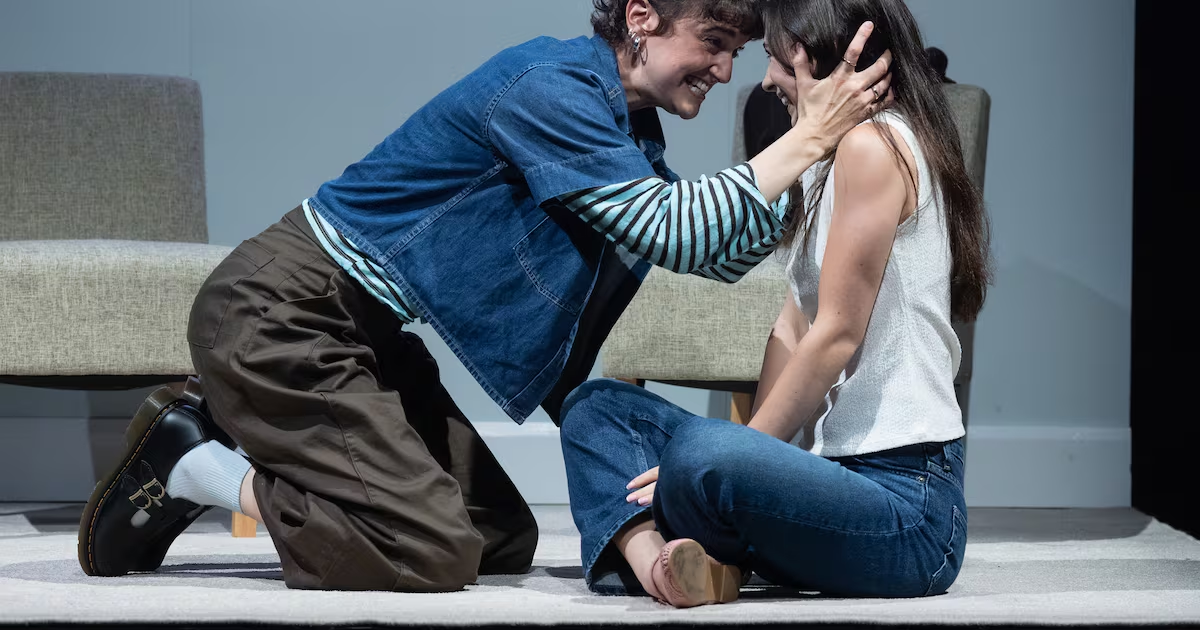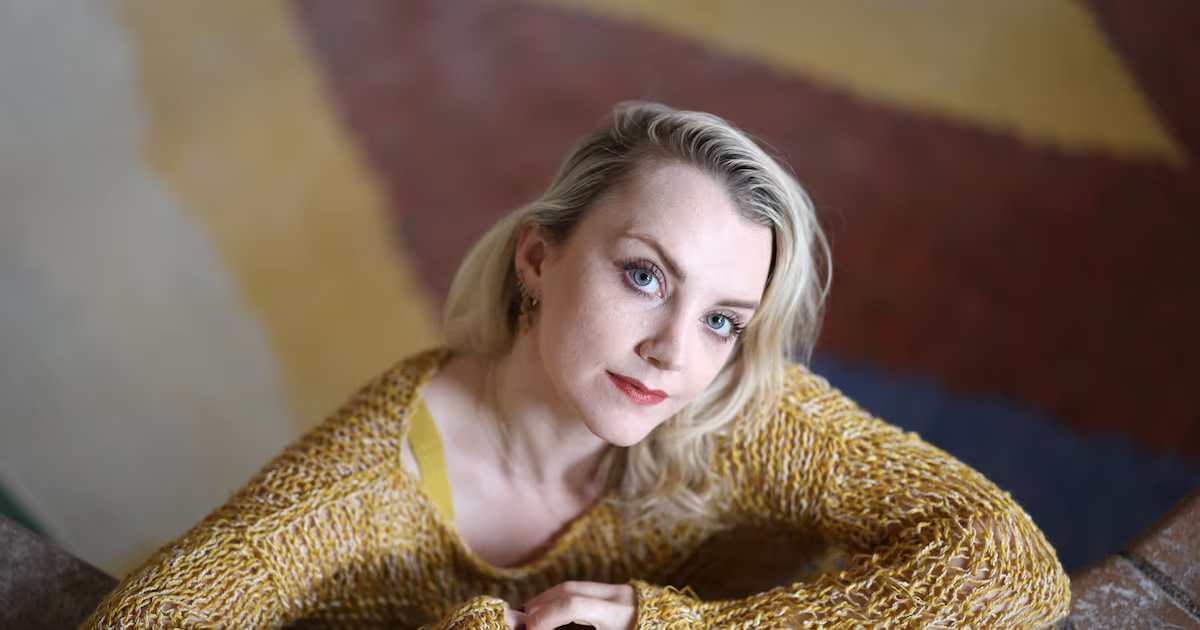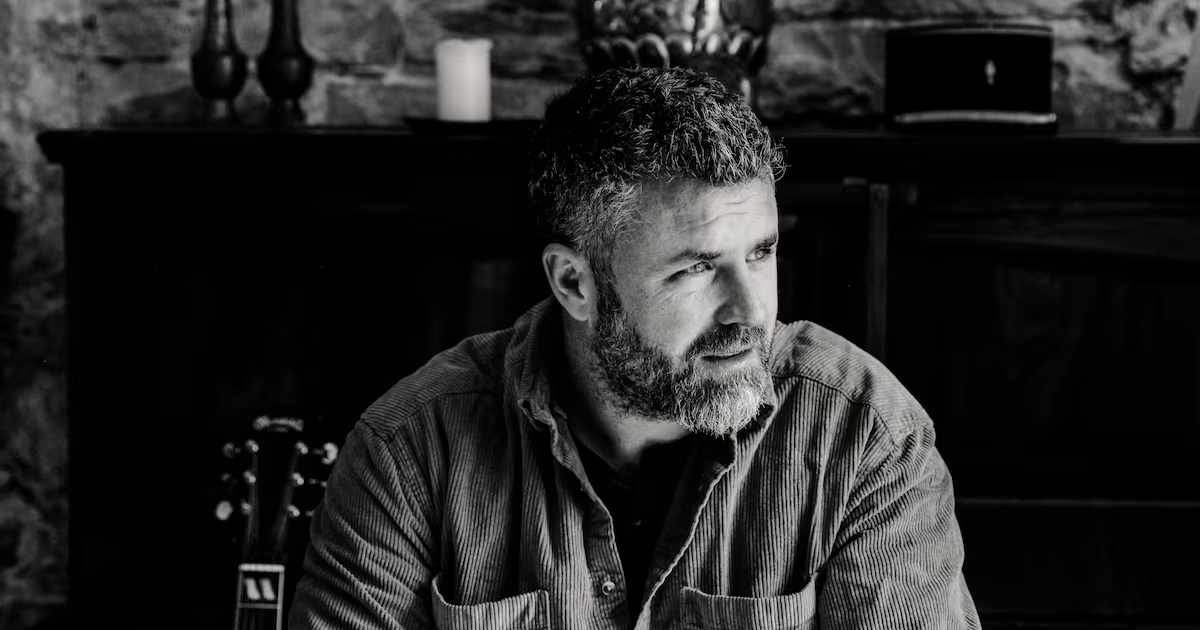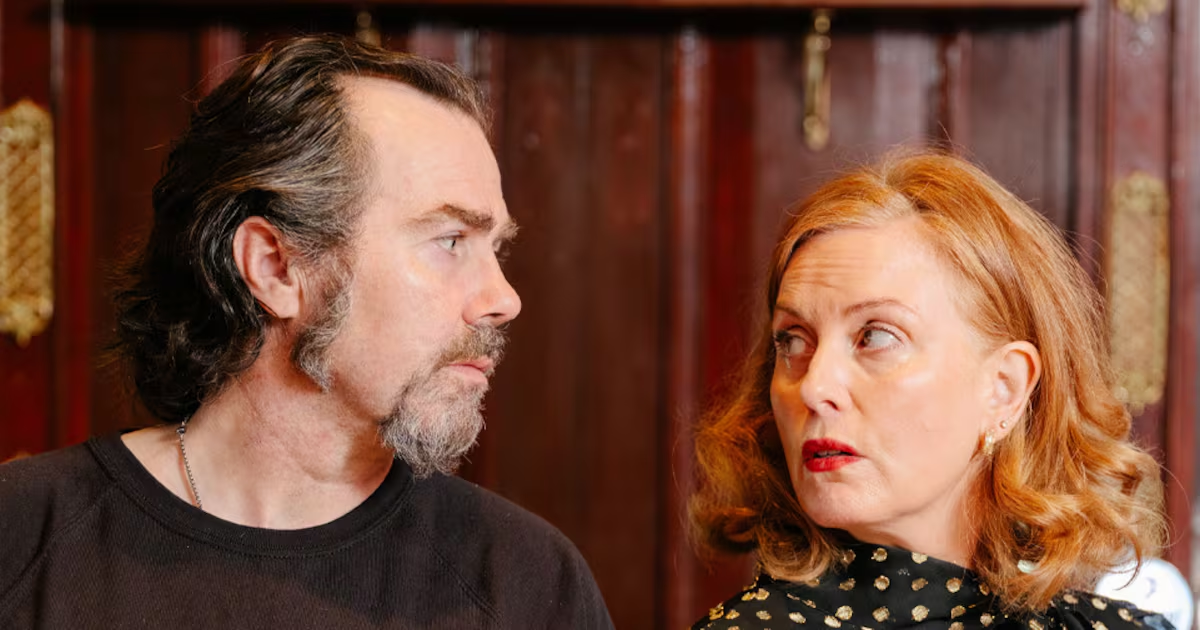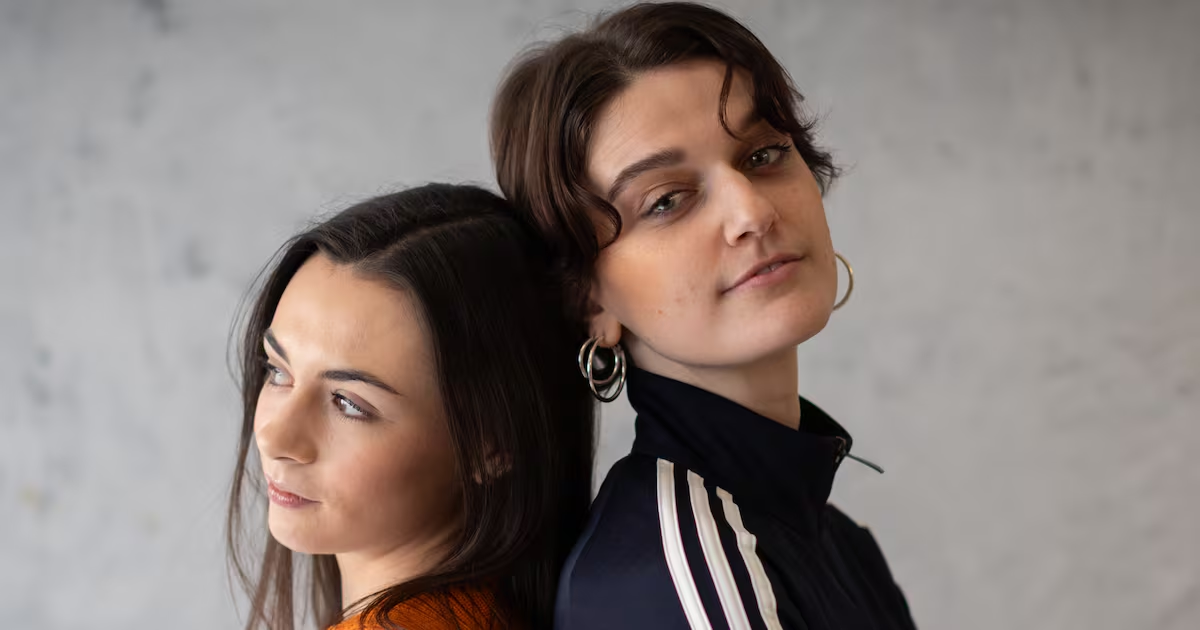
Hard as they are, we have a script for breakups. We learn about romantic relationships through songs, films and pop culture. But what if a friendship stops working? On that subject, our culture is strangely silent.Eva O’Connor’s new play, For Dolores, explores this tricky territory, following two women who meet at Edinburgh University and become instant best friends. The play begins a few years later, when they’re in their mid-20s. Something has happened between them, something very dramatic, and they’re trying to work out whether there is any way back. As they revisit the past, the audience pieces together what drove them apart.“The story of these two girls has been living rent-free in my brain for a really long time,” O’Connor says over the phone one morning from her home in London, where she lives with her toddler. “I wanted to capture the hedonistic freedom of university but also the pain that comes with living in such close quarters and how people can treat each other.“I was really fascinated by those friendships that you form in your early 20s that are so all-consuming. Before you’re seeing other people, you have these really expansive days together. You go out and get drunk together, then you’re hungover together, and they’re your chosen family. “You don’t really look ahead very much. You only start doing your later life planning after you’ve left. There’s this immediacy to that time, and I really wanted to see if I could capture it.”The two protagonists, Mo and Réaltín, could hardly be more different. Mo, from Glasgow, arrives at university fiercely political and convinced that “everyone in Edinburgh is a posh c**t”; Réaltín, from Dublin, is more naive. Their friendship is intimate, emotionally entangled and tinged with sexual tension, but it never quite becomes a romance.“I’m a woman writing about my own life experience and how I move through the world. That inevitably influences how I perceive things and how I write about them,” O’Connor says.That instinct runs through her work. Across her plays, she repeatedly returns to questions of girlhood, the body and the female experience. Her debut, Overshadowed, drew on her experience of anorexia. She wrote and performed the one-woman show, which won the Fishamble New Writing Award at Dublin Fringe Festival and marked the beginning of her long collaboration with the theatre company, including on For Dolores. She followed Overshadowed with Maz and Bricks, which she wrote during the campaign to repeal the Eighth Amendment to the Constitution and centred on abortion rights and reproductive choice before creating Mustard, a darkly comic solo show about self-harm, heartbreak and compulsion.“I had a real compulsion this time to write about female friendships and to try and nail that experience. Whenever something feels important in my life, I want to see if I can get it onto the page. “It’s also the first time I’ve written about motherhood. Réaltín has a very traumatic birth. I’d started writing the play before I had my son, and then I had a horrendous birth myself. Afterwards I thought, well, now I’m highly qualified to write that scene properly. It’s strange how fiction can sometimes seem to predict your own life.”For Dolores: the play's writer, Eva O'Connor. Photograph: Laine Alcantara O’Connor’s background spans writing and performance. She wrote and starred in her first play, and for years created roles with herself in mind. At this stage in her career that’s changing a little. Though she’s still touring Chicken, she’s getting more used to writing scripts she won’t perform.As she’s now in her mid-30s, O’Connor felt she was a decade too old to play either of the roles in For Dolores. Instead she has remained closely involved throughout rehearsals, working from London with the creative team as the play has evolved. It’s being directed by Jim Culleton, Fishamble’s artistic director. He says O’Connor has been open to cuts and responsive to discoveries made in the rehearsal room. When the team felt the final scene was missing a beat, she revisited the script and substantially reworked its structure. “She knows what she wants to say, but she’s also very collaborative and very open. And she’s an actor herself, so she knows what that involves,” he says.Culleton was taken by the script as soon as he read it. “What struck me was how authentic it felt. The two characters are messy, flawed and imperfect, but you really care about them. You want them individually to work through their issues, but you also desperately want them to find a way back to each other. “Eva captures that stage of your 20s so truthfully, when you’re still figuring out your values, your friendships and who you are. It’s also very funny. I found myself laughing and crying all the way through it.”Watching rehearsals in the final week, I’m struck by the fact that Culleton is still laughing.“Maybe I’m easily amused,” he says. “But, no, I don’t think so. It’s a very rich play. Different things strike you as you go along. Often the saddest moments are the funniest, because humour is a way of coping. Eva is particularly good at creating that balance. You find yourself laughing one moment and then realising it’s actually heartbreaking.”The production leans into theatricality rather than realism. In what is framed as a couples-therapy session, the audience becomes the therapist as the two women move fluidly between memories, direct address and choreographed movement. Designed in collaboration with the choreographer Nóra Ní Anluain Fay, the staging allows the characters to inhabit each other’s memories and competing versions of the past. [ Playwright Conor McPherson: ‘You’re better off getting hammered than a three-star review’Opens in new window ]The therapist’s room is literally supported by the debris of their lives – Buckfast bottles, baby mobiles, milk warmers and university books – suggesting that the emotional work of the present rests on everything that came before.For Culleton, however, the biggest challenge was casting. With only two performers, everything rests on the chemistry between Mo and Réaltín. The search took months, with auditions held in Dublin for the Irish role and over Zoom for the Scottish role. Lara McDonnell, whose stage work includes collaborations with Sam Mendes, Kenneth Branagh and Jez Butterworth, was cast as Réaltín, while the Scottish actor Catriona Faint, a regular at the Traverse and other Scottish theatres, was chosen to play Mo.“You need two actors who are individually brilliant but who also have an instinctive chemistry together,” Culleton says. “Fortunately, Lara McDonnell and Catriona Faint have exactly that.”Remarkably, the pair never auditioned together. “We just felt they were both such strong, open performers that the chemistry would be there. When they met for the first time, at the photoshoot, it was as if they’d known each other for years.”McDonnell and Faint say the chemistry was immediate.“When we did the first read-through, people kept asking how long we’d known each other,” Faint says. “We’d literally met once before, at the photoshoot. But it just fit.”“I feel like I’ve known Cat for a thousand years,” McDonnell says.Much of the rehearsal process has involved building the characters’ histories in minute detail. “We’ve left no stone unturned,” Faint says. “When you know the characters inside out, you can play them freely. We trust each other enough to try things and surprise each other.”McDonnell agrees. “We’ve had so much time to ask questions and suddenly realise, ‘Oh my God, that’s what this moment means.’ Those conversations have been one of the nicest parts of the process.”The result is visible onstage. Even though the friendship is fractured from the opening moments, the audience never doubts why these women were once inseparable.Both actors point to O’Connor’s writing as the reason the relationship feels so lived in. McDonnell singles out a line: “A liability was our Deco. Beautiful people always are.” Faint recalls a passage that struck her at her first audition, describing feelings being “pressed into her ribcage, down into the space between her bladder and her pubic bone”. “I’d never have found those words myself,” she says. “But I immediately knew exactly what that feeling was. It’s such vivid writing.”In rehearsals, a handful of touchstones kept resurfacing: Girls, Fleabag and Derry Girls. Like those three TV series, For Dolores treats female friendship not as a subplot but as the emotional centre of the story. It asks what happens when the most important relationship in your life begins to unravel, and why that loss can feel every bit as painful and bewildering as the end of a romance. There may be no script for friendship breakups, but O’Connor’s play argues that they deserve to be taken just as seriously.For Dolores, staged by Fishamble, is at the Mick Lally Theatre, as part of Galway International Arts Festival, from Thursday, July 16th, to Saturday, July 18th, with previews on Tuesday, July 14th, and Wednesday, July 15th. It’s then at the Pavilion Theatre, Dún Laoghaire, Co Dublin, from Wednesday, July 22nd, until Sunday, July 26th; and the Traverse Theatre, in Edinburgh, as part of TravFest and the Culture Ireland Showcase, from Friday, August 7th, until Sunday, August 30th, with a preview on Thursday, August 6th
What happens when the most important relationship in your life begins to unravel?
Galway International Arts Festival 2026: In Eva O’Connor’s play For Dolores, a fractured friendship feels every bit as painful as the end of a romance
1,522 words~7 min read