In indie game development, one of the biggest challenges is finding high-quality assets to bring our ideas to life.
My goal has always been to create a complete world that stands out from the asset-saturated market, which often feels repetitive and even boring. However, I noticed that most available resources are low-resolution, typically 16x16.
While 16x16 sprites have been functional for years, modern game engines allow for much greater detail while still preserving that classic retro vibe. The typical workaround has been to simply scale 16x16 sprites twice to make them 32x32, or three times for 48x48. This approach sacrifices an incredible amount of potential detail just to optimize... I'm not even sure what, since the file sizes end up being practically the same.
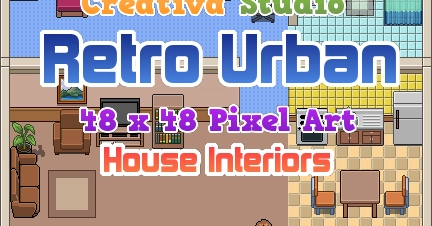
That is why choosing a 48x48 pixel grid was not a random decision. In modern pixel art, this size represents the perfect balance between the classic nostalgia of 16-bit systems and the need for contemporary expressiveness. Plus, when I first started creating graphics, I was primarily using RPG Maker MV (RMMV), which has a native 48x48 grid.
With a lower resolution, I would have lost the ability to subtly animate a character's gaze, individual movements, or the flow of their hair. Minor details—like wall sketches or windows with lighting that shifts depending on the time of day—would have been impossible.