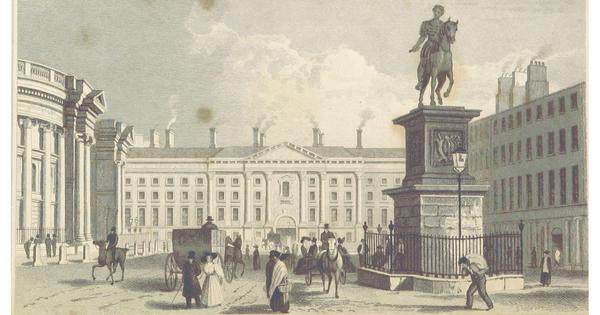
Long before contemporary debates about migration, multiculturalism and belonging, Dublin was already home to a striking and unconventional figure: Mir Syed Aulad Ali, a Muslim scholar from northern India who became one of the city’s most distinctive intellectual and social icons in the nineteenth century.His life unsettles many modern assumptions – about religion, identity, and integration – by showing how an early migrant Muslim was not merely accepted into Irish society, but helped shape its cultural and intellectual life.Today, many associate the presence of Muslims in Ireland with post-1950s student migration, particularly from Africa. Yet, as historians like Craig Considine have noted, many Irish people are surprised to learn that South Asian Muslims were arriving in Ireland as early as the nineteenth century. Mir Aulad Ali stands as the most vivid example of that forgotten history.From Lucknow to DublinMir Syed Aulad Ali was born in Shahabad near Lucknow, in the princely state of Awadh, one of North India’s most culturally refined regions before its annexation by the British in 1856. He was the son of Mir Zamin Ali, an employee of the Awadh court, and belonged to a respected Sayyid family – an inference drawn from his name, as “Mir” was commonly used among Sayyids.Records suggest he had connections with the nawab of Awadh and served briefly at court before leaving India.Mir Aulad Ali served as the Persian tutor to Mirza Muhammad Jawad Ali Shah, the younger brother of Nawab Wajid Ali Shah, the king of Awadh. When Mirza Muhammad Jawad Ali Sikandar Hashmat Bahadur was appointed commander-in-chief of the Awadh army, Aulad Ali continued in his service as an aide-de-camp to his former pupil.He accompanied Mirza Jawwad to England in 1856, along with the king’s mother and a delegation, to plead the case of Wajid Ali Shah before the British Crown.Aulad Ali stayed in London and grew fond of the city. It was during his stay there that he came into contact with some British scholars that resulted in him receiving an offer to work as a teacher in Dublin, Ireland – an opportunity that would lead his life in an unexpected and enduring direction.Dr. William Wright was Professor of Arabic, Persian and Hindustani at Trinity College and took up the same position at Cambridge in 1861.Mir Aulad Ali (28) appointed as his successor.He became one of the most beloved figures in Trinity, holding that position for 37 years. pic.twitter.com/44owR0PLXC— Danny Boy (@Care2much18) April 12, 2025
Forgotten histories: Awadh-born Mir Aulad Ali’s impact on 19th century Dublin
He was a professor at Trinity College and a champion of the Irish language.
1,330 words~6 min read