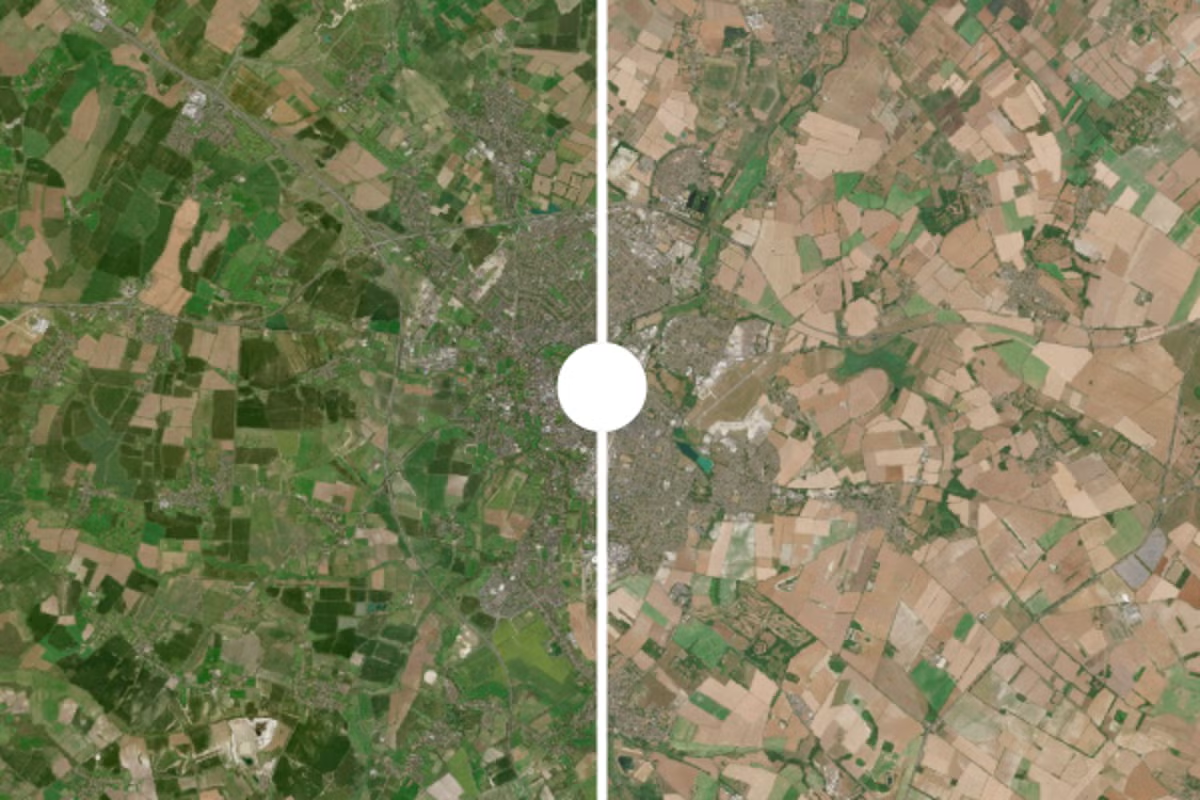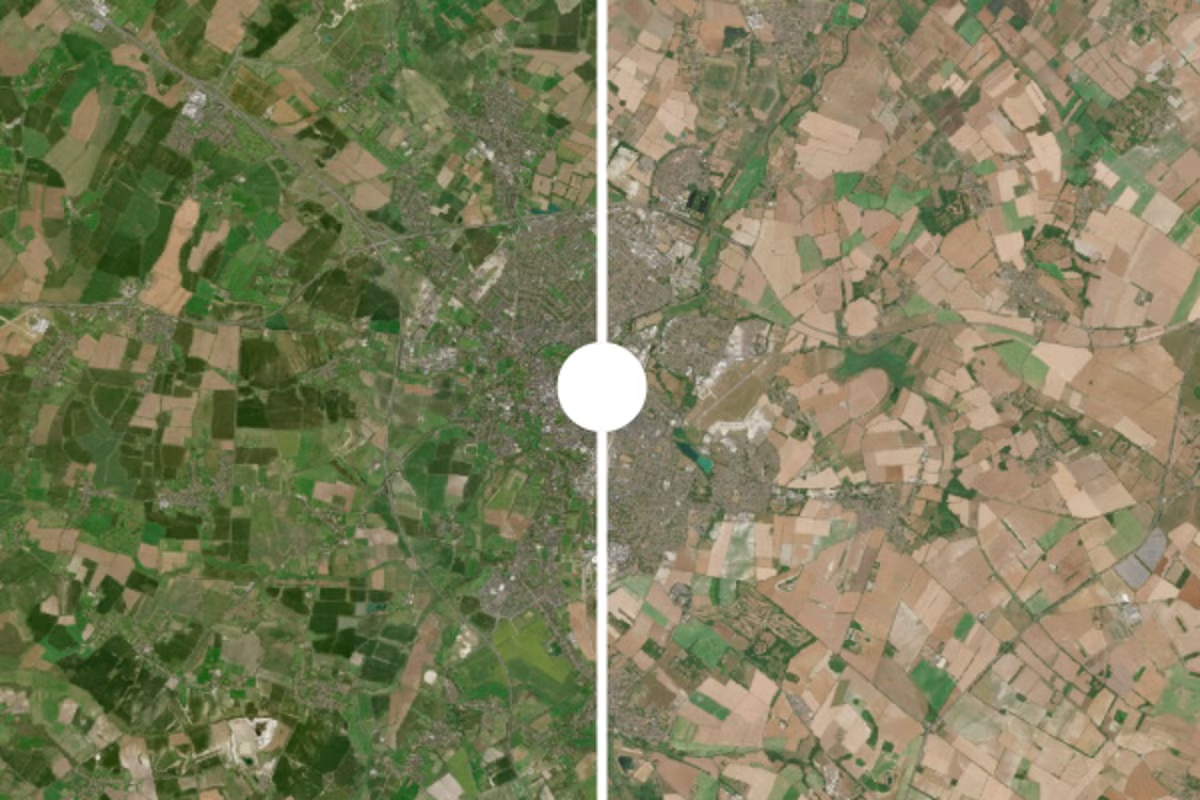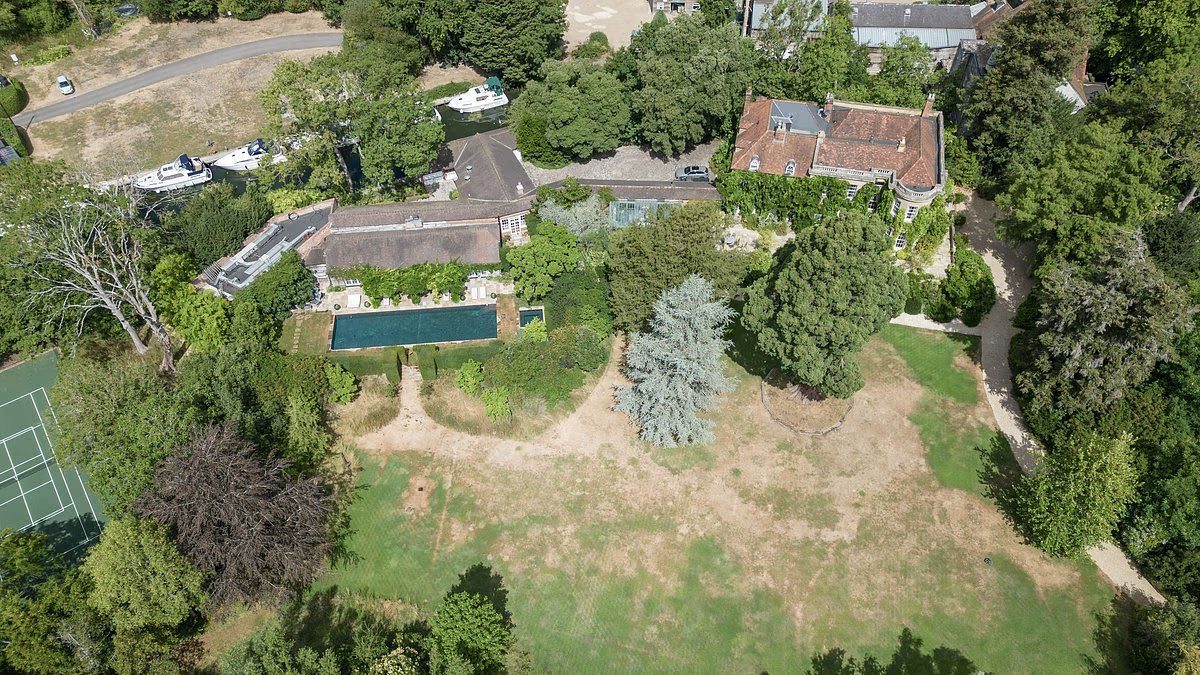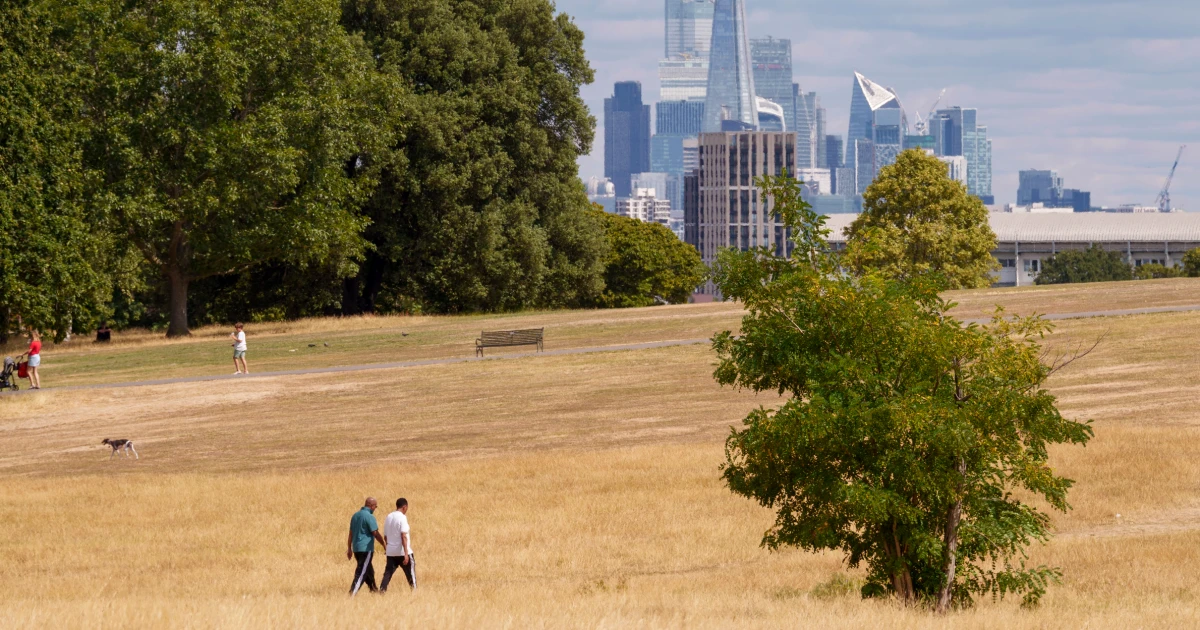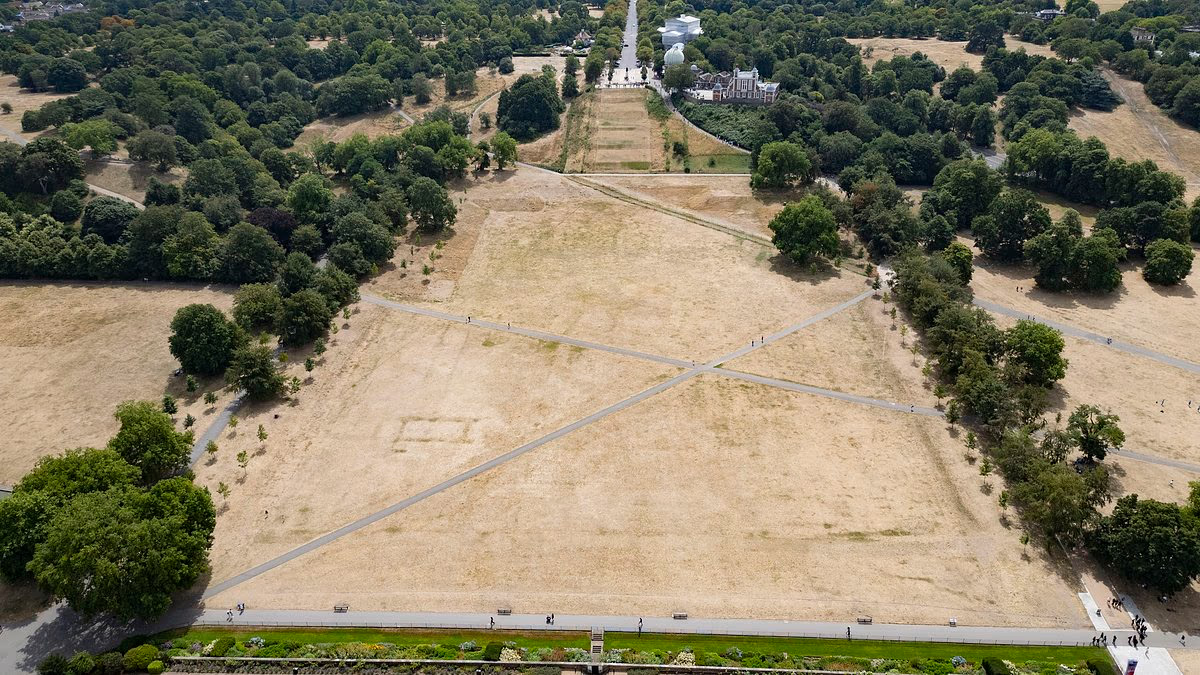
New aerial photos show the devastating effect of the heatwave on Britain's green spaces – as millions now face a hosepipe ban. In what could be the longest heatwave on record, yellowing grass can be seen at some of Britain's best-known landmarks.The UK is stuck in its third heatwave of the year with temperatures expected to remain baking hot until the end of next week.Aerial photographs showed usually green parks in London as well as areas around Stonehenge, Dorset and Nottingham scorched by the brutal heat.Shocking photos show the comparison of Cambridge University grounds between 2023 and now. Lush green grounds have yellowed almost completely.A record was broken this week as temperatures passed 34C for the eighth day this calendar year, surpassing the previous high of seven days set in the summers of 1976 and 2020. This comes as millions face hosepipe bans across the south of England. Anglian Water announced restrictions on Friday morning, placing five million customers across eastern England under a ban from tomorrow. A drone of Greenwich park, east London, showing how the colour of the grass has turned yellow after weeks of baking temperatures ‹ Slide me › A comparison between King's College Cambridge after this week's heatwave and July 2023 A white dry circle appears around the stones at a very arid Stonehenge (pictured on Friday) Wimbledon Common in south west London looked dry as the effects of the heatwave are becoming apparent on Britain's green spaces Bridport and West Dorset Golf Club, on the east cliff at West Bay in Dorset, begins to dry out under the intense heat The fairways at the Cambridgeshire Golf Club in Cambridge appear parched after high temperatures in the UK this week There is barely a sign of green grass in Tooting Common, south London, as it is scorched under high temperatures An aerial view shows a yellowing Beeston Fields Golf Course in Nottingham as the grass struggles with the hot and dry weatherThat means people under the ban will not be permitted to use hosepipes for watering gardens, washing cars or filling swimming and paddling pools. Cambridge Water announced on Friday that it would implement a hosepipe ban for its 350,000 customers for the first time in three decades. The restrictions will come into force on July 17. Thames Water has urged its 16million customers, including those in Greater London, to stop using hosepipes during the heatwave but has not imposed an official ban. The Met Office said it was the first time temperatures of 35C or higher have been recorded in May, June and July of the same year.Rail passengers faced ongoing disruption on Friday due to the heat across the UK network as East Midlands Railway (EMR) continued its 'essential travel only' warning.Great Western Railway, c2c, London Northwestern Railway, South Western Railway, Northern Transport for Wales and West Midlands Railway were running amended services on Friday due to the weather. High temperatures can cause rails to buckle, overhead electric wires to sag and lineside fires, while steel rails can exceed 50C when the air temperature is 30C.From 1am on Saturday, Anglian Water said its customers will not be allowed to use hosepipes.Dr Geoff Darch, head of strategic asset planning for Anglian Water, said: 'This year has been exceptionally hot and dry, and we're already into the third heatwave of the summer.' ‹ Slide me › Shocking photos show the comparison of Cambridge University grounds in 2023 versus now Visitors to Hyde Park in central London cross a scorched landscape of yellowing grass A woman walks through Greenwich Park on July 10 as Britain's Health Security Agency issued yellow heat health alerts for the Midlands, eastern and southern England Two women take a selfie as they visit Greenwich Park in south-east London amid a hot spell that marks the third official heatwave of the season Paddleboarders Olivia, 20, and Abbie Selby, 17, at Cullercoats Bay in North Tyneside on Friday
Scorched earth Britain: Aerial photos show how nation is baking
In what could be the longest heatwave on record, shocking photos show yellowing grass at some of Britain's best-known landmarks.
1,295 words~6 min read