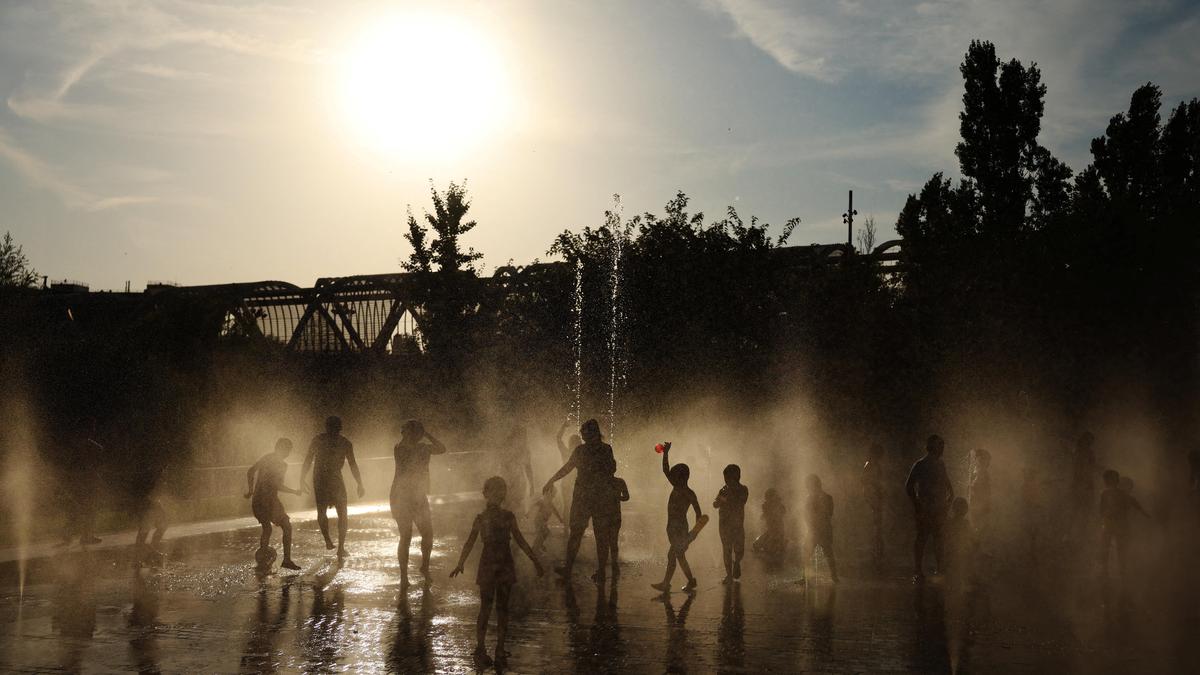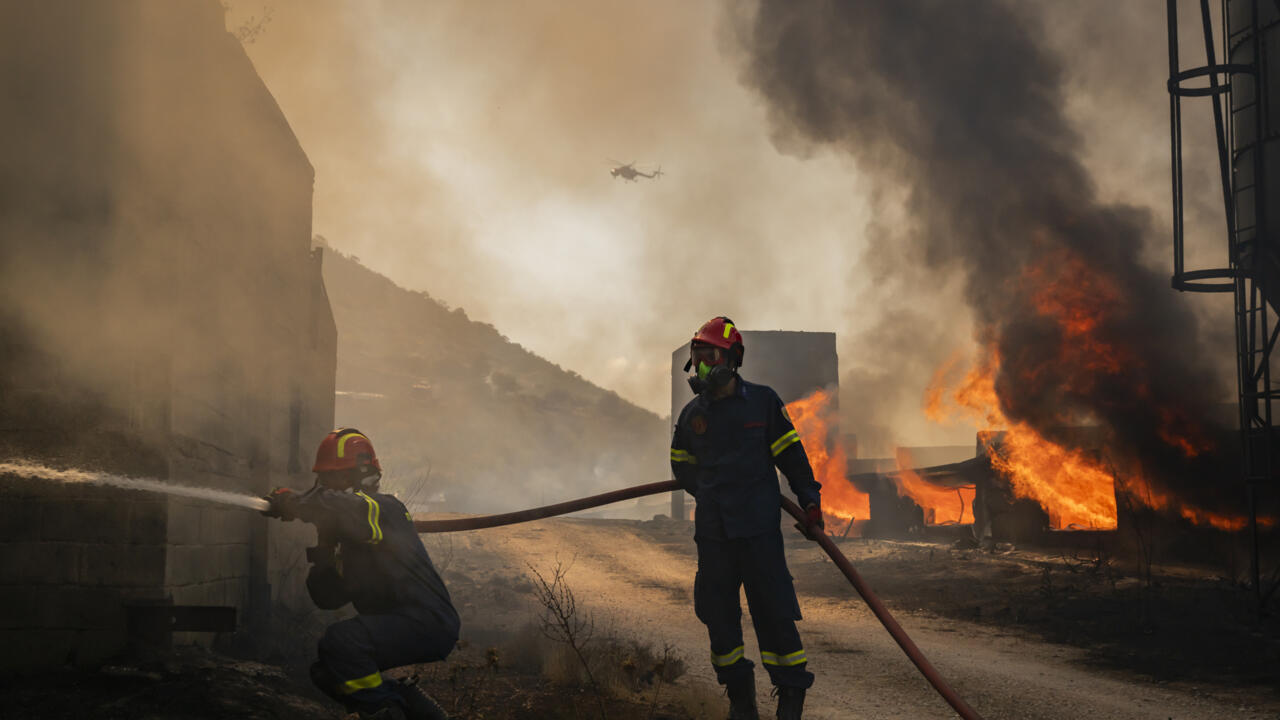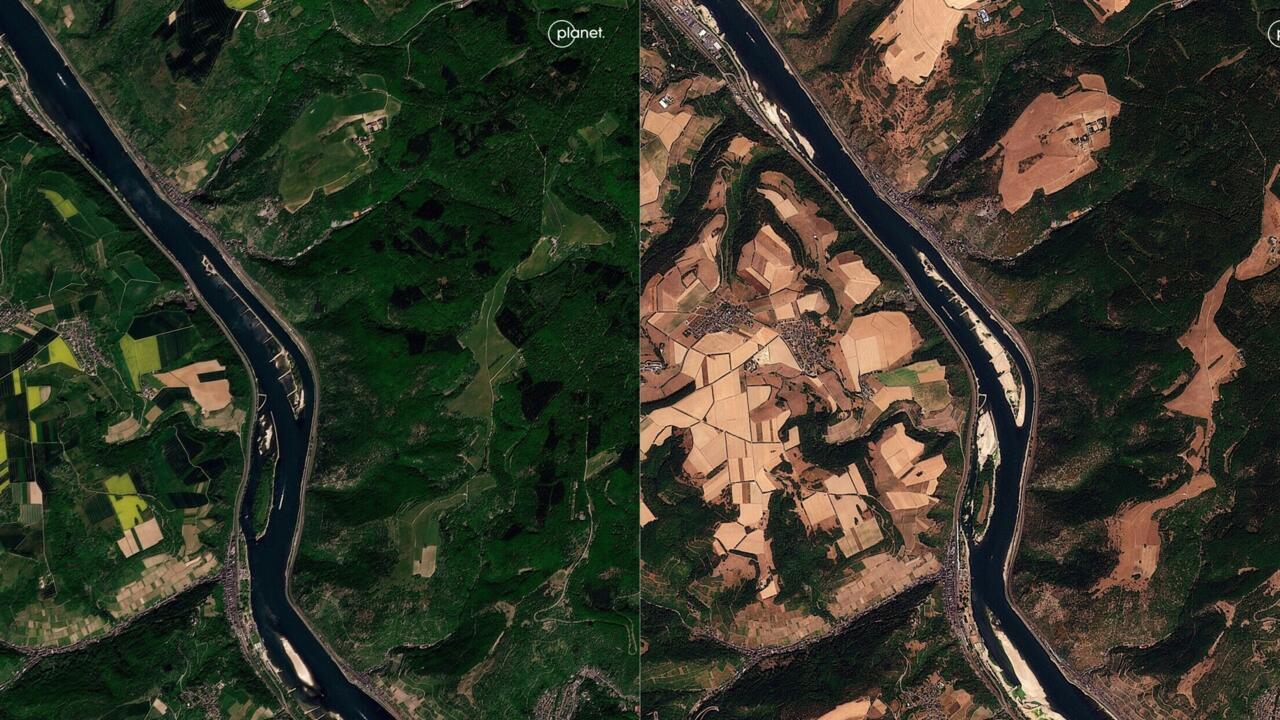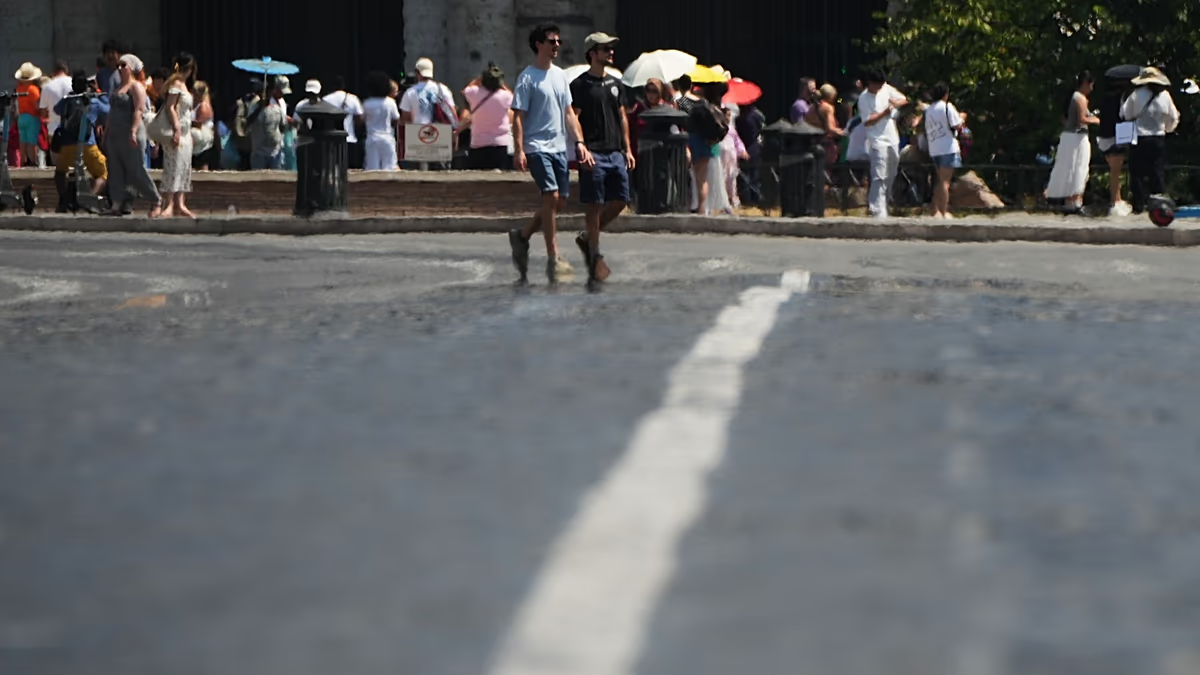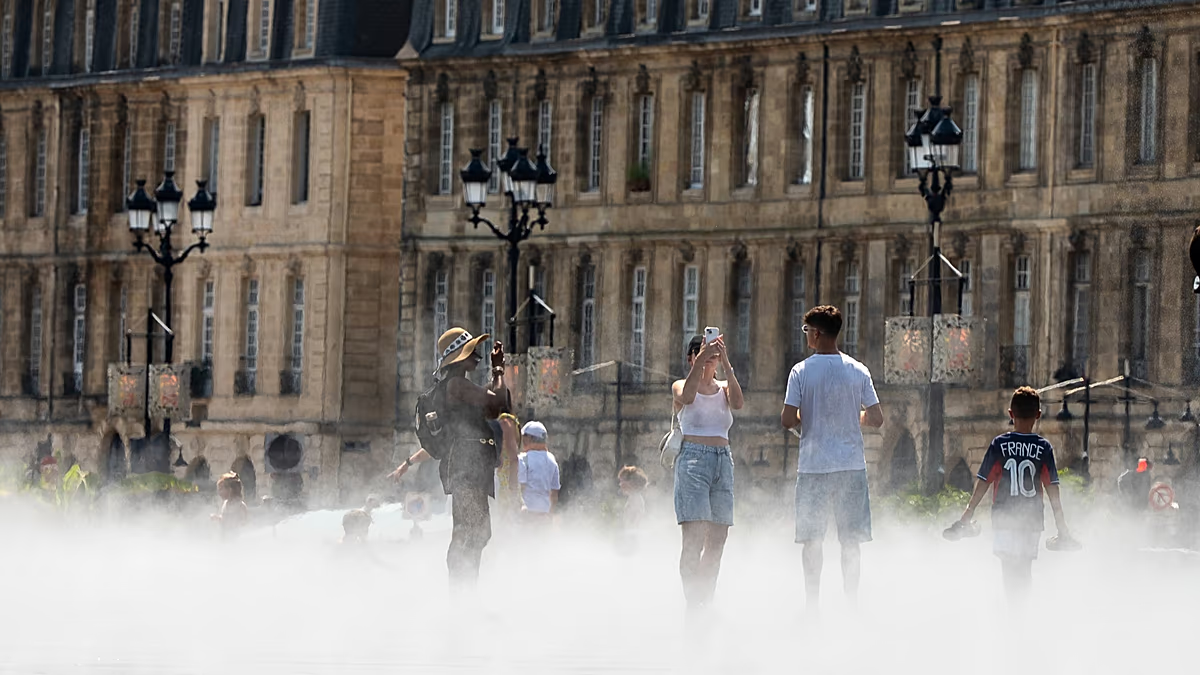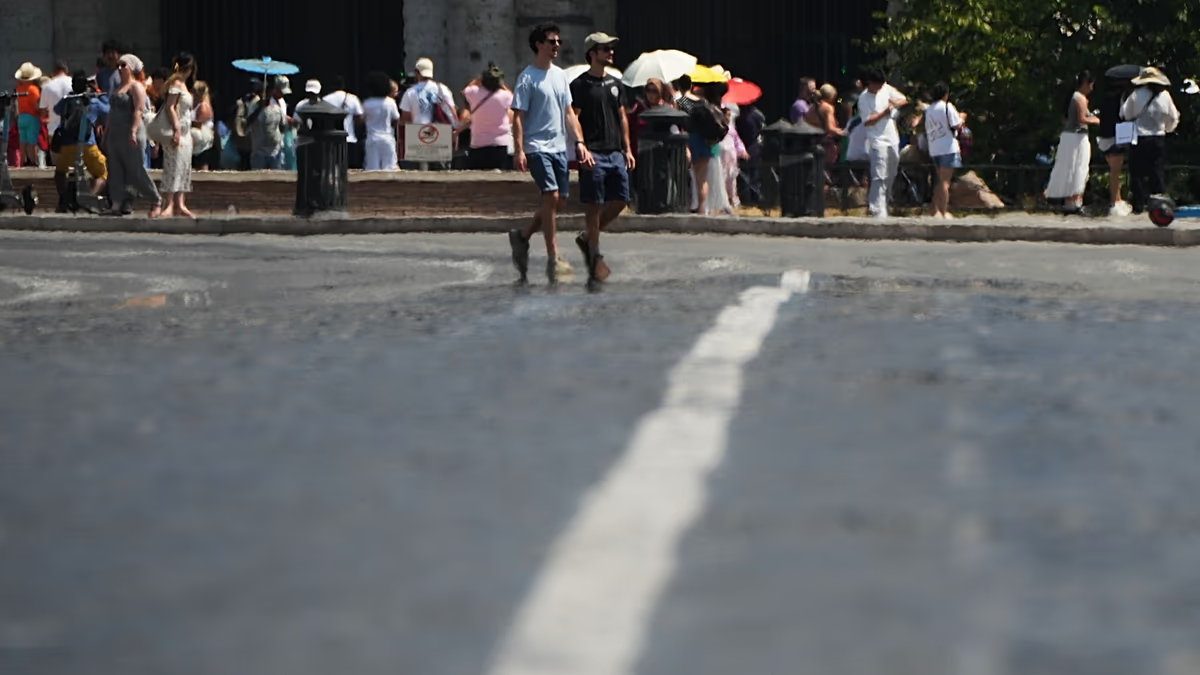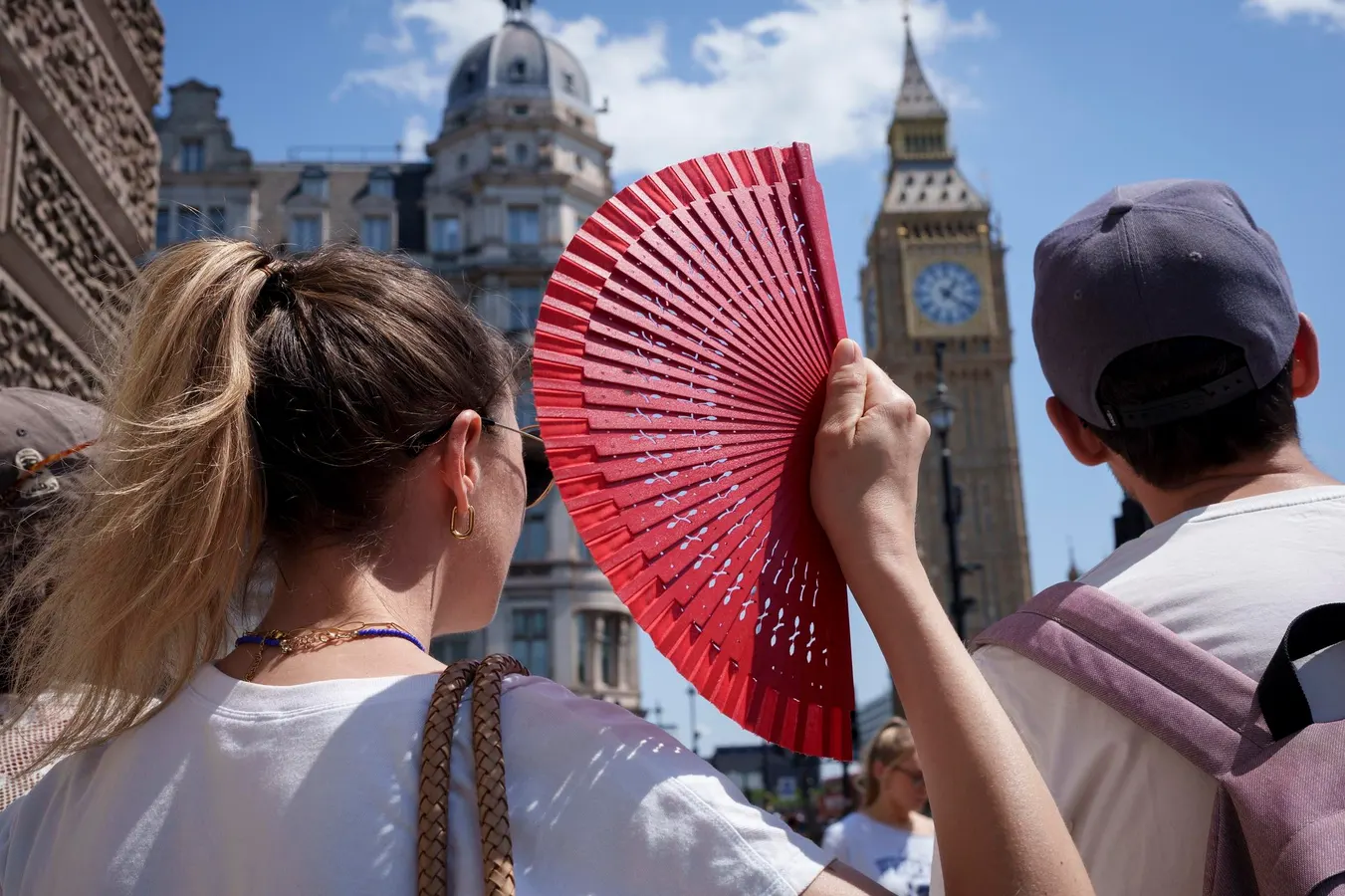
In front of London's Parliament during the latest heatwave. The Met Office has issued Amber Warnings for hot weather for southern England and South Wales where temperatures are forecast to reach 95 degrees Fahrenheit (35 degrees Celsius). Photo by Richard BakerIn Pictures via Getty ImagesEurope is facing its third heatwave of the year across the continent, with June officially declared the hottest month ever recorded and the second-warmest globally.“Heatwaves are getting longer, hotter, and more frequent,” warns the European Commission in an advisory recommending “things people should know about extreme heat – and how to beat it,” as sweltering-heat summers become Europe’s hard reality and new normal.Ingenious Ways To Cool DownSplashing in public fountains, getting showered under sprinklers, standing under mist sprayers, dipping their feet or their heads in canals….people are desperately searching for relief from the stifling heat in cities and towns around the region. Temperatures in June rocketed to 95°F (41°C) for 100 million Europeans and all-time heat records are been cracked in thousands of cities.“Countries ill-equipped to deal with soaring temperatures are struggling to cope, with aging infrastructure and a scarcity of air-conditioning,” writes the New York Times. “Across the continent, the heat is upending daily life. Train cancellations caused travel chaos, schools closed early and some hospitals in England canceled elective procedures.”Heatwaves Across Europe: The New Summers“Europe is warming faster than any other region, and heatwaves are affecting people’s health, ecosystems, infrastructure and the economy,” the European Commission explains.“A rapid succession of major heatwaves since May,” writes Euronews, “suggests that extreme heat is no longer an isolated event, but an increasingly prolonged feature of European summers.”ForbesBarcelona’s Sagrada Familia, Completed After 144 Years, Celebrates Gaudí’s CentenaryBy Cecilia RodriguezHeatwaves Across Europe Cause Of Devastating FiresThe ensuing dryness is feeding small wildfires that become devastating conflagrations affecting large areas in Southern Europe, particularly in France and Spain, that illustrate the increasing dangers as heat extremes get worse. Data published last week shows that wildfires have already burned 56% more land than usual. So far, according to the European Comission, 385,000 acres have burnt since the start of the year.Although so far this wildfire season has burned fewer areas than in 2025 - the worst year on record - it still registers above the average of the last 20 years.ForbesLee Miller: From Vogue Model To War Photographer, A Captivating Exhibition At Paris’ MAMBy Cecilia RodriguezMeanwhile around the continent people find ways to cool down. Here is how that looks:People try to cool down by standing in front of a misting nebulizer placed on a Civil Protection pick-up truck spraying cool water near Rome’s Colosseum.Tthe fountains of the Trocadero Gardens in Paris; Photo by Mustafa YalcinAnadolu via Getty ImagesPeople cool off in the fountains of the Trocadero Gardens, with the Eiffel Tower in the background, in Paris. Much of Europe, including France, Spain and Italy, continues to endure the record-breaking heat waves and extreme temperatures.Rome; Photo by Claudia ChieppaAnadolu via Getty ImagesTourists and residents in Rome are braving the heat as Western Europe continues to swelter.In early July, the Ministry of Health issued a Level 3 heat alert for the capital - the highest level - warning of the heat wave’s adverse health effects for both vulnerable individuals and healthy, active people. Black Sea Odesa, Ukraine; Photo by Nina Liashonok/UkrinformNurPhoto via Getty ImagesIn the midst of war with Russia, residents take to the Black Sea in Odesa, Ukraine. In June, temperatures reached 95 degrees (35 C), breaking the record set 79 years ago.A crowded Canal Saint-Martin in Paris; Photo by Samuel BoivinNurPhoto via Getty ImagesTwo young men are about to dive into the crowded Canal Saint-Martin from a footbridge in Paris. Krakow, Poland; Photo by Artur WidakNurPhoto via Getty ImagesPeople seek refreshment next to a municipal water spray station installed in the Main Market Square to provide cooling relief in Krakow, Poland. This local snapshot captures conditions amid the European heatwave that has shattered Poland’s 105-year-old national record with a blistering 105°F (41°C) in Slubice, as active orange alerts remained in place ahead of predicted severe regional storms set to collide with the lingering tropical air mass. Partygoers cool off under a mist sprayer as they dance and drink in a street while taking part in the annual street music festival 'Fete de la Musique’ in Bordeaux, southwestern France. Alcohol consumption was banned in areas under red heatwave alert in France, outdoor sporting events have been canceled in Spain, and warnings issued about "tropical nights" in Great Britain. Brussels; Photo by Emile WindalBelga/AFP via Getty ImagesA person uses a hand fan during the heatwave in Brussels. In June, at least 94 million people struggled with temperatures above 95F (35C), most of them in France and Spain. La Concha Bay Beach in the Spanish Basque city of San Sebastian; Photo by Ander GilleneaAFP via Getty ImagesPeople walk on the esplanade along La Concha Bay Beach in the Spanish Basque city of San Sebastian. The Spanish State Meteorological Agency, the agency responsible for declaring heatwaves when they meet specific criteria regarding intensity, duration, and territorial extension, activated special weather warnings. Santarem., Portugal. Photo by Henrique CasinhasAFP via Getty ImagesA person walks in an almost empty street in Sa da Bandeira Square due to high temperatures, in Santarem, Portugal. Areas of Portugal are under red alert due to forecast high temperatures in the coming days after being relatively spared by the recent European heatwave, as the official weather agency places Leiria and Coimbra, among others, on alert as temperatures could reach 111°F (44°C) in some areas.Berlin, Germany; Photo by Halil SagirkayaAnadolu via Getty ImagesPeople flee to ponds and sprinklers to cool off in Berlin.French Riviera . Photo Valery HacheAFP via Getty ImagesPeople sweating in the French Riviera city of Nice. An Aerial photograph of a bridge over the Loire River bed in Loireauxence (Varades), western France, illustrates just how dry things are. Scientists around the world, from organizations such as the Copernicus Climate Change Service, NASA, the U.S. National Oceanic and Atmospheric Administration, and the UK Met Office, that track global temperatures independently and analyze measurements collected from weather stations, ships, buoys and satellites, have identified the long-term warming trend.This remarkable consistency across independent scientific institutions is one of the strongest reasons why there is an overwhelming scientific consensus that the heatwaves across Europe and the Earth’s climate in general are getting hotter -- and that human activities are the primary driver of this change.MORE FROM FORBESForbes13 Beautiful, Standout Winners Of U.N. World Oceans Day Photo CompetitionBy Cecilia RodriguezForbesMasters Of Photography Competition By Hasselblad: 21 Captivating Winning PhotosBy Cecilia Rodriguez
Too Hot: Scorching Record-Breaking Heatwaves Across Europe In Photos
Extreme heat is becoming Europe’s new summer normal upending daily life for millions of people who search for traditional and unexpected ways to cool down.
1,096 words~5 min read