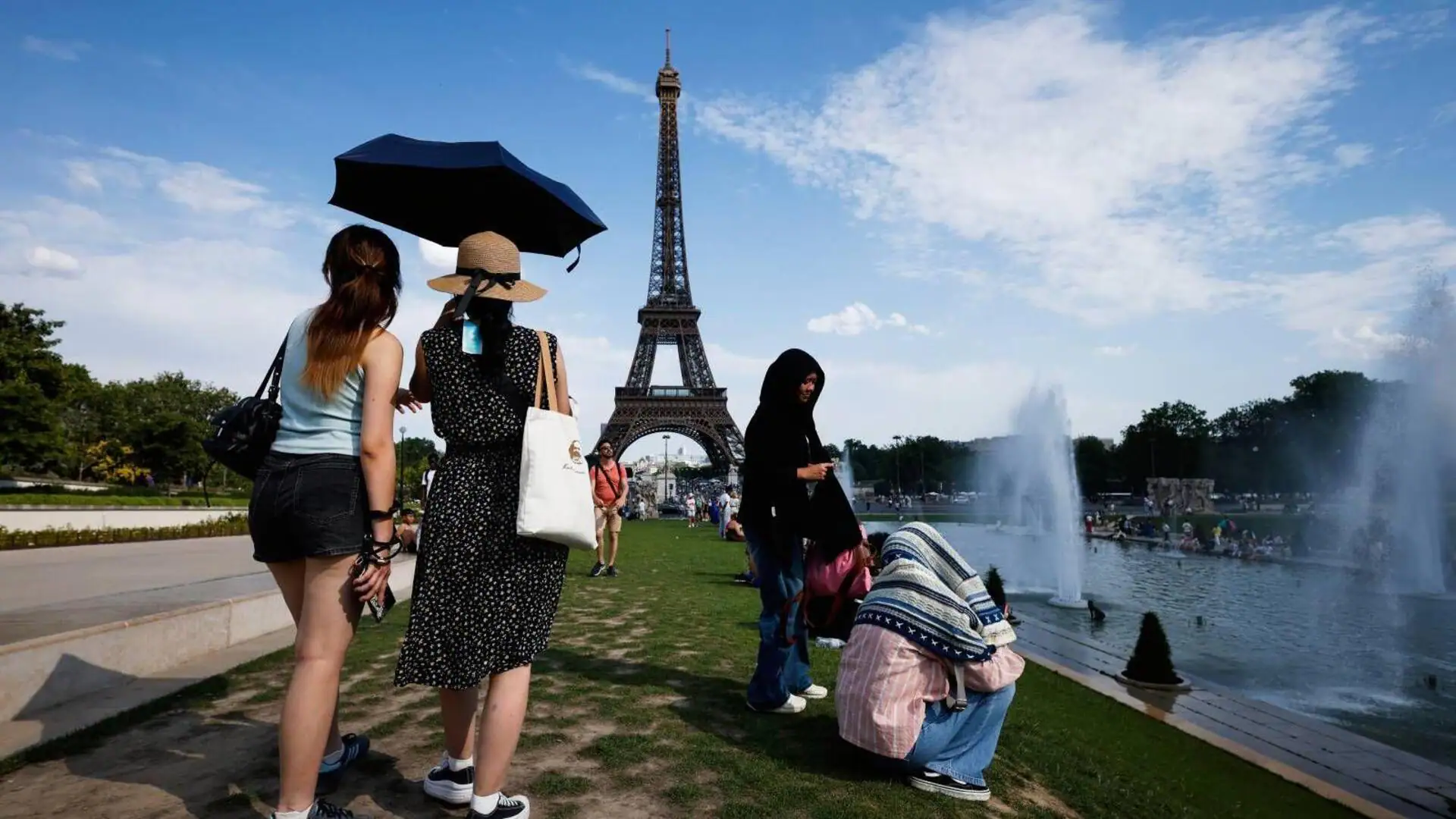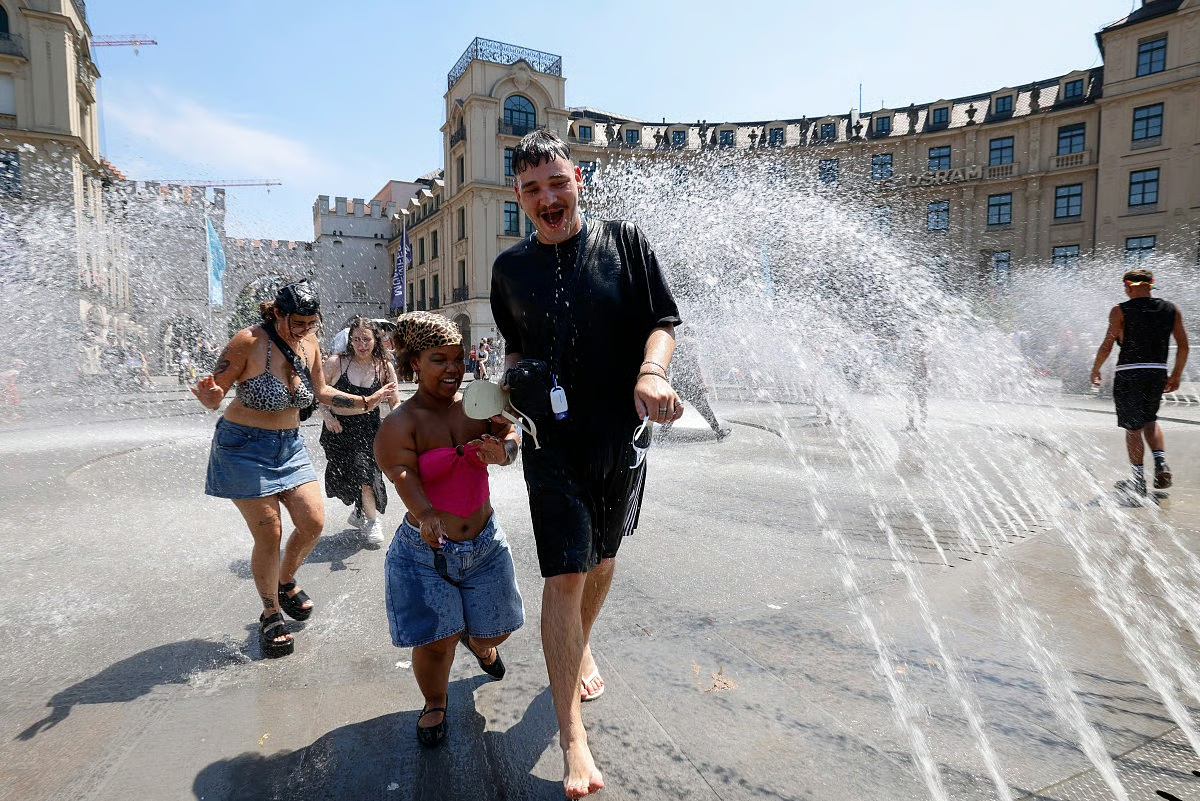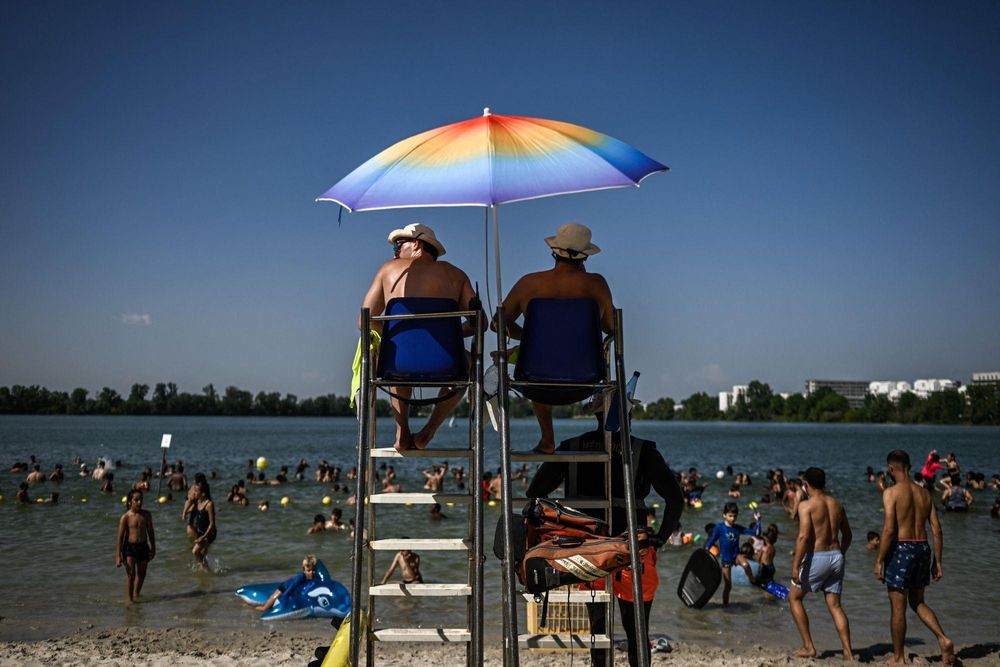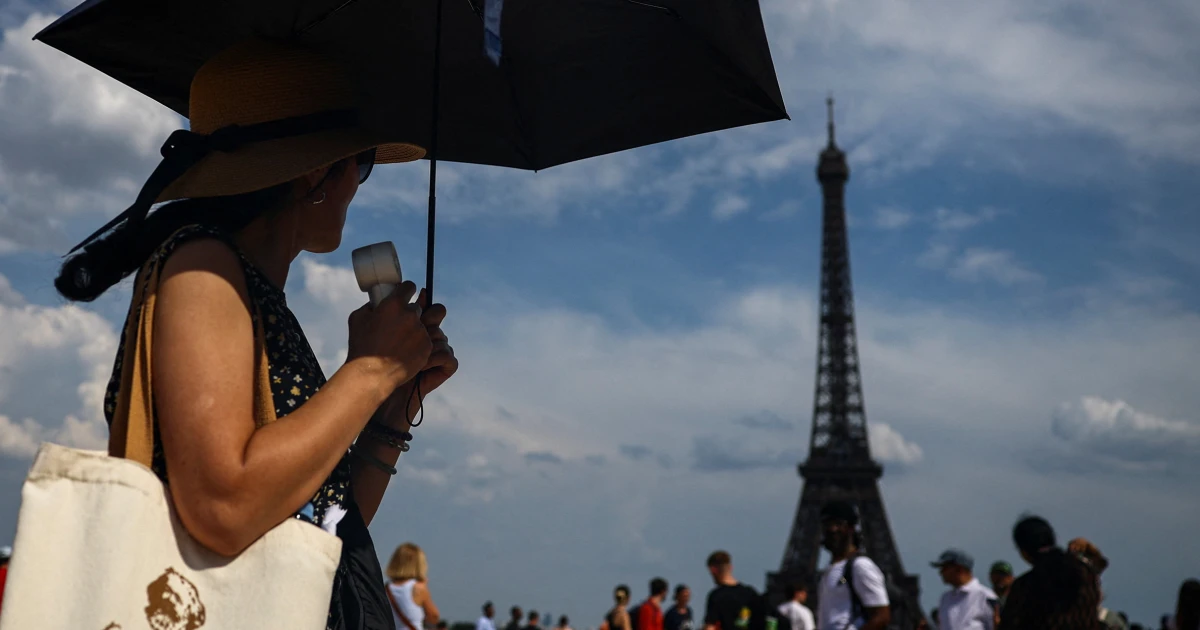
June 23, 2026, 7:21 AM EDT / Updated June 23, 2026, 7:54 AM EDTBy Elmira AliievaA deadly heatwave is tightening its grip on Europe, sending temperatures soaring toward record levels and forcing authorities across the continent to close schools, cancel public events and even restrict alcohol consumption.The most extreme conditions were hitting millions in France, Spain, and Britain on Tuesday, where temperatures kept climbing to exceptionally high levels for early summer.The scorching heat caused widespread disruptions to public transport and raised alarm in areas of western Europe where air conditioning is not widespread. Tourists at the Leaning Tower of Pisa in Italy on Monday.Enrico Mattia Del Punta / NurPhoto via Getty ImagesIt’s just the latest unseasonably intense period of high temperatures to raise fears about the effects of climate change. And for many in Europe, this new reality is becoming impossible to ignore.Pamela Clapp, a 39-year-old American who has lived in Paris for 14 years, told NBC News she was “very worried about the next couple of days.” This summer feels different from those she has experienced before, she said. France has placed more than half of its regions under a red heat alert, the highest level, with national weather service Meteo-France assessing that temperatures remained “exceptionally high” on Tuesday. A day earlier the country endured its hottest June day on record — based on average day-and-night calculations — with the temperature in the central village of Chateaumeillant reaching as high as 43.3C (109.9 Fahrenheit).At least 40 people have drowned as residents flocked to beaches, rivers and lakes to escape the heat, Prime Minister Sebastien Lecornu said ahead of an emergency meeting on the subject.Hundreds of schools have been closed across France and other countries in the region.A crowded Metro carriage during a heatwave in Paris on Monday.Gaulthier Bedrignans / Hans Lucas/AFP via Getty Images“The government has allowed us to keep children at home instead of sending them to school,” Clapp, who is a marketing consultant, said in a telephone interview.But for Clapp, who has two children, it offered little relief. “The irony is that in France, where most homes don’t have air conditioning, it can actually be cooler at school,” she said.At her children’s school in Saint-Germain-en-Laye, an affluent suburb west of Paris, lessons have been moved to semi-underground classrooms during the hottest part of the day. “It is baffling that they don’t have a better solution,” Clapp added. As Météo-France said the heat is expected to persist through much of the week, several local authorities canceled events tied to France’s annual Fête de la Musique celebration, which takes place nationwide on Tuesday. Authorities also banned alcohol consumption in several areas placed under the highest heat alert, including Paris, citing public safety concerns.Children cool off in the Trocadero Fountain in Paris on Monday.Abdul Saboor / ReutersIn the Spanish capital Madrid, officials called off a planned public screening of the national team’s World Cup match against Saudi Arabia. Spain declared its first official heatwave of the year on Sunday, with temperatures forecast to climb as high as 44 degrees Celsius (111 Fahrenheit) in some areas through Wednesday. Authorities in Italy and Germany, where five people died in fatal swimming accidents related to the heatwave, have also issued highest level alerts for parts of their countries.“Heatwaves like this are associated with what we call high-pressure systems,” said Oscar Brousse, a lecturer in urban climatology and health at University College London. “These systems suppress cloud formation, leading to more sunshine, which heats up the surfaces and, in turn, the air around us.” As a mass of hot air moves north from the Sahara Desert, Britain is also bracing for unusually high temperatures this week, with forecasters saying readings could approach 40 degrees Celsius — just one degree shy of the all-time national record. It comes just weeks after the U.K. saw its hottest May day in recorded history. “One of the challenges we face here in the U.K. is adapting to heat when we are actually living in a cold climate for the vast majority of the year,” Brousse said.Bus passengers swelter during a heatwave in London on Monday.Richard Baker / In Pictures via Getty ImagesIn Britain, many older homes were built with thick walls, small windows and insulation designed to retain heat during long winters.“It’s almost like you can’t escape the heat,” said Stefan Cretu, a 22-year-old financial analyst in London. “It’s hot outside, and somehow it’s even hotter inside — my house feels like a trap.”That stands in contrast to many parts of the United States, where air conditioning is widespread, and modern cooling systems and building designs intended to manage extreme summer temperatures are in place. The daily commute is another challenge for Londoners. “It’s sweaty, crowded and suffocating,” Cretu said of traveling on London’s Underground network, much of which lacks air conditioning. Delays were widespread on Tuesday.Europe is the world’s fastest-warming continent, with temperatures rising roughly twice as fast as the global average since the 1980s, according to the European Union’s Copernicus Climate Change Service.While governments face pressure to invest in adaptation measures, from cooling centers to heat-resilient infrastructure, experts warn that such steps risk addressing the symptoms rather than the cause.“The real way to stop heatwaves becoming increasingly severe is to tackle climate change itself,” Brousse said. Without that, “there is only so much we can do.”
Deadly heat wave grips Europe with red alerts and scorching records
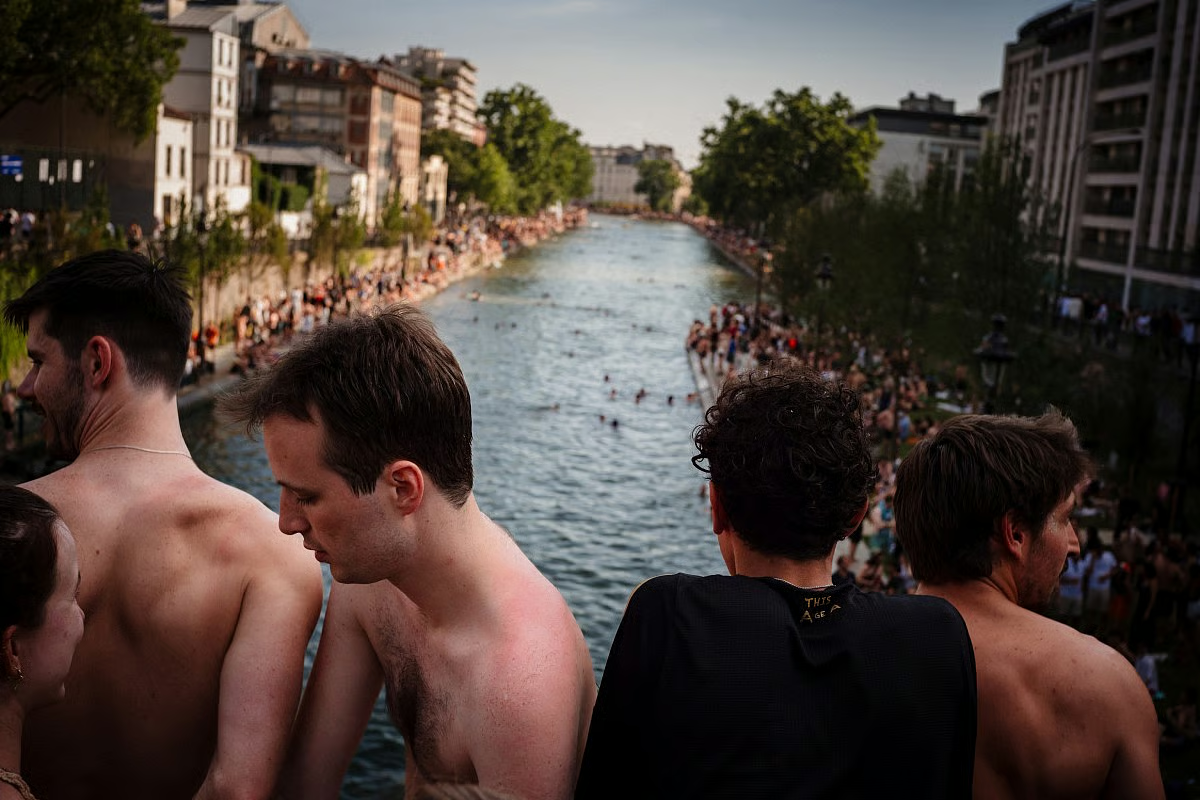
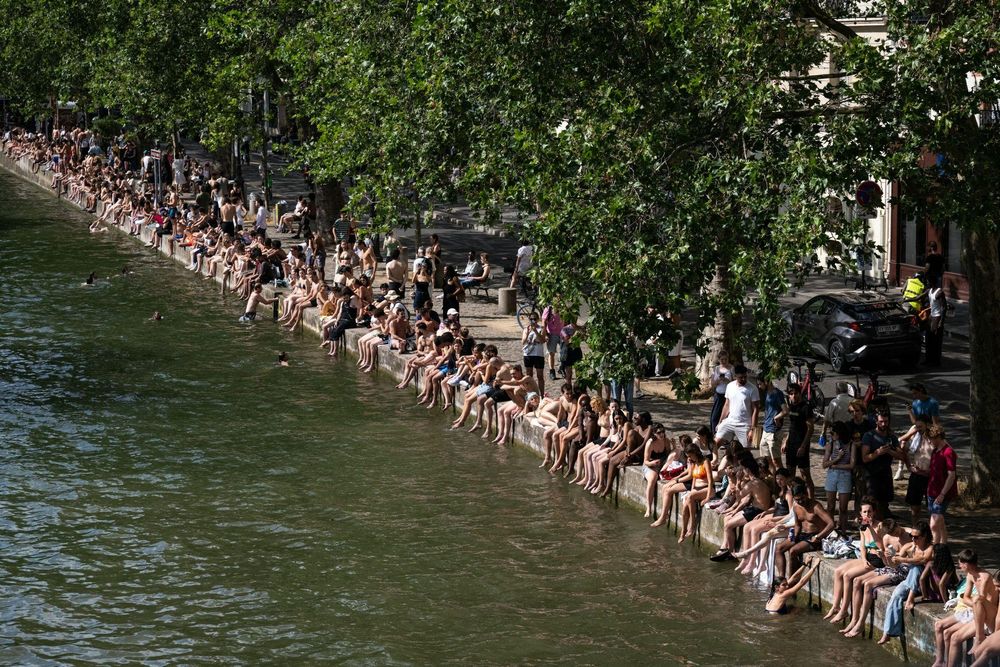
Authorities in France said Tuesday at least 40 people have drowned as residents flocked to beaches, rivers and lakes to escape the heat.
890 words~4 min read