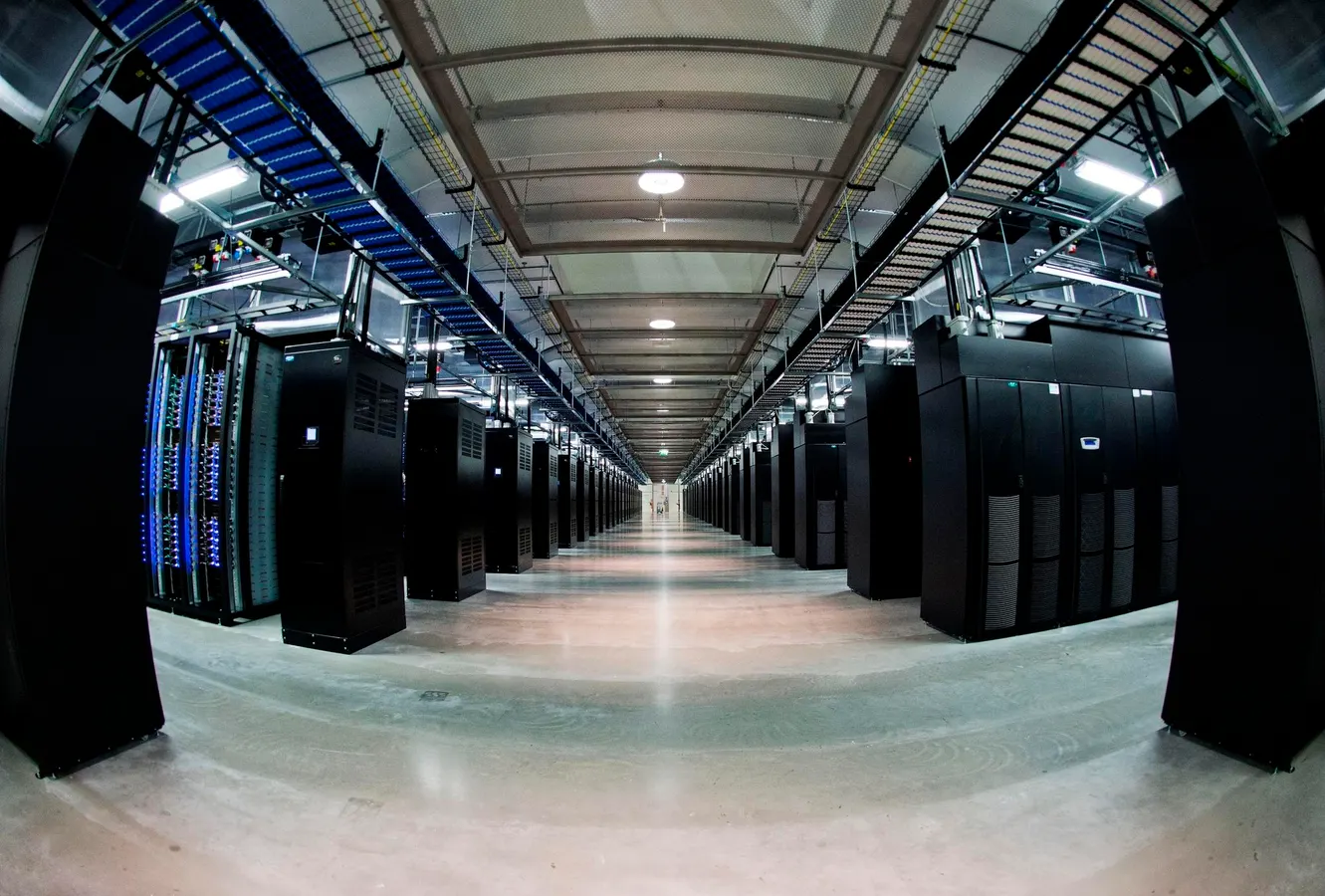
Meta seems to be having a bit of an identity crisis. On Monday, the social networking singularity said it would spend $50 billion to expand its Hyperion datacenter project in Richland Parish, Louisiana, from 2.2 to 5 gigawatts.The news comes less than a week after a report broke claiming that Meta was actively exploring options to offload its excess compute capacity to other AI labs.So, which is it, Zuck? Did you invest too much or too little in AI?
The easy answer is that Meta overcommitted. Inspired by the early success of Llama, it made a huge bet on the AI gold rush. Offloading spare compute to the highest bidder is just a hedge in case its Superintelligence team turns out to be another pipe dream, like the Reality Labs Metaverse that utterly failed to spark enthusiasm for immersive environments accessible through Meta's Quest cybergoggles.
The more pragmatic read is that Zuckerberg has woken up to the fact he’ll never be as cool as OpenAI boss Altman or Anthropic's Amodei, and renting out spare compute is just the natural progression for any sufficiently large hyperscaler.Dawn of the Meta cloud?Meta's business model is closer to Google's than those operated by OpenAI and Anthropic.Both Meta and Google offer various services which generate revenues by connecting users with advertisers. For Google it’s a search and entertainment empire. For Meta it's enabling an endless feed of content generated by friends, family, influencers, and yes, bots. Both are immensely profitable, earning $132.2 billion and $60.5 billion in profits last year, respectively. That's profit, not revenue.But both are now plowing over $100 billion a year into AI infrastructure to power large language and image and video generation models. As we learned from Meta’s recent earnings calls, the most commercially potent of those models get the right ads in front of the right eyeballs.The open secret is Meta was already one of the most successful AI companies long before ChatGPT debuted. Except, it's not large language models (LLMs) that make Meta money, at least not in the conventional sense. Instead, Meta’s most profitable AI models are the recommender systems that mine profiles for context and use it to infer your needs. Meta's devs evolved those models considerably over the past few years, and their architectures now look a lot more like an LLM than the now-pedestrian neural networks on which Zuckerberg built his empire.Google is in a similar situation. It’s investing heavily in AI to feed its fast-growing and profitable cloud business, even as advertising still pays most of the bills. But unlike Google, Meta hasn’t yet made the leap from hyperscaler to cloud provider.