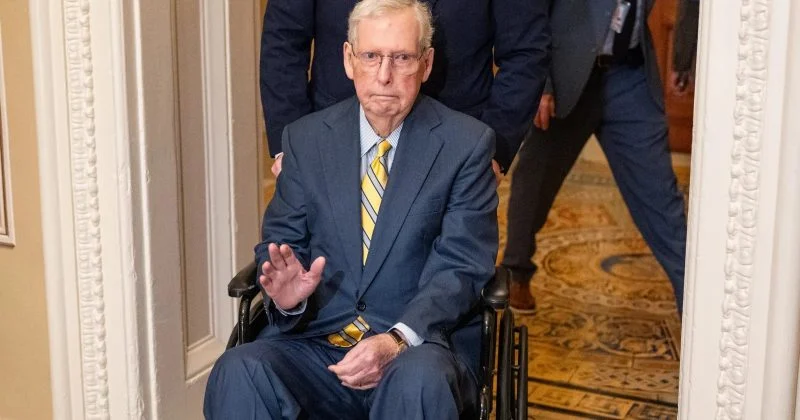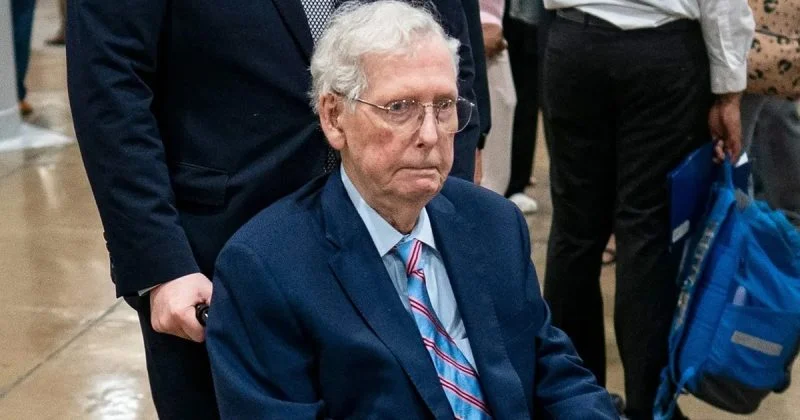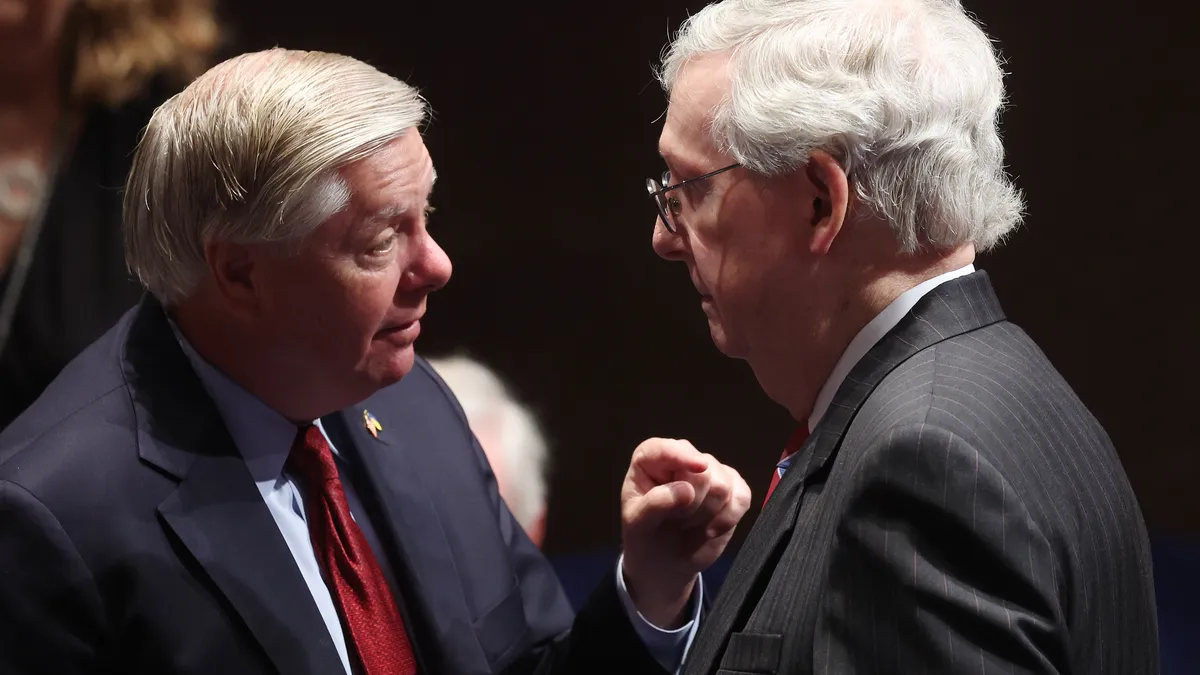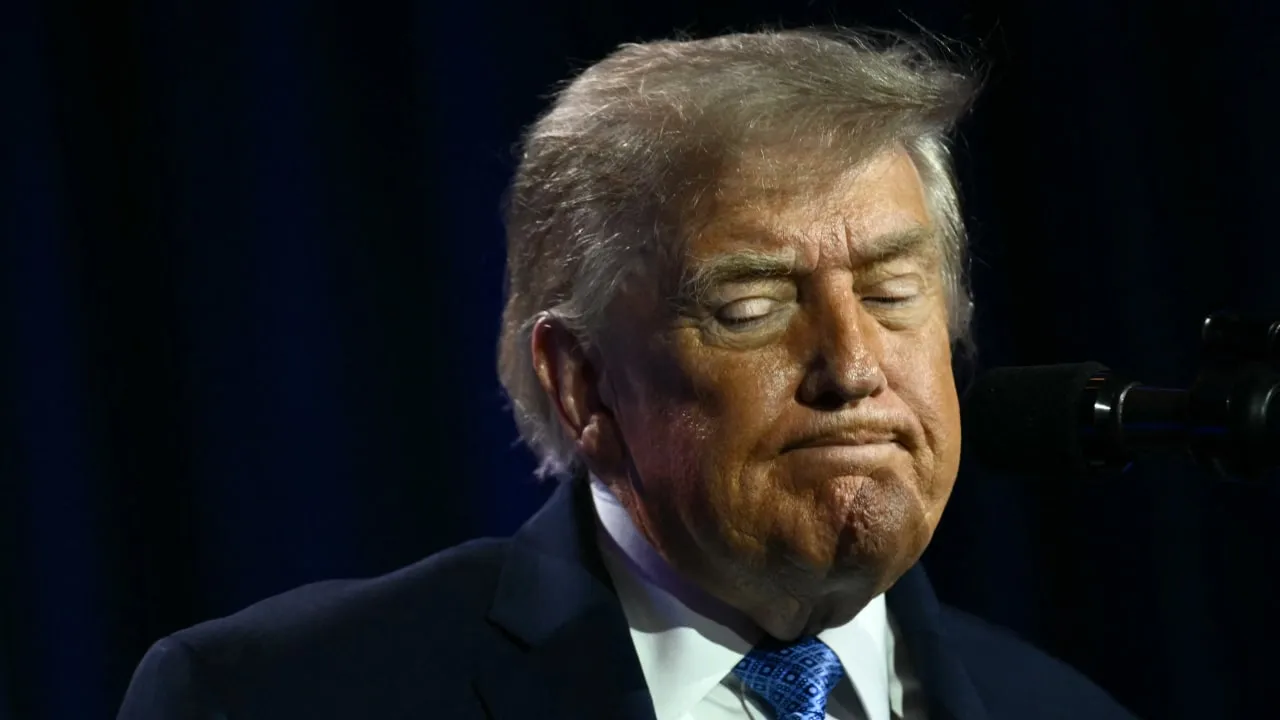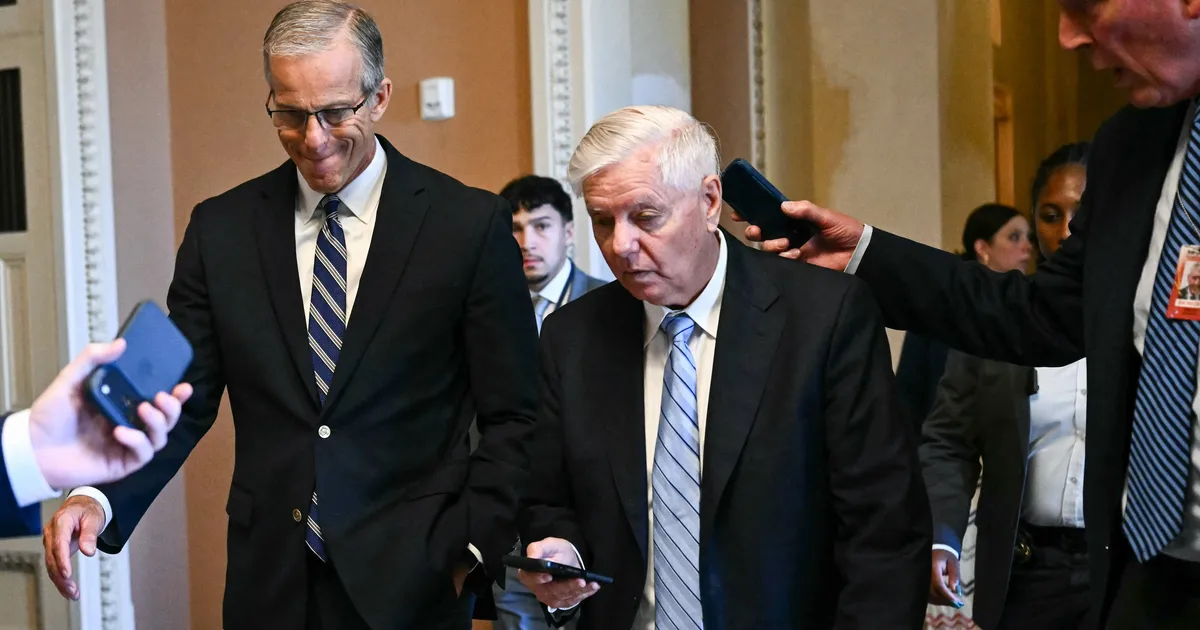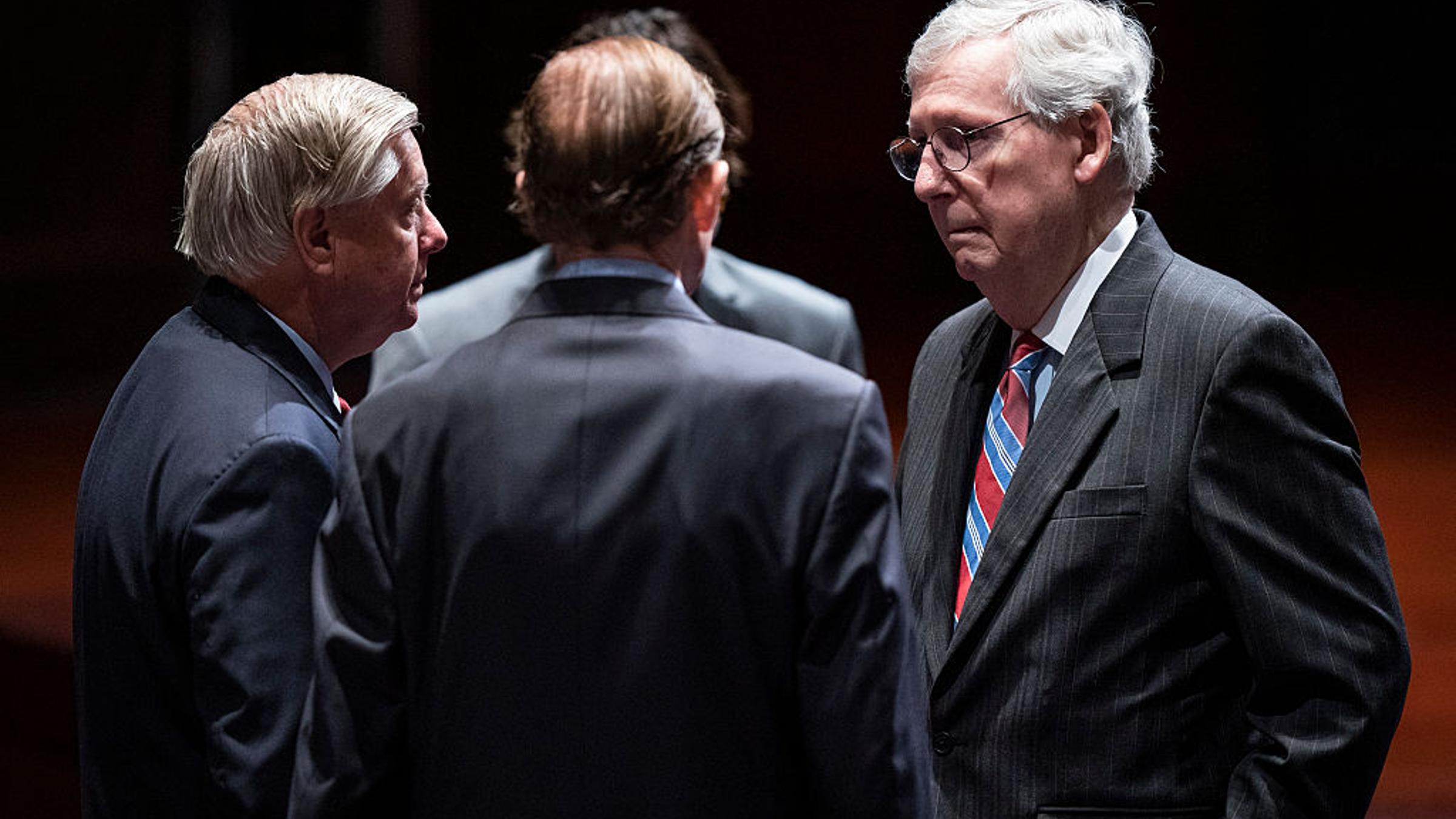
Senate Republicans returned to Washington on Monday confronting an unusually narrow path to advance President Donald Trump’s agenda after the sudden death of Senator Lindsey Graham of South Carolina and the continued absence of Senator Mitch McConnell of Kentucky, two lawmakers whose influence stretched far beyond their votes.The twin setbacks leave Republicans with a 51-47 majority in the Senate as lawmakers begin what is expected to be one of the busiest stretches of the year. With only seven weeks of scheduled session before the November midterm elections, Republicans must avert another government shutdown, while deciding whether to renew an expired foreign surveillance authority, pass Trump’s request for billions of dollars in additional defense funding tied to the conflict with Iran, and confirm several of his nominees, including Todd Blanche for attorney general.South Carolina’s Republican Governor Henry McMaster on Monday appointed Graham's sister, Darline Graham Nordone, to serve the remainder of Graham's term, soon after Trump publicly endorsed the idea. She is expected to be sworn in on Wednesday, though Senate Republicans still need to fill Graham's committee assignments.Still, the absence of Graham and McConnell threatens to complicate committee work and floor action at a moment when time is already scarce.Graham, one of Trump's closest allies in Congress and among the Senate's most influential voices on national security and foreign policy, died Saturday after suffering an aortic dissection, a tear in the wall of the body's largest artery, according to a preliminary finding released by the District of Columbia medical examiner. His office said additional testing would determine whether any contributing factors played a role.McConnell announced Sunday that he remains unable to return after being hospitalized in June following a fall. The former Republican leader disclosed for the first time that he had briefly lost consciousness, later developed pneumonia, and is recovering at a rehabilitation facility. Doctors have advised him against returning to the Senate for now, though he said he intends to come back as soon as he is able.Graham’s death deprives the Senate of not only a reliable Republican vote, but also a negotiator who often helped assemble coalitions on national security issues, judicial nominations, and budget legislation. Graham frequently served as an intermediary between Trump and skeptical Republican senators, using relationships built over more than two decades in the chamber to help bridge ideological and personal divides.Here’s where Graham’s death and McConnell’s absence could shape the Senate in the coming weeks:Confirming Trump’s Attorney General PickOne of the Senate’s first major orders of business this week is the confirmation process for Todd Blanche, Trump’s nominee for attorney general. Blanche has been Trump’s acting attorney general since April 2. Graham served on the Senate Judiciary Committee, which is scheduled to consider Blanche's nomination this week. Without Graham, Republicans still maintain a one-vote majority on the panel, but it’s not clear that every remaining Republican will support advancing Blanche’s nomination. The challenge becomes even greater on the Senate floor. Even after Graham's sister is sworn in, Republicans will still be down to 52 seats, empowering even a handful of Republicans to threaten Blanche’s confirmation. Graham had long been one of Trump’s most reliable advocates in the Senate and frequently helped rally Republican support behind judicial and executive branch nominees.Avoiding Another ShutdownCongress must pass spending legislation before Sept. 30 to prevent a partial government shutdown, but negotiations have already stalled over disagreements about defense spending. Senate Democrats have insisted they will not support appropriations bills unless increases for the military are paired with comparable increases for domestic programs. Those negotiations now become more complicated with Graham's death and McConnell's continued absence, since both senators served on the Appropriations Committee, where Republicans now temporarily lack the votes to advance spending bills if Democrats remain united in opposition.Passing a Reconciliation BillTrump has urged Republicans to pursue another reconciliation package before the midterms, a process that allows legislation affecting taxes and spending to pass with a simple majority rather than the Senate’s usual 60-vote threshold. That effort now faces procedural and political hurdles. Graham chaired the Senate Budget Committee, which is responsible for drafting the budget resolution that serves as the foundation for reconciliation legislation. His death leaves the committee evenly divided until Republicans appoint a replacement, which is likely to be Sen. Ron Johnson from Wisconsin. The Trump Administration has proposed including roughly $350 billion in defense funding along with other Republican priorities. But even after Republicans fill Graham’s committee seat, leaders must still persuade skeptical GOP senators that another lengthy partisan budget bill is worth pursuing during an already compressed legislative calendar.Iran Spending RequestThe Trump Administration is also seeking congressional approval for an $87.6 billion supplemental funding request for the Pentagon and other agencies amid ongoing U.S. military operations in Iran. Members of both parties have expressed reservations about approving that request over concerns about the Administration’s current war strategy.Senate Appropriations Chair Susan Collins has indicated the committee intends to hold a hearing on the proposal, though Democrats are unlikely to support the additional funding absent a broader bipartisan agreement. McConnell had been expected to play a central role in that debate as chair of the Appropriations defense subcommittee, which has jurisdiction over military spending. Graham had also been among the Senate’s strongest advocates for increased defense spending and an assertive U.S. foreign policy.Russia SanctionsBefore his death, Graham had spent months negotiating bipartisan legislation with Senator Richard Blumenthal of Connecticut imposing new sanctions on Russia, culminating in an agreement with the Trump Administration announced just days before he died.The legislation had been one of the few major foreign policy initiatives drawing support from both parties, owing in large part to Graham's longstanding relationships with both Republican hawks and Democratic supporters of Ukraine. Blumenthal said after Graham's death that he remained committed to advancing the sanctions package.Senate Majority Leader John Thune told reporters Monday that passing the Russian sanctions bill “would be a great tribute to the legacy of Lindsey.”Renewing FISALawmakers must also decide whether to revive an expired provision of the Foreign Intelligence Surveillance Act, a politically divisive issue that has split both parties over the balance between national security and civil liberties. Graham and McConnell had both been central figures in Republican efforts to restore the surveillance authority, particularly as senators scrutinize Trump's intelligence leadership following his appointment of Bill Pulte as acting director of national intelligence and the pending confirmation of Jay Clayton to lead the agency permanently.Renewing the surveillance authority was already expected to require delicate negotiations among Republicans with differing views on government surveillance. With Graham gone and McConnell absent, Senate leaders lose two lawmakers with deep institutional knowledge of intelligence policy and longstanding credibility on national security issues, making an already difficult debate even more uncertain as the legislative clock ticks toward the midterm elections.
Graham's Death, McConnell's Absence May Doom Senate Priorities
The setbacks could make it harder to avert a shutdown, fund the Iran War and renew FISA.
1,127 words~5 min read