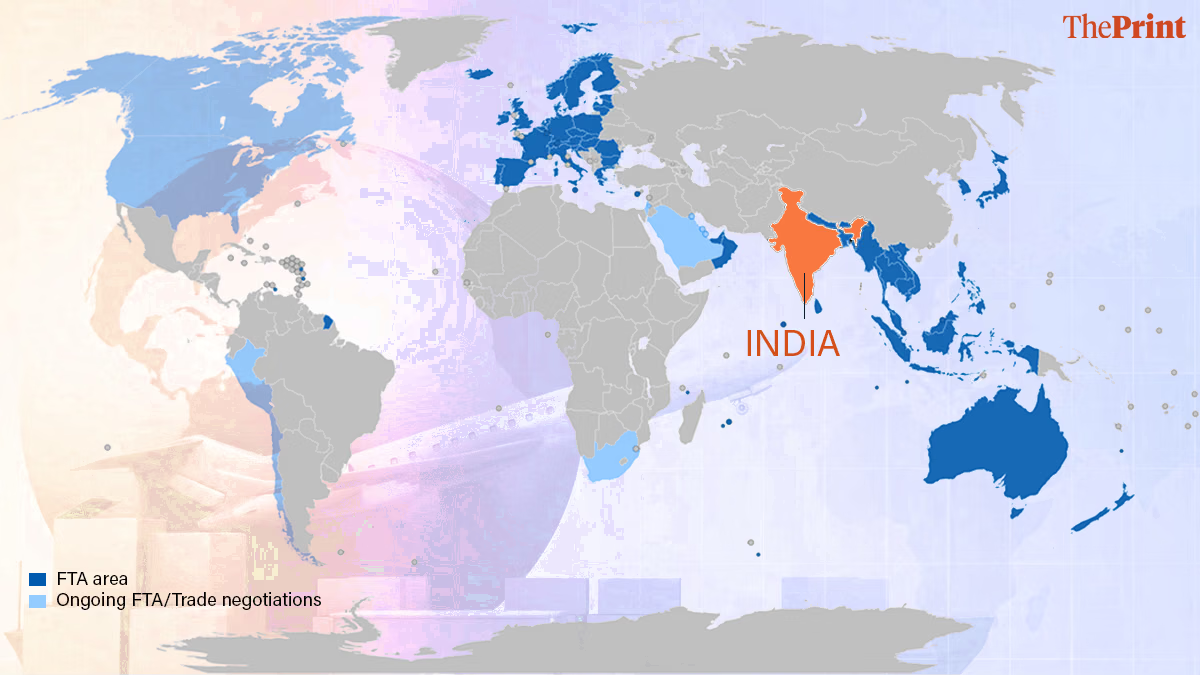
A recent article in ThePrint argues that India’s free trade agreements have failed because bilateral trade deficits with FTA partners have grown faster than deficits with the rest of the world: 381 per cent with ASEAN, 318 per cent with Japan, 268 per cent with Korea, against 142 per cent with non-FTA countries. The numbers are correct, but the inference drawn from them is not. Bilateral trade deficits are an accounting artefact, not a measure of harm, and a trade policy built on minimising them will make India poorer.
Let’s start with an everyday observation. Every household runs enormous bilateral trade deficits. We buy groceries, electricity, and streaming subscriptions from dozens of suppliers, and we don’t sell our labour to the grocer, the electricity board, or the streaming platforms. A family that employs a domestic worker runs a 100 per cent trade deficit with her: money flows out every month, and she buys nothing from the family in return. Nobody loses sleep over this, because everyone understands that the household balances its books in aggregate, by selling its labour to an employer who, in turn, buys nothing like the full value of what the household consumes.“I have a chronic deficit with my barber, who doesn’t buy a darned thing from me,” Nobel laureate Robert Solow once quipped.