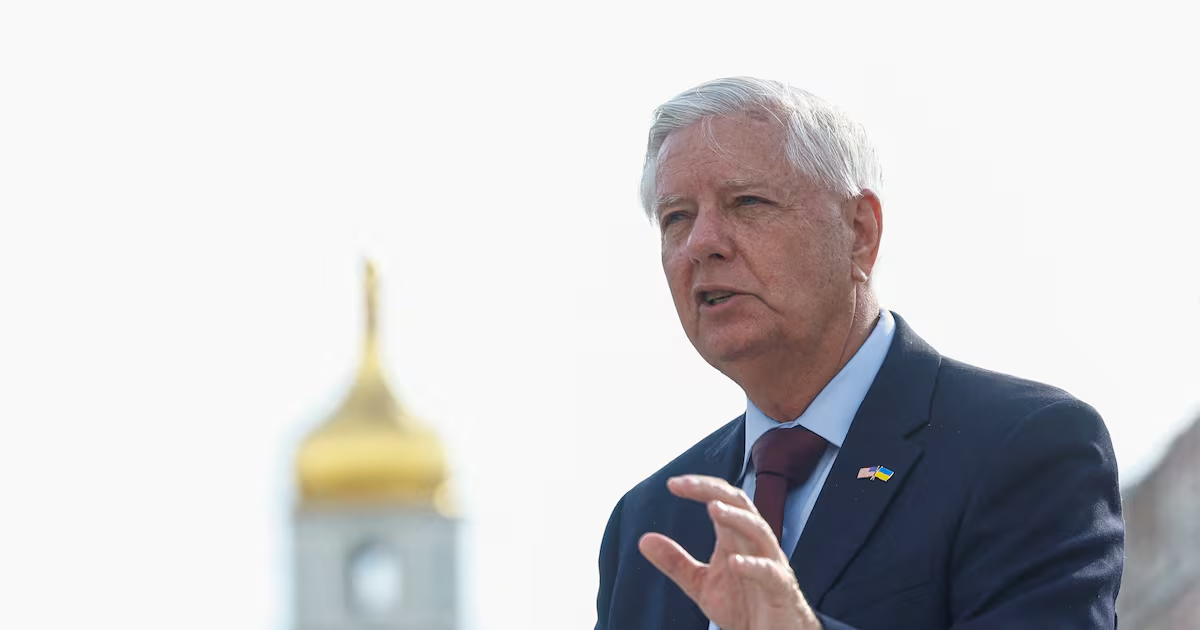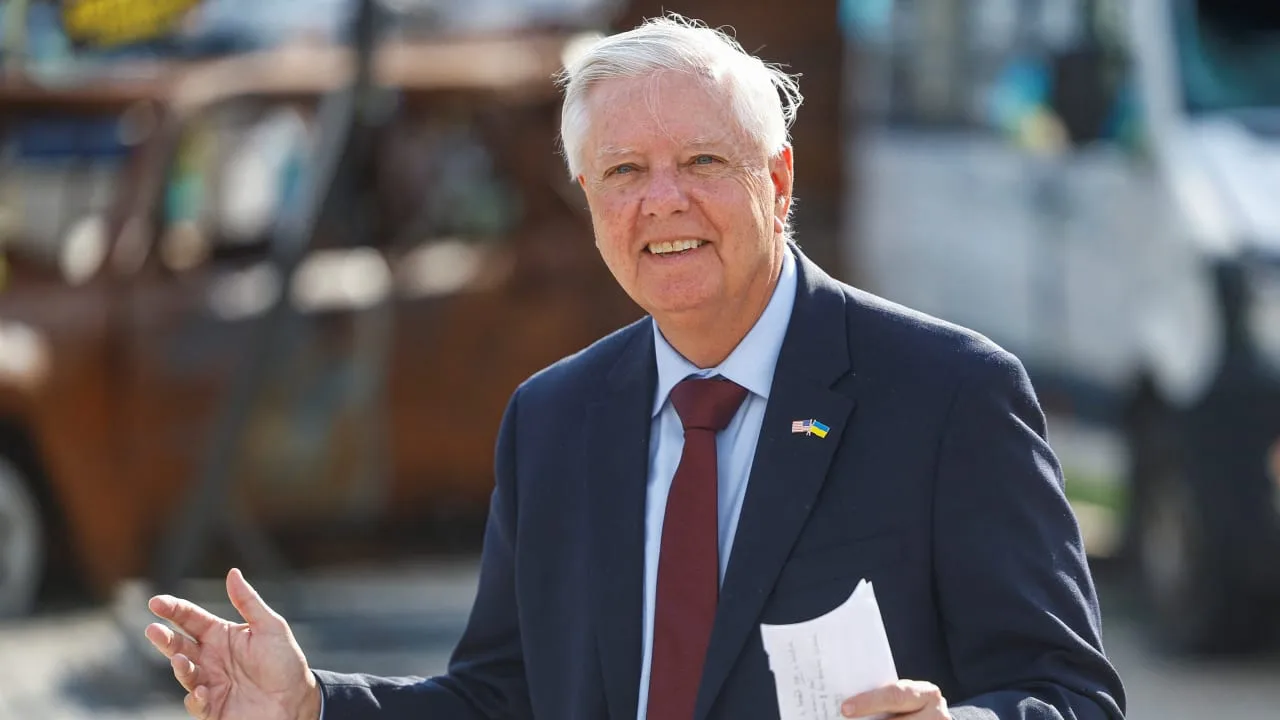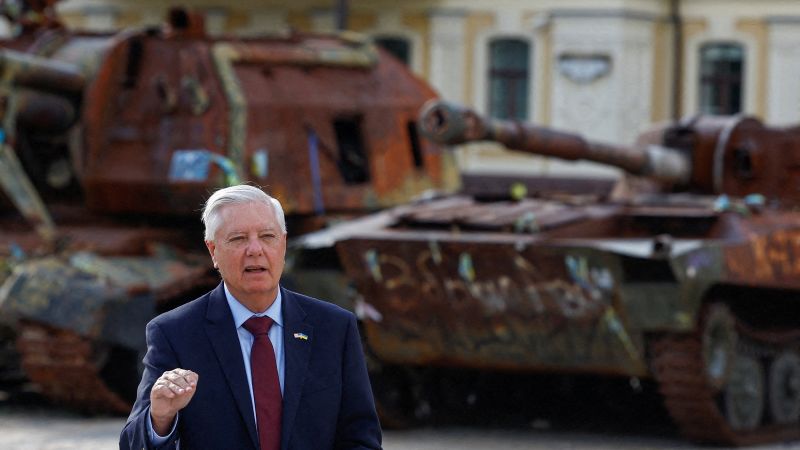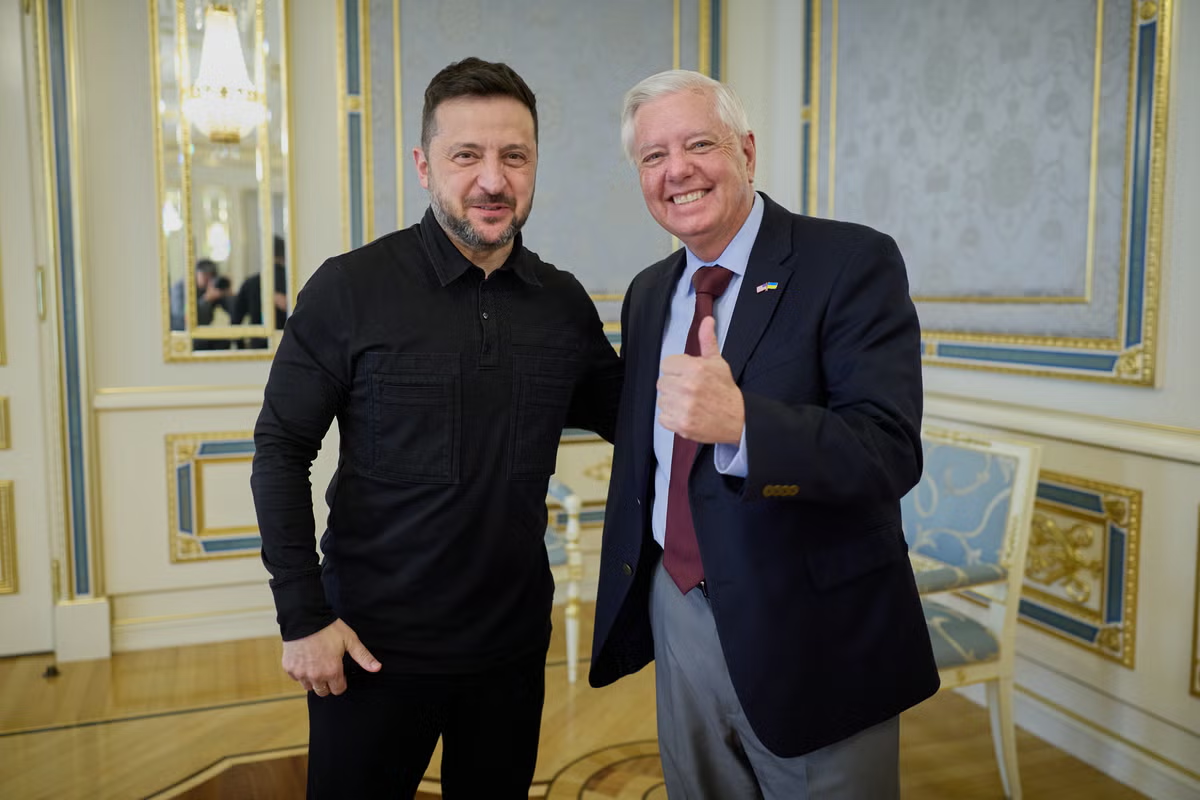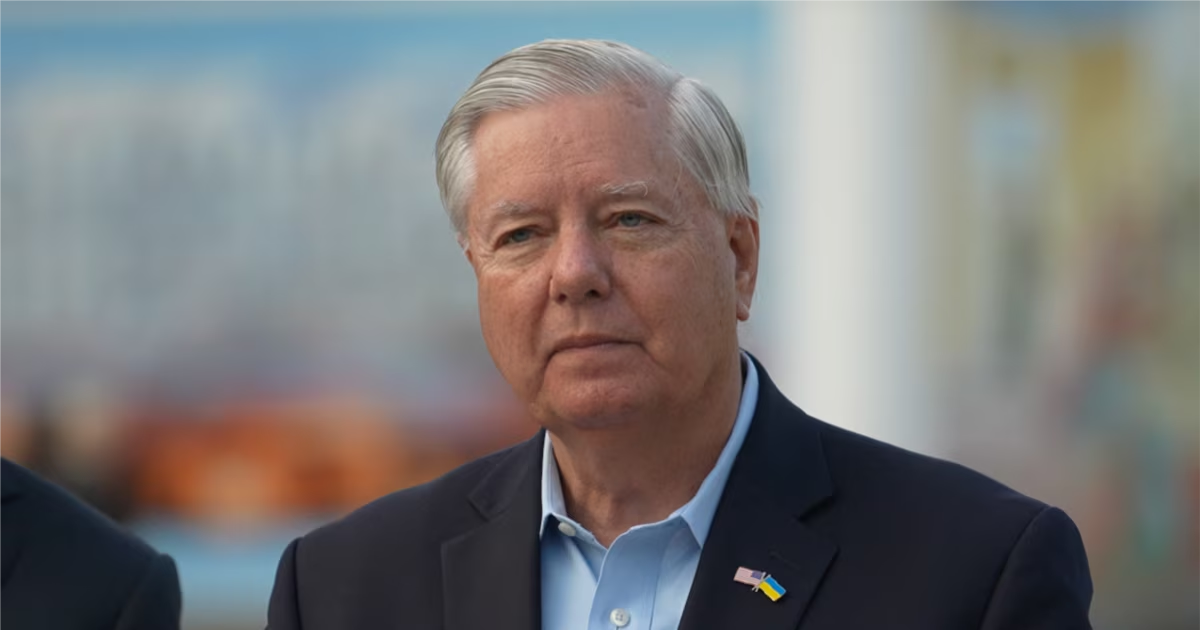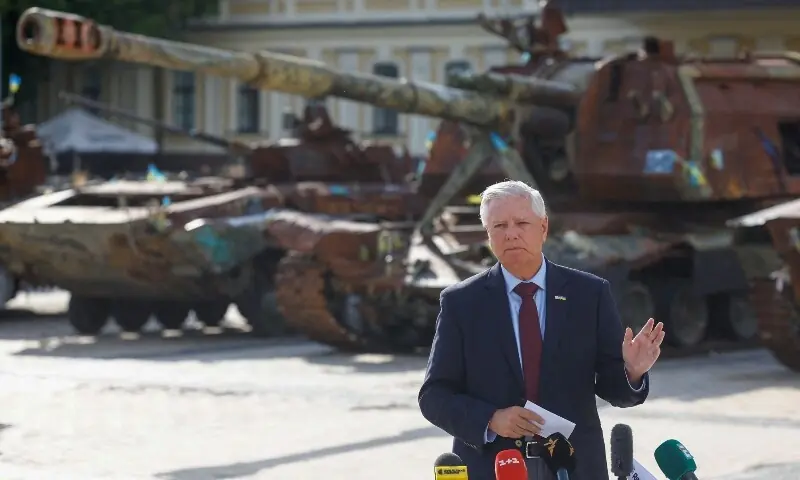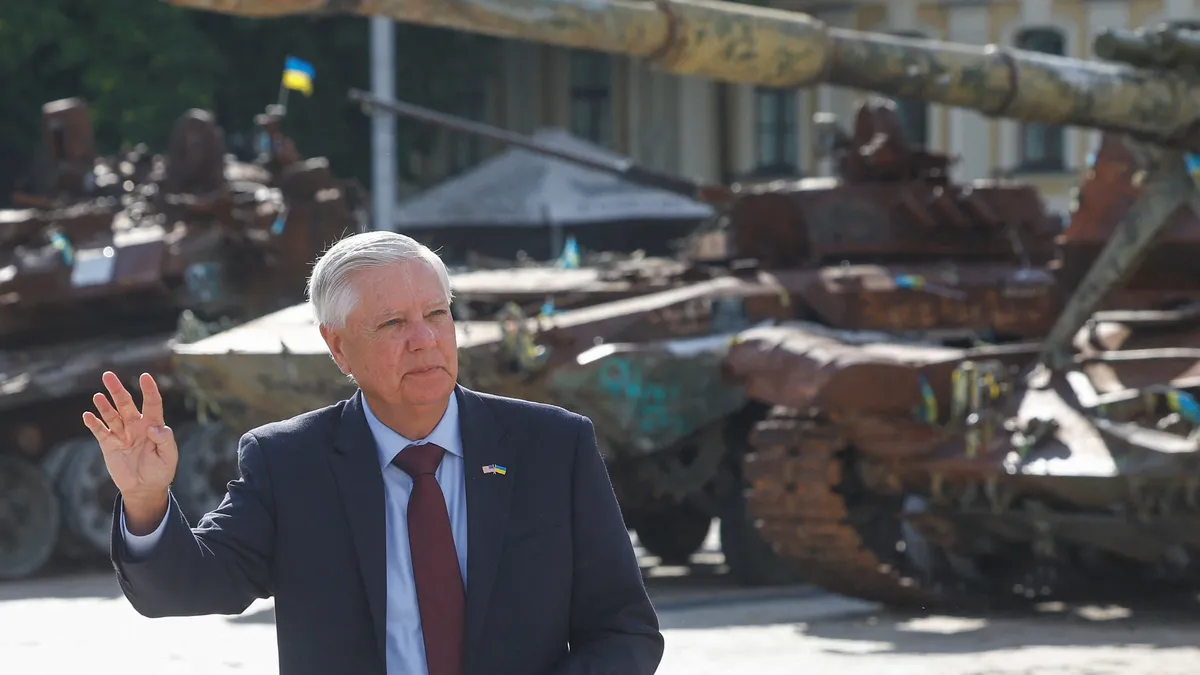
The Republican senator steadfastly refused to abandon Ukraine and, in fact, died just hours after returning from Kyiv − his tenth trip to the country since the start of Russia's full-scale invasion.Show Caption
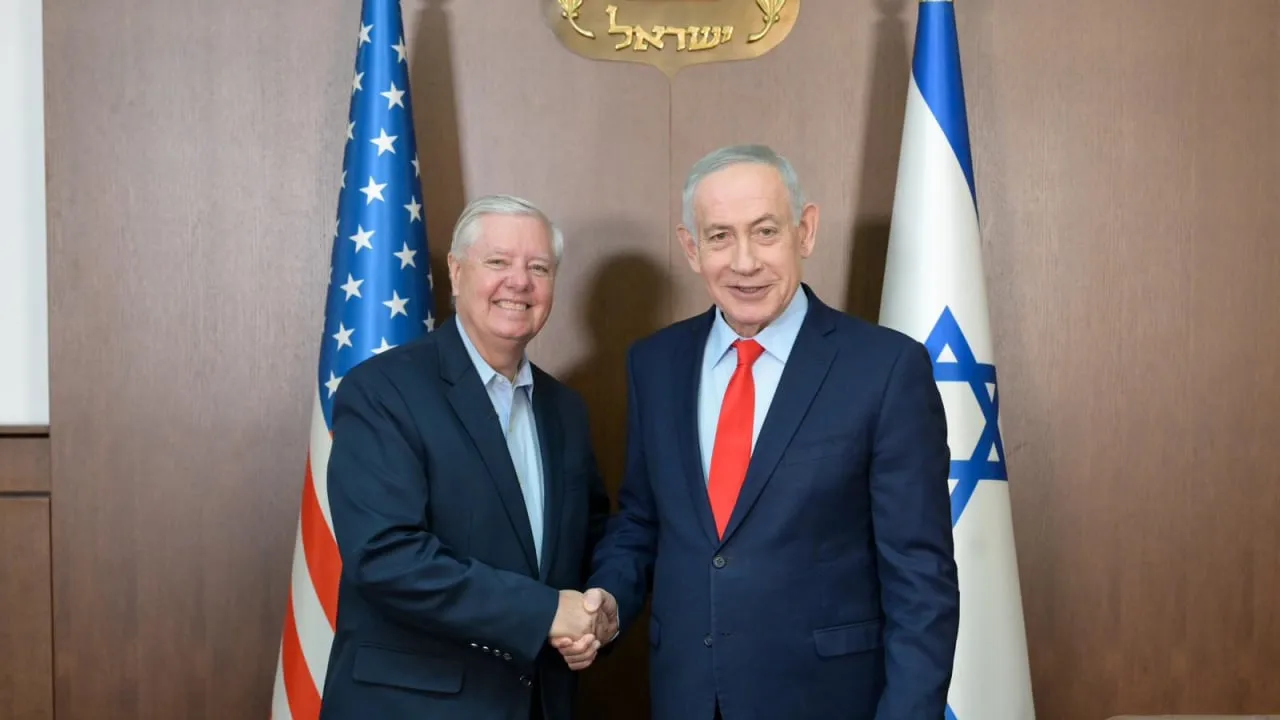
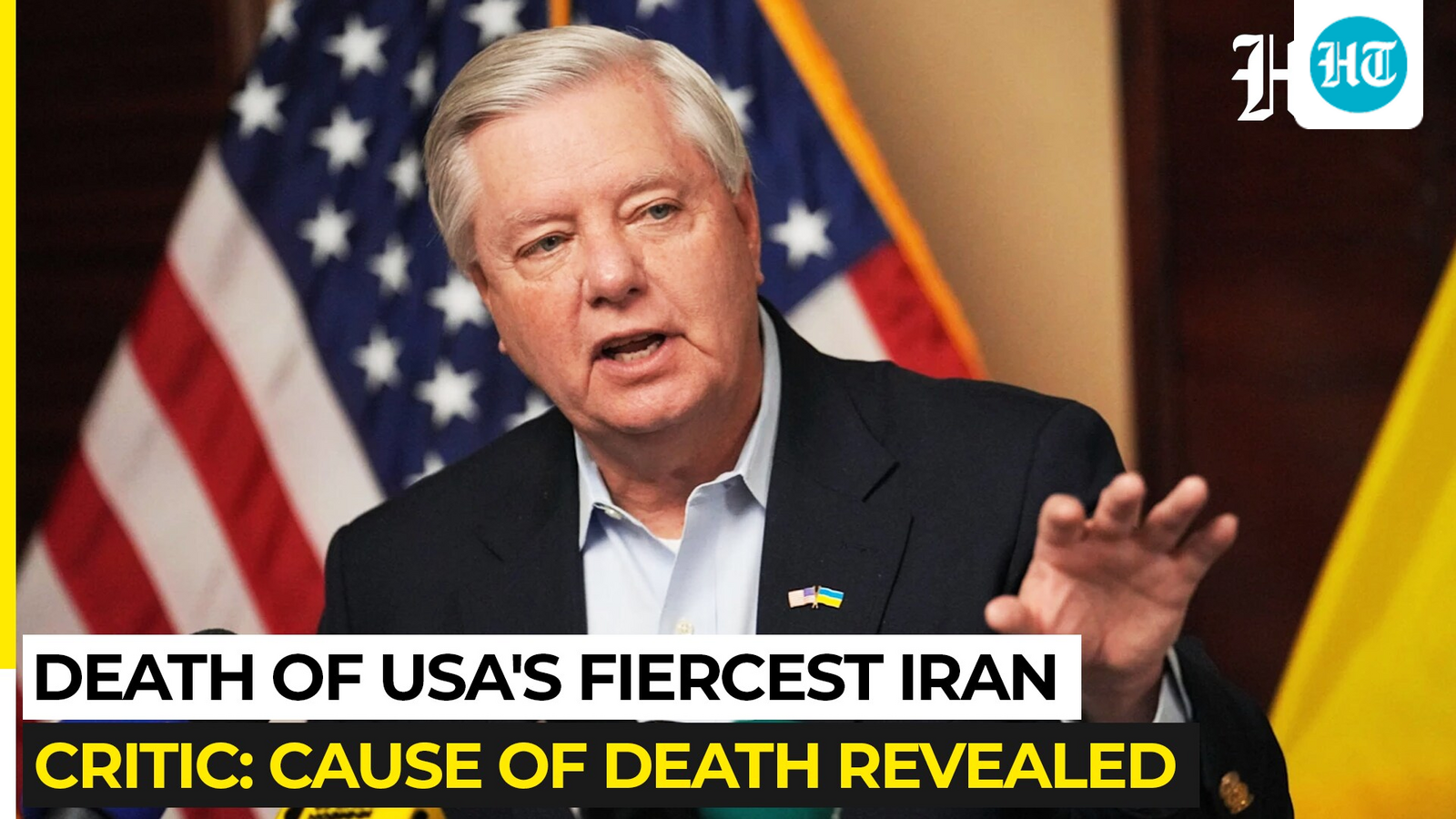
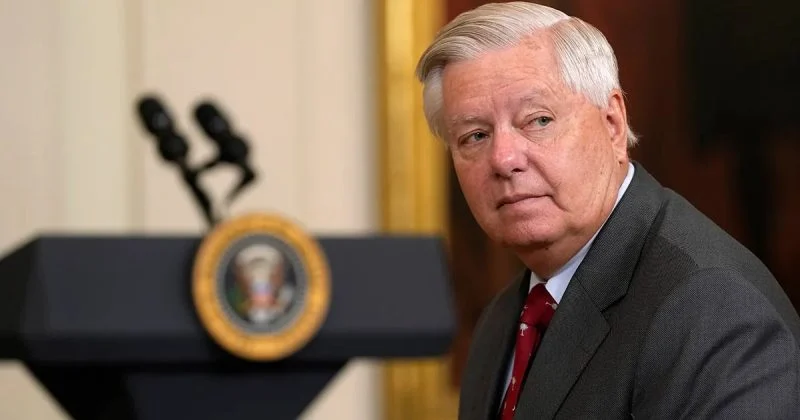
Some Iranians nicknamed him "Uncle Lindsey" for his consistent support of their opposition to the Islamic Republic.He never wavered in backing Israel, even as its military campaign in Gaza in response to the Hamas-led Oct. 7, 2023, attack drew widespread international condemnation over its humanitarian toll.The Republican senator from South Carolina steadfastly refused to abandon Ukraine and, in fact, died just hours after returning from Kyiv − his tenth trip to the country since the start of Russia's full-scale invasion.Lindsey Graham, who died from a heart condition on July 11 at 71, was among the Republican Party's most prominent hawkish voices on foreign policy. During more than two decades in Congress, he championed global U.S. military interventions, sanctions and alliances, including amid President Donald Trump's wavering commitment.Graham's death robs Washington of one of its staunchest internationalists at a time when a stronger role for the United States overseas has fallen out of fashion for some lawmakers on both sides of the aisle, as well as Trump's White House, some experts said. But his death is unlikely to immediately change the overall direction of U.S. foreign policy, whether toward China, Iran, Israel, or other places where internationalist Republicans and the party's more nationalist "America First" faction have been dueling for policy supremacy during Trump's second term."Whether you loved him or hated him, nobody can dispute that Lindsey Graham had a significant impact on virtually every foreign policy issue under the sun. This is particularly the case with Trump, who genuinely seemed to care about Graham’s views and often leaned on him to sell his decisions on Capitol Hill," said Daniel DePetris, a fellow at Defense Priorities, a Washington, DC-based think tank that advocates for U.S. military restraint."But Graham isn’t the only foreign policy hawk with influence in Trump’s Washington. There are no shortage of those. His death doesn’t present a void because others will quickly take his place and lobby for similar policies, from continuing the war against Iran to maintaining an aggressive stance in Latin America," he said.DePetris added that Trump "has in essence become one of the hawks." He noted that Trump attacked Venezuela and captured its leader, Nicolás Maduro, alleging he was responsible for U.S. drug trafficking. Alongside Israel, Trump started a war with Iran over its nuclear and ballistic missile program. He has for months been threatening to intervene in Cuba militarily if that country fails to make sweeping economic and political changes.Graham was a cheerleader for both of those actions, and the one that might come next in Cuba.Barbara Slavin, a fellow at the Stimson Center, a Washington, DC-based think tank that analyzes U.S. foreign policy, compared Graham to John Bolton, a foreign policy hawk among hawks who has long advocated for regime change and pre-emptive military action against American adversaries like Iran and North Korea.Bolton served as Trump's national security adviser from 2018 to 2019, during his first term, before he was fired over various policy disagreements related to overseas engagements. After leaving the White House, he became a fierce Trump critic who accused him of having "no grand strategy." (Bolton recently pleaded guilty to charges of mishandling classified security information as part of notes he compiled for a book about Trump's White House.)Slavin said that like Bolton, Graham was a "consistent Iran hawk, always pushing for sanctions and military force. Neither have succeeded, but that didn't dull his enthusiasm." She added that "given the incoherence of U.S. policy right now," she didn't think Graham's death would make much difference to Trump's overseas behavior."We are in a mess he encouraged, but like Trump, he had no ideas about how to extricate ourselves," she said, referring to the Iran war. There's been a series of back-and-forth attacks since the two sides agreed to a ceasefire in April and signed a memorandum of understanding in June intended to lead to a permanent end to the fighting.Earlier in his congressional career, Graham enthusiastically supported U.S. military action against Iraq in the wake of the Sept. 11, 2001, attacks. He strongly opposed the Biden administration's decision in 2021 to withdraw U.S. troops from Afghanistan, describing it as a "sad and dangerous event" for U.S. national security."Jihadists all over the world are celebrating," he added.Lindsey Graham and UkraineStill, Graham was a loud and forceful foreign policy voice who continued to publicly push for working with allies, especially in Ukraine. A day before his death he joined a group of bipartisan senators in announcing an updated package of sanctions targeting Russia's oil industry that they hoped Trump would eventually back. It is the president and executive branch, not individual senators, that ultimately controls the direction of U.S. foreign policy.For this and other attempts to pursue the U.S.'s historical commitment to NATO and trans-Atlantic friendships, Graham was widely lauded by Ukrainian President Volodymyr Zelenskyy, NATO Secretary-General Mark Rutte and Israeli Prime Minister Benjamin Netanyahu, who said he was in a "state of shock" over his death.After Washington suspended some military aid to Israel in May 2024 as the humanitarian crisis in Gaza deteriorated, Graham pressed then-Defense Secretary Lloyd Austin to restore support, saying Israel should receive "what they need to fight the war." He described the danger confronting Israel as "Hiroshima and Nagasaki on steroids."The pause didn't last long."Senator Lindsey Graham was a cornerstone of the trans-Atlantic partnership," said Peter Beyer, a conservative German lawmaker who is a member of that country's parliamentary foreign relations committee, in a WhatsApp message. "A reliable partner for Germany and Europe. Ukraine could always rely on him."Graham the man also appeared to be well-liked and respected in foreign policy circles."He forged a close relationship with Trump and provided critical support and advice to the president that offset the naive counsel coming from influential Republican circles who sought to end all U.S. support for Ukraine and to lessen the U.S. tie to NATO," John Herbst, a former U.S. ambassador to Ukraine, wrote in a tribute posted on the website of the Atlantic Council, a Washington, DC-headquartered foreign policy think tank."I traveled with him on many congressional visits to foreign political and military leaders, where he was always effective in communicating America’s policies," said Kay Bailey Hutchison, a former U.S. ambassador to NATO. "He championed NATO, knowing that having a strong alliance expanded and strengthened U.S. leadership."Graham nevertheless said comparatively little publicly about other areas of Trump's foreign policy that have caused concern and confusion among traditional U.S. allies. He did not, for example, have much to say about Trump's repeated suggestions that he might use the U.S. military to seize Greenland, or the president's periodic praise for authoritarian leaders like Russian President Vladimir Putin. Graham for years talked about the importance of the United States Agency for International Development, or USAID, in countering foes like China and Russia.When Trump started dismantling USAID, Graham stayed largely silent.In a July 13 analysis of Graham's words and actions on Ukraine, Phillips O'Brien, an American military historian at the University of St. Andrews in Scotland, concluded that Graham never used his position in the Senate over the last few years to push aid to Ukraine or expressly support it beyond what Trump approved of.Kim Hjelmgaard is an investigative journalist covering global stories for USA TODAY, from living rooms to conflict zones. Follow him on X:@khjelmgaard